Rubio Uses Manila Briefing to Present Broad U.S. Foreign Policy Agenda
Secretary of State Marco Rubio used a press briefing in Manila to outline U.S. priorities on Ukraine, Iran, China, the South China Sea, Indo-Pacific security and strategic partnerships, presenting diplomacy backed by military deterrence as the foundation of Washington's global strategy.
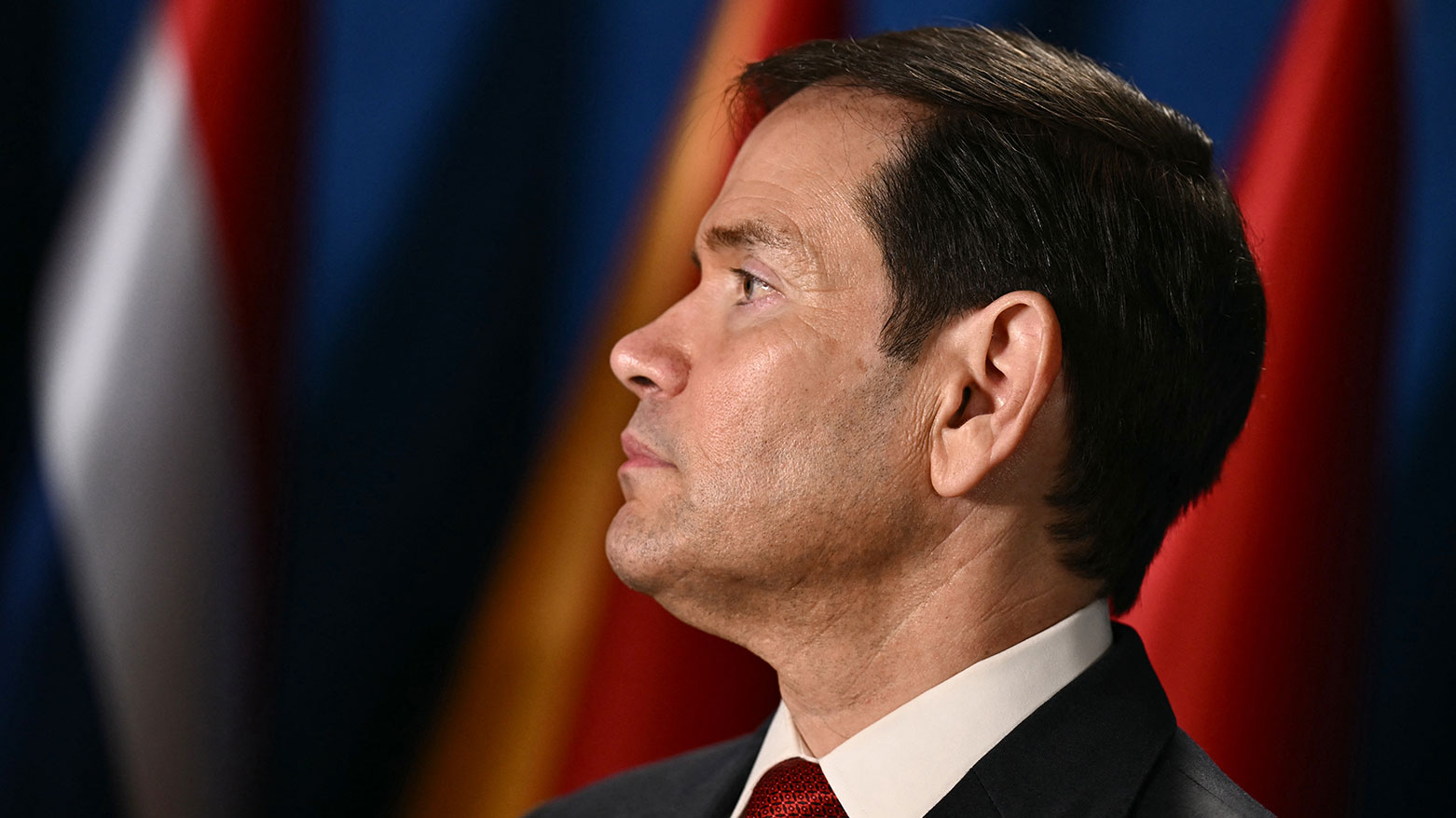
ERBIL (Kurdistan24) - Secretary of State Marco Rubio used a wide-ranging press appearance in Manila on Thursday to present an expansive vision of U.S. foreign policy, portraying the United States as pursuing diplomacy across multiple global crises while reinforcing military deterrence and reaffirming long-standing security commitments to allies from Europe to the Indo-Pacific.
Although Rubio's visit to the Philippines centered on meetings with Southeast Asian leaders during regional gatherings, his press conference evolved into a broad assessment of Washington's priorities well beyond Asia.
Questions spanning Russia's war in Ukraine, Iran, tensions in the South China Sea, relations with China, maritime security, civilian nuclear cooperation with Saudi Arabia and emerging technologies offered a window into how the administration views an increasingly interconnected global security landscape.
Rather than treating each issue as a separate challenge, Rubio repeatedly returned to a consistent message: the United States remains willing to pursue negotiations where opportunities exist, but diplomacy must be reinforced by credible military capabilities, strong alliances and sustained engagement across multiple regions.

Ukraine Diplomacy Remains a Priority
That approach was perhaps most evident in Rubio's discussion of Ukraine following his meeting with Russian Foreign Minister Sergey Lavrov on the sidelines of the ASEAN-related meetings in Manila.
Declining to characterize the substance of their conversation, Rubio argued that successful diplomacy depends on confidentiality rather than public disclosure immediately after negotiations.
"Diplomacy doesn't work well when you run to the microphones afterwards," Rubio told reporters, while reaffirming that Washington remains prepared to help facilitate efforts to end the conflict if conditions allow.
Without suggesting that the latest meeting represented a diplomatic breakthrough, Rubio emphasized that the United States continues to view itself as a potential constructive intermediary should both Moscow and Kyiv identify an acceptable path toward negotiations.

"The United States... is prepared to play a constructive role in bringing about an end to a senseless war," he said.
Rubio portrayed the conflict as one of extraordinary human cost, pointing to continuing attacks inside both Russia and Ukraine, mounting battlefield losses and persistent civilian suffering as evidence that neither side benefits from prolonging the war.
He noted that previous diplomatic initiatives ultimately failed because proposed frameworks lacked acceptance from all parties involved, arguing that future negotiations would require fresh ideas rather than revisiting concepts already rejected.
Rather than speculate about shifting momentum on the battlefield, Rubio suggested the scale of destruction itself should encourage renewed diplomatic efforts.

"Both sides should have an incentive to bring it to an end," he said, while acknowledging that any eventual agreement would have to reflect terms acceptable to both governments rather than a settlement imposed from outside.
He also stressed that President Donald Trump's overriding objective remains ending the conflict rather than prolonging military confrontation.
"He thinks it's a stupid war; he thinks it's a senseless war," Rubio said, adding that Washington stands ready to use "the power and influence of the United States" if an opportunity emerges to help broker a durable peace.
Throughout the discussion, Rubio avoided predicting whether renewed contacts with Moscow would produce tangible progress, instead portraying diplomacy as an incremental process requiring patience rather than headline-grabbing meetings.

Pressure on Iran Coupled With Conditional Diplomacy
The secretary described a markedly firmer approach toward Iran, portraying Washington's strategy as one that combines sustained military pressure with the possibility of renewed diplomacy should Tehran demonstrate a willingness to honor future commitments.
Rubio argued that Iran has spent years expanding its arsenal of ballistic missiles, drones and other military capabilities while pursuing what Washington views as ambitions to acquire a nuclear weapon. He said the administration believes Tehran intended to further expand that arsenal before seeking the protection of a nuclear deterrent.

He defended recent U.S. military action as necessary to prevent that outcome.
"The world will be a safer place because we addressed it," Rubio said, arguing that allowing Iran's military capabilities to continue growing unchecked would have posed a far greater long-term danger than the current period of regional instability.
A nuclear weapon in the hands of Iran's leadership, he added, would represent the more serious threat.
Although he repeatedly emphasized that diplomacy remains available, Rubio questioned whether Iranian leaders are prepared to negotiate in good faith.

According to Rubio, Washington continues receiving indirect signals suggesting Tehran is interested in reopening negotiations, but confidence has been eroded by what the administration views as Iran's history of failing to uphold previous agreements.
"The problem with these guys... you can't make a deal with people unless they're going to keep it," Rubio said, arguing that lasting diplomacy requires confidence that commitments will be honored rather than revised after agreements are reached.
He said that skepticism explains why President Donald Trump has become increasingly reluctant to pursue renewed negotiations without stronger assurances, while suggesting Iran may eventually return to the negotiating table because "the price they're paying is very high."

Rubio also rejected suggestions that regime change represents Washington's objective, repeatedly returning to what he described as the administration's central security concern.
"Our issue and our concern and our focus is denuclearizing Iran. They can never have a nuclear weapon," he said.
He argued that questions regarding Iran's political future ultimately belong to the Iranian people, while insisting that preventing nuclear proliferation remains the overriding priority guiding U.S. policy.

Red Sea Security and Regional Stability
Beyond Iran itself, Rubio also addressed growing instability across the broader Middle East, including renewed attacks linked to Yemen's Houthi movement that have heightened concerns over commercial shipping in the Red Sea.
He expressed hope that the Houthis would refrain from further military action, arguing that renewed attacks risk expanding a conflict that already threatens regional stability and international trade.
Rubio suggested the Houthis had unnecessarily widened the confrontation after largely remaining outside earlier phases of the regional conflict, warning that continued attacks against commercial shipping could eventually affect vessels connected to countries far beyond the Middle East.
"The Houthis largely were smart and stayed out of all this," Rubio said. "They now apparently have gotten themselves suckered into this."

His comments reflected Washington's broader concern that disruptions in key maritime corridors could have consequences extending well beyond regional security, affecting global energy markets and international commerce.
"This becomes a problem for China. This will become a problem for the whole world," Rubio said.
Expressing hope that tensions could still be contained, Rubio urged the Houthis to reverse course.
"I hope that they'll stop," he said. "They should stay out of it and they should stop."
His comments reinforced Washington's broader emphasis on protecting international maritime trade routes stretching from the Middle East to Asia.
The issue also fit within Rubio's wider argument that regional conflicts increasingly carry global economic consequences, making maritime security a shared international concern rather than solely a regional one.

Taken together, Rubio's remarks on Ukraine and the Middle East illustrated the administration's effort to balance military pressure with diplomatic engagement across multiple crises simultaneously. Whether discussing negotiations with Moscow or the possibility of renewed talks with Tehran, he consistently framed American policy as one that seeks political solutions without reducing its military posture or strategic leverage.

|
Summary Secretary of State Marco Rubio used a press briefing in Manila to outline a broad U.S. foreign policy strategy centered on diplomacy backed by military deterrence, reaffirming Washington's commitment to ending the war in Ukraine through negotiations, preventing Iran from acquiring a nuclear weapon, safeguarding Red Sea shipping, and strengthening alliances across the Indo-Pacific while emphasizing that lasting security depends on both sustained engagement and credible defense capabilities. |