Iran Claims Drone Strikes on US Military Facilities in Bahrain, Jordan
Iran says it launched drone attacks on U.S. military facilities in Bahrain and Jordan following recent American strikes, as tensions over the Strait of Hormuz and regional security continue to intensify.
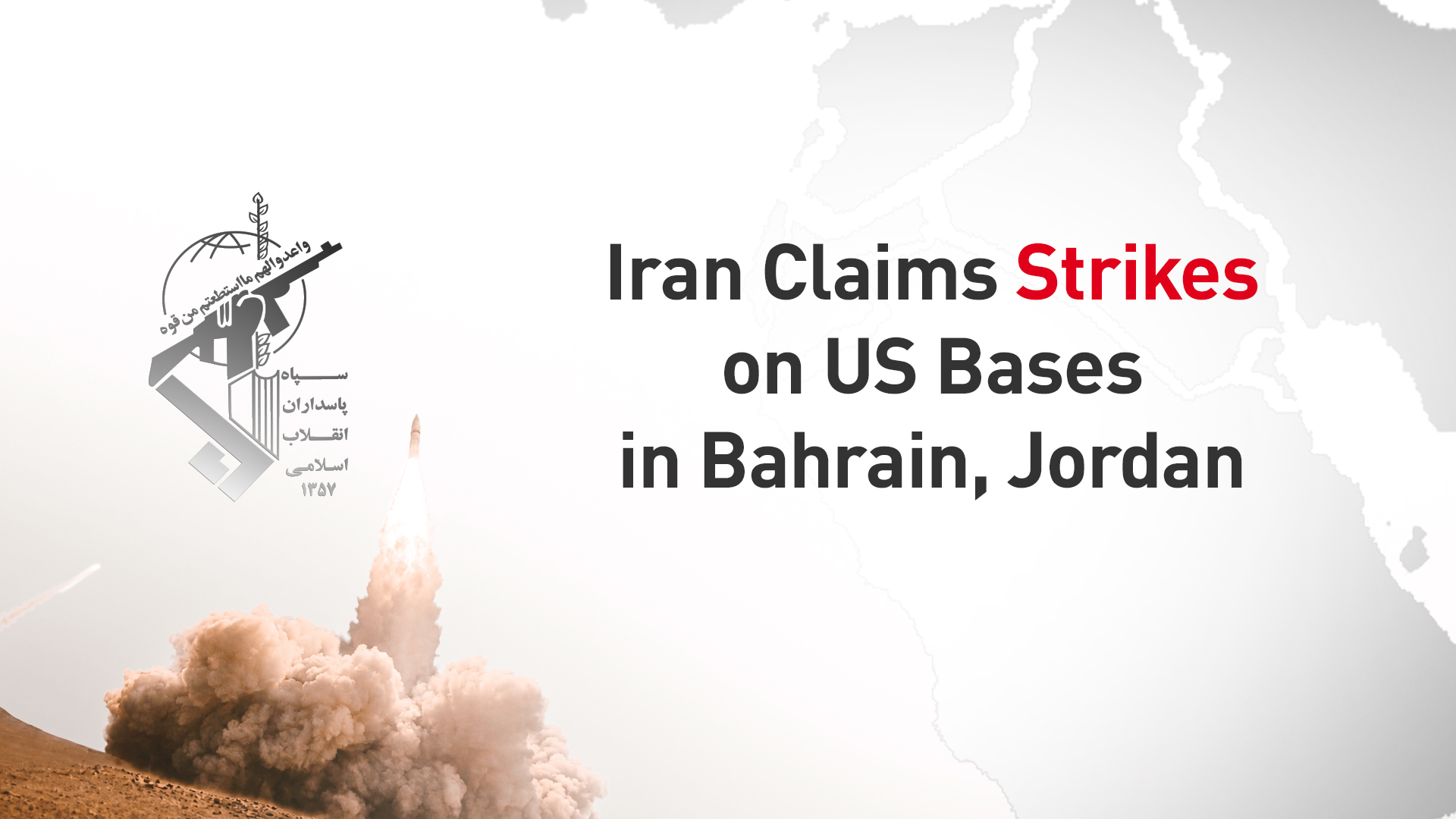
ERBIL (Kurdistan24) - Iran said Friday it had launched drone attacks against American military facilities in Bahrain and Jordan, describing the operation as retaliation for the latest U.S. strikes on Iranian territory in a further escalation of the widening confrontation between Tehran and Washington.
According to Agence France-Presse (AFP), the Iranian army said Arash kamikaze drones were used to strike facilities at Isa Air Base in Bahrain and Al-Azraq Air Base in Jordan.
In a statement carried by Iranian state television, the military said the targets included fuel storage facilities, equipment depots, barracks and aviation-related infrastructure at the two installations.
Iran presented the operation as a direct response to recent U.S. military action, maintaining that American bases used to support operations against Iranian territory are considered legitimate military objectives for retaliation.
The statement reflects Tehran's longstanding position that U.S. military infrastructure across the Middle East could become part of the expanding conflict if Washington continues military operations against Iran.
The reported attacks prompted an immediate security response in Bahrain, although the circumstances surrounding the incident remained unclear.
An AFP journalist in Bahrain reported hearing an explosion while warning sirens sounded across the country early Friday.
Bahraini authorities activated emergency alert systems after incoming fire was detected, according to reporting by The Associated Press (AP), which said residents were urged to seek shelter.
However, officials had not immediately confirmed whether the reported explosion or warning sirens were directly linked to Iran's claimed drone strikes.
Jordan, meanwhile, had not reported any strikes on its territory in the hours following Iran's announcement, leaving Tehran's claims regarding the Al-Azraq Air Base without independent confirmation.
The latest developments unfolded as the United States continued military operations inside Iran.
According to AP, U.S. Central Command announced it had completed another round of strikes against Iranian targets, describing the campaign as part of efforts to reduce Iran's ability to threaten commercial shipping and civilian maritime traffic in regional waters.
The exchange marks another phase in a confrontation that has increasingly expanded beyond direct military installations to encompass vital waterways and regional security infrastructure.
At the center of the dispute remains the Strait of Hormuz, one of the world's most strategically important maritime corridors.
AP reported that fighting between the United States and Iran intensified after disputes over control of the waterway, through which roughly one-fifth of global oil and gas supplies normally pass during peacetime.
Military operations by both sides have increasingly focused on securing or disrupting maritime movement through the Gulf.
The regional security picture has grown more complicated as attacks have spread beyond the Strait of Hormuz itself.
AP reported that Yemen's Iran-backed Houthi movement recently claimed attacks on Saudi oil tankers in the Red Sea, raising concerns that another critical shipping route could face increasing disruption.
The Bab el-Mandeb Strait, which links the Red Sea with the Gulf of Aden, has become an additional point of concern for governments and commercial shipping operators monitoring the conflict.
The combined pressure on two of the world's most important maritime chokepoints has heightened international concerns about global energy supplies and commercial trade.
According to AP, Brent crude oil prices climbed above $100 per barrel, reflecting investor concerns that prolonged instability could further affect energy markets and international shipping.
Amid the military escalation, regional governments have continued diplomatic efforts aimed at preventing a broader conflict.
AP reported that Iraqi Prime Minister Ali al-Zaidi traveled to Tehran to advocate for dialogue and de-escalation while reaffirming that Iraqi territory should not be used to launch attacks against Iran.
Iraq has maintained relations with both Washington and Tehran, positioning itself as a regional actor seeking to encourage diplomatic engagement despite intensifying hostilities.
Friday's developments illustrate how rapidly the confrontation has expanded beyond exchanges inside Iranian territory.
Iran's announcement that it targeted U.S. military facilities in Bahrain and Jordan, coupled with continuing American operations against Iranian sites and mounting concerns over maritime security, underscores the increasingly regional character of the conflict.
While several of Tehran's claims had not been independently verified, the latest exchanges point to a security environment in which military operations, commercial shipping and diplomatic efforts are becoming ever more closely intertwined across the Gulf and surrounding region.
|
Summary Iran says it launched drone attacks on U.S. military facilities in Bahrain and Jordan in retaliation for recent American strikes. Bahrain activated emergency sirens as Gulf tensions, Strait of Hormuz security concerns and fears over global energy markets continue to intensify. |