Rubio, Iran Exchange Signals Rising Tensions as Trump Considers Next Steps
As President Donald Trump weighs broader military options against Iran, increasingly pointed exchanges between Washington and Tehran underscore mounting diplomatic strain, while Congress, energy markets, and regional security remain on edge.
ERBIL (Kurdistan24) - Washington and Tehran have entered a sharper phase of public confrontation, with increasingly forceful statements from senior officials drawing renewed attention to whether the United States could expand its military campaign against Iran.
According to POLITICO, President Donald Trump has indicated that he is weighing a significantly broader military operation, though no final decision has been announced. The possibility of further action has become the central focus of diplomatic and security discussions as the conflict continues to reverberate across the Middle East.
The latest exchange unfolded after Iranian Foreign Minister Abbas Araghchi reiterated that Iran's military doctrine is based on reciprocal retaliation, warning that any attack would invite a proportional response.
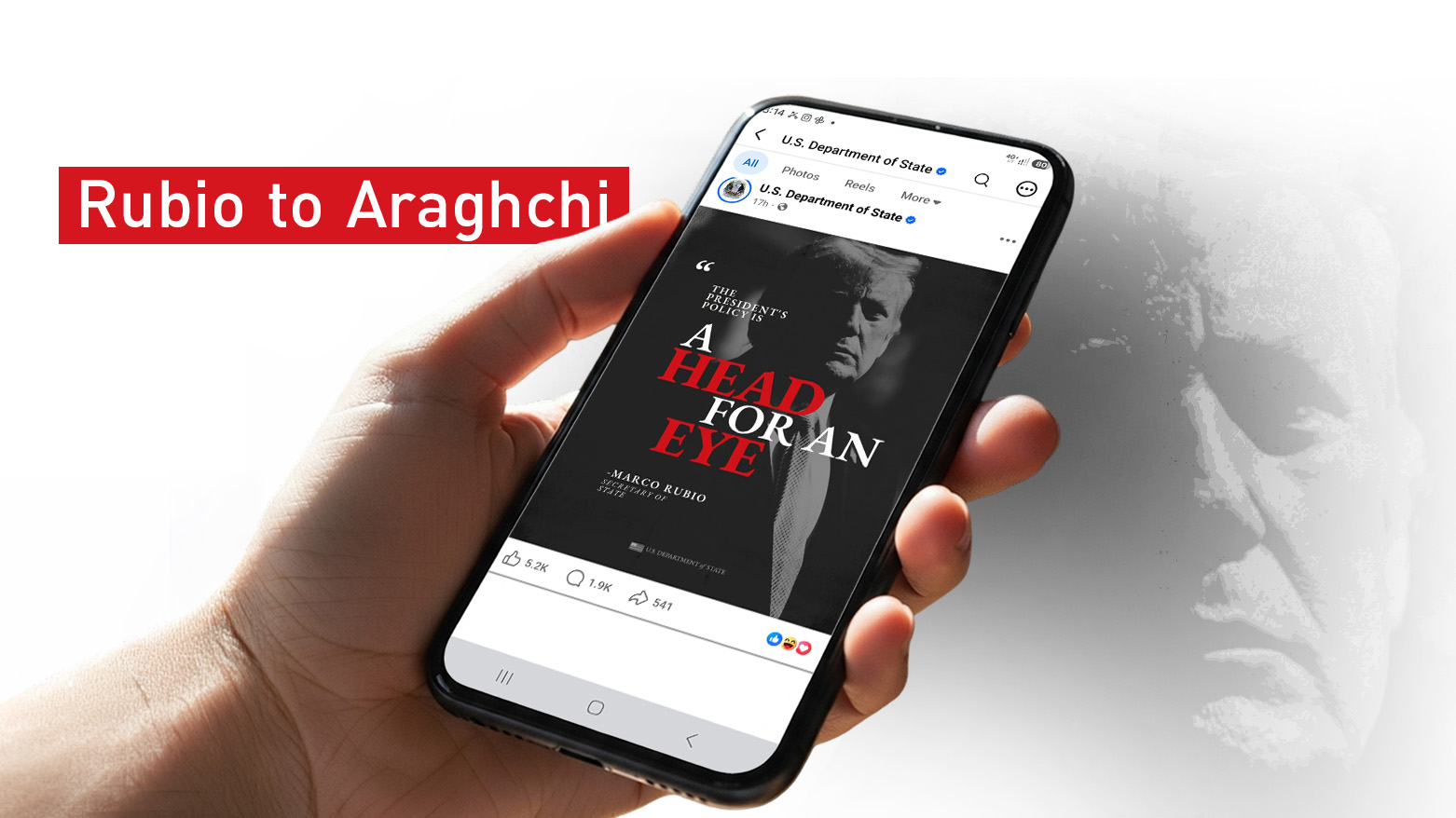
Speaking on behalf of the Trump administration, U.S. Secretary of State Marco Rubio answered with an even more forceful formulation, saying the president's approach amounted to "a head for an eye," underscoring Washington's determination to respond decisively if circumstances require.
"Our defense doctrine is clear: eye for an eye," Iranian Foreign Minister Abbas Araghchi.
Secretary of State Marco Rubio batted that comment away today: "The president’s policy," he said, "is a head for an eye."
The contrasting statements have become the clearest public indication yet of how both governments are using rhetoric to signal resolve while uncertainty persists over the next phase of the confrontation.
According to POLITICO, Trump has said his administration is actively considering military options that would extend beyond earlier operations.
While emphasizing that no order has been issued, he suggested the United States is prepared to intensify pressure if it believes doing so could alter Iran's strategic calculations and encourage movement in stalled negotiations.
The administration has presented the possibility of stronger military pressure as one element of a broader effort to influence Tehran's decision-making.
At the same time, the absence of a formal announcement has left allies, regional governments, and financial markets watching closely for signs of Washington's next move.
The increasingly confrontational messaging comes as the conflict is also generating political debate inside the United States.
According to POLITICO, lawmakers remain divided over presidential war powers, with renewed congressional efforts reflecting broader questions about the scope of executive authority in an expanding regional conflict.
The strategic uncertainty has also extended beyond Washington.
Fresh instability in the Middle East has renewed concerns over global energy markets, with oil prices climbing as investors assess the potential consequences of additional military action.
At the same time, continued security threats affecting maritime routes have reinforced concerns about disruptions to international shipping and regional commerce.
Against that backdrop, the exchange between Rubio and Araghchi illustrates how public messaging has become an increasingly important component of the broader confrontation.
Statements from senior officials are now serving not only as diplomatic signals but also as indicators of each side's willingness to maintain pressure while leaving room for future decisions.
According to POLITICO, no timetable has been announced for any additional U.S. military action, and Trump has not indicated that a final decision has been reached.
Even so, the increasingly direct rhetoric from both Washington and Tehran has heightened attention on the possibility of further escalation, leaving regional governments and international observers closely monitoring developments in a conflict that remains highly fluid.
|
Summary President Donald Trump is considering broader military action against Iran as U.S.-Iran tensions intensify. POLITICO reports increasingly sharp exchanges between Marco Rubio and Iranian officials, while debate over military escalation, diplomacy, oil markets, and regional security continues. |