KRG Agricultural Investment Rises to 12% as Diversification Drive Boosts Food Security
The increase underscores the KRG's efforts to strengthen domestic agricultural production, improve food security, and expand export opportunities for locally produced crops in regional and international markets.
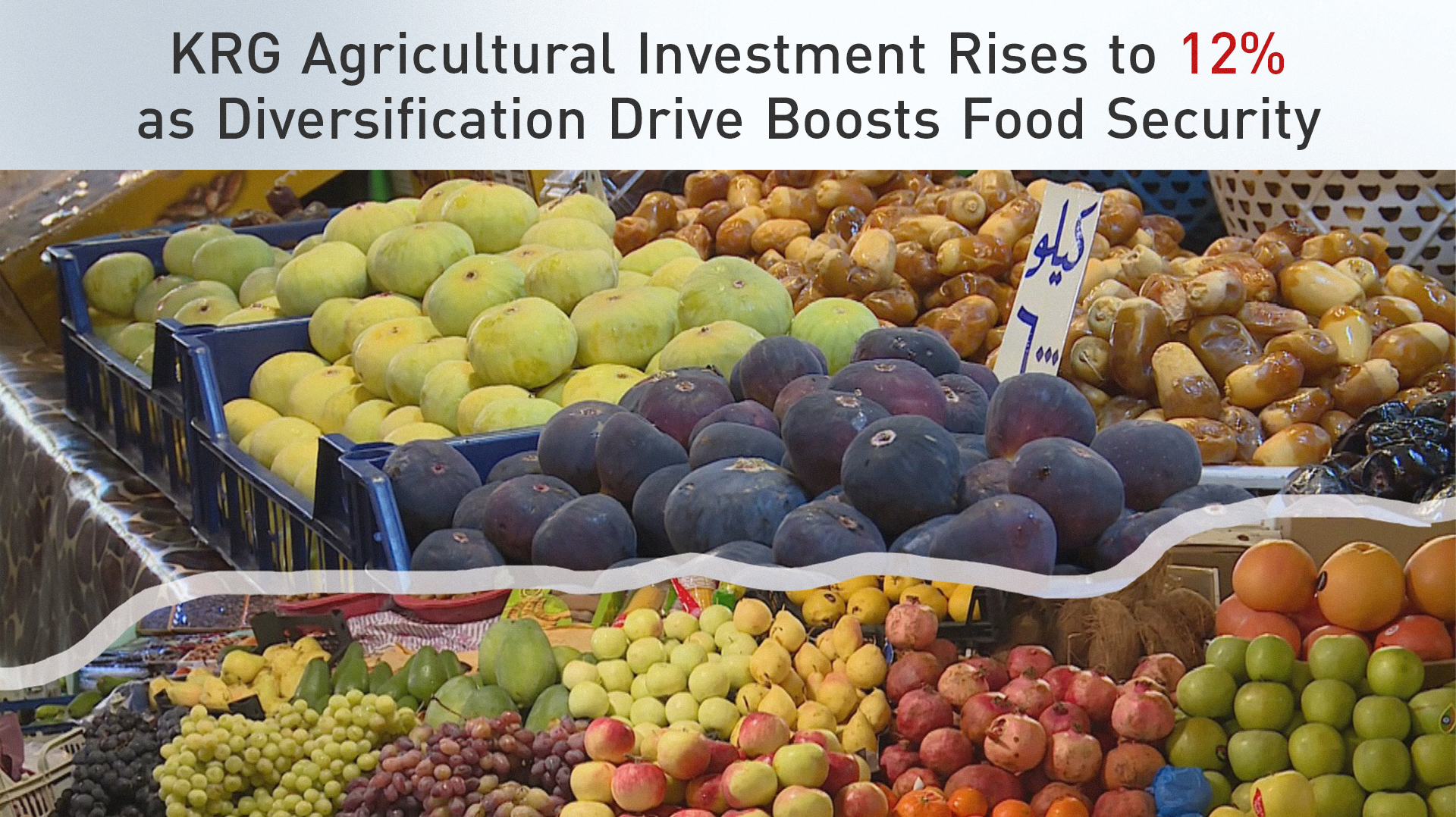
ERBIL (Kurdistan24) – Agricultural investment in the Kurdistan Region has increased from less than 2% to around 12% of total capital under the Kurdistan Regional Government's (KRG) Ninth Cabinet, reflecting a strategic shift toward sustainable economic diversification, according to a statement published Tuesday by Invest Kurdistan.
The investment agency said the increase underscores the KRG's efforts to strengthen domestic agricultural production, improve food security, and expand export opportunities for locally produced crops in regional and international markets.
The announcement comes as the KRG continues to invest heavily in agricultural infrastructure. Earlier this month, the KRG Department of Media and Information announced the construction of four new grain silos with a combined storage capacity of 160,000 tons of wheat as part of efforts to protect wheat harvests and boost domestic production.
The 90 billion Iraqi dinar project includes silos in Qushtapa, Erbil (21 billion dinars), Kalar, Sulaimani (21 billion dinars), Rovia, Duhok (20 billion dinars), and Halabja (28 billion dinars). Additional silos are planned in Duhok, Zakho, Kifri, Koya, and Harir to further strengthen grain storage capacity and food security.
The KRG has also highlighted broader progress in the agriculture and trade sectors, including the establishment of 13,943 companies, 1,341 industrial facilities, approximately 30,000 plastic greenhouses for year-round cultivation, and 319 cold storage facilities.
These investments have enabled farmers and domestic producers to export hundreds of thousands of tons of agricultural products to central and southern Iraq, while tens of thousands of tons of produce have reached Gulf markets and other international destinations for the first time.
Speaking to Kurdistan24 in June, Hemin Sayed Murad, the Director General of Agriculture in Erbil, said part of the Kurdistan Region's agricultural output satisfies local demand, with the remainder exported abroad or sold to the federal Iraqi provinces.
He noted that between 250 and 300 truckloads of agricultural products are shipped daily from the Kurdistan Region to central and southern Iraq, reinforcing the region's growing contribution to Iraq's food supply.
Murad also said exports to the United Arab Emirates typically increase between July and September, with potato shipments from Duhok already underway and exports from Erbil expected to rise as the province's harvest reaches its peak.
The KRG's efforts to promote its domestic products internationally have also expanded beyond fresh produce. Kurdistan Region honey became the first locally produced agricultural product to enter European markets in 2022 and 2023, reaching France. It was followed by Akre rice and Amedi tahini, which were exported to several European countries, including Sweden, Germany, and the United Kingdom.
Meanwhile, pomegranates from Halabja and Zakho became the first agricultural products from the Kurdistan Region to be officially exported in large quantities to Gulf countries, particularly the United Arab Emirates and Qatar, marking another milestone in the region's expanding agricultural trade.