Duhok Solar Systems Reach 22.4 MW as Adoption Grows
More than 1,760 electricity subscribers in Duhok have installed solar systems with a combined generation capacity of about 22.4 megawatts.
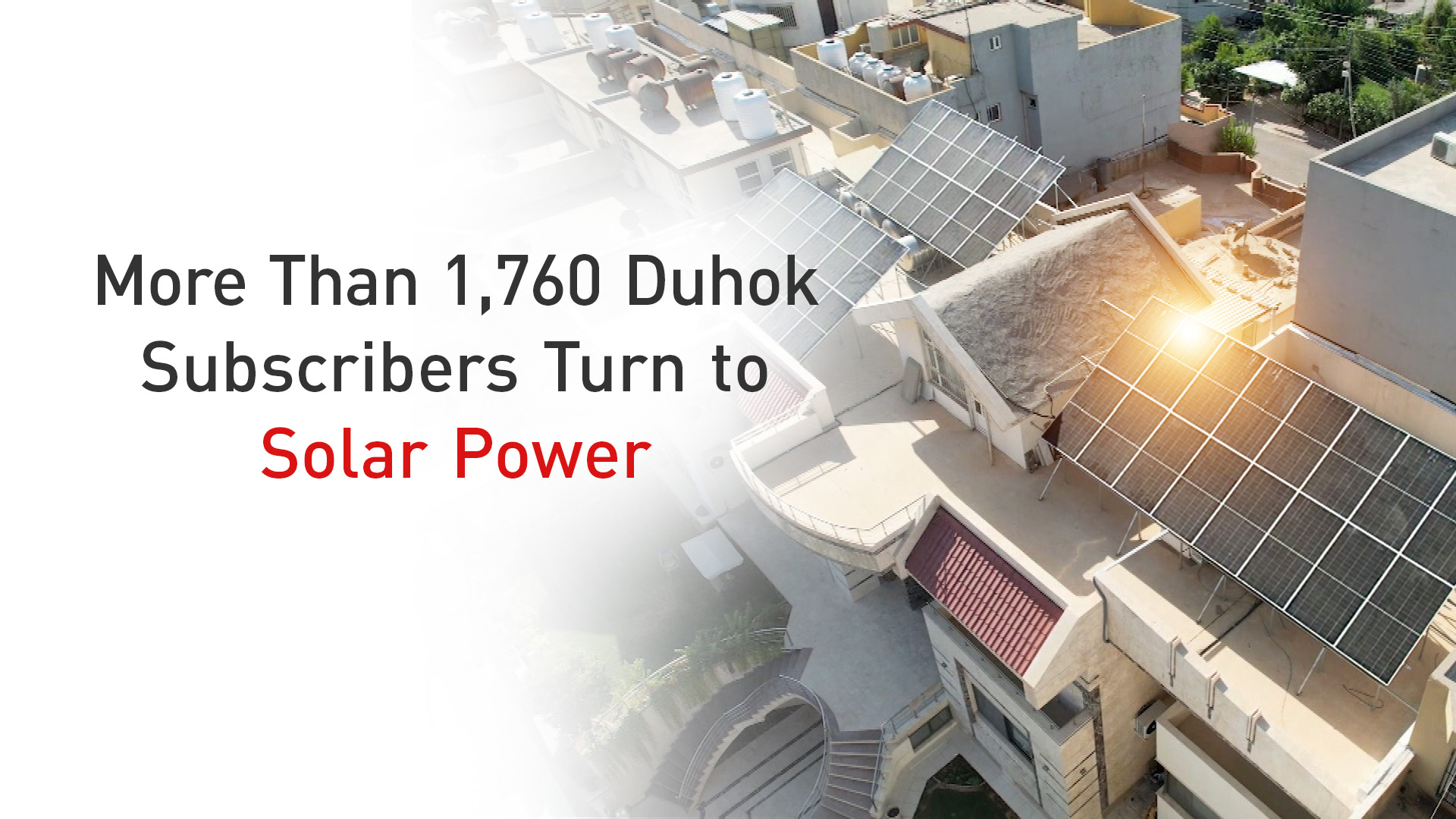
ERBIL (Kurdistan24) - More than 1,760 electricity subscribers in Duhok Governorate have installed solar energy systems with a combined generation capacity of approximately 22.4 megawatts, reflecting a sharp increase in the use of privately generated renewable power.
The figures, provided by Hazim Mohammed Hamayel, Director General of Electricity for Duhok Governorate, highlight the growing role of household and institutional solar systems in meeting local electricity needs while easing pressure on the power network.
Solar demand rises sharply
The expansion has been accompanied by a significant increase in demand for solar installations, according to local industry representatives.
Niwar Tahir, owner of a solar installation company in Duhok, said his business previously completed roughly one to three installations per month.
Since 2022, however, monthly demand has risen to between 15 and 30 installations, illustrating how quickly solar power has gained popularity among electricity consumers.
The increase has turned solar systems into an increasingly common option for subscribers seeking to generate part of their own electricity.
University of Duhok leads by example
The University of Duhok provides a prominent institutional example. It has been using solar power for four years and currently generates more than two megawatts through its solar installations.
Farhad Mustafa, head of the university's Maintenance Department, said the system is particularly valuable during peak electricity-demand hours, when the university's power requirements are highest.
Solar generation helps the university meet part of its electricity needs during those hours while reducing its operating costs, Mustafa explained.
The university's experience also demonstrates how solar power can be integrated into the operations of large institutions rather than being limited to individual households.
Solar eases pressure on grid
Hamayel said the more than 1,760 systems installed across Duhok collectively provide about 22.4 MW of private generation capacity. That capacity represents electricity being generated locally by subscribers rather than supplied entirely through the wider electricity network.
The official figures therefore point to a growing contribution from distributed solar generation across the governorate, while also supporting environmental objectives through greater use of renewable energy.
For consumers, the shift provides an additional source of electricity and can reduce operating costs, while for the network, privately generated power can help meet part of demand when solar production is available.
As adoption continues to expand, Duhok's electricity consumers are increasingly becoming small-scale producers as well, adding privately generated solar power to the governorate's overall electricity supply.
Kurdistan24's correpondent in Duhok Bewar Hilmi contributed to this report.