Ukraine Hits Ozon Warehouse as Drone Campaign Targets Russian Retailers
Ukraine struck an Ozon warehouse for a second day as Kyiv expanded its drone campaign from Wildberries to major Russian logistics infrastructure.
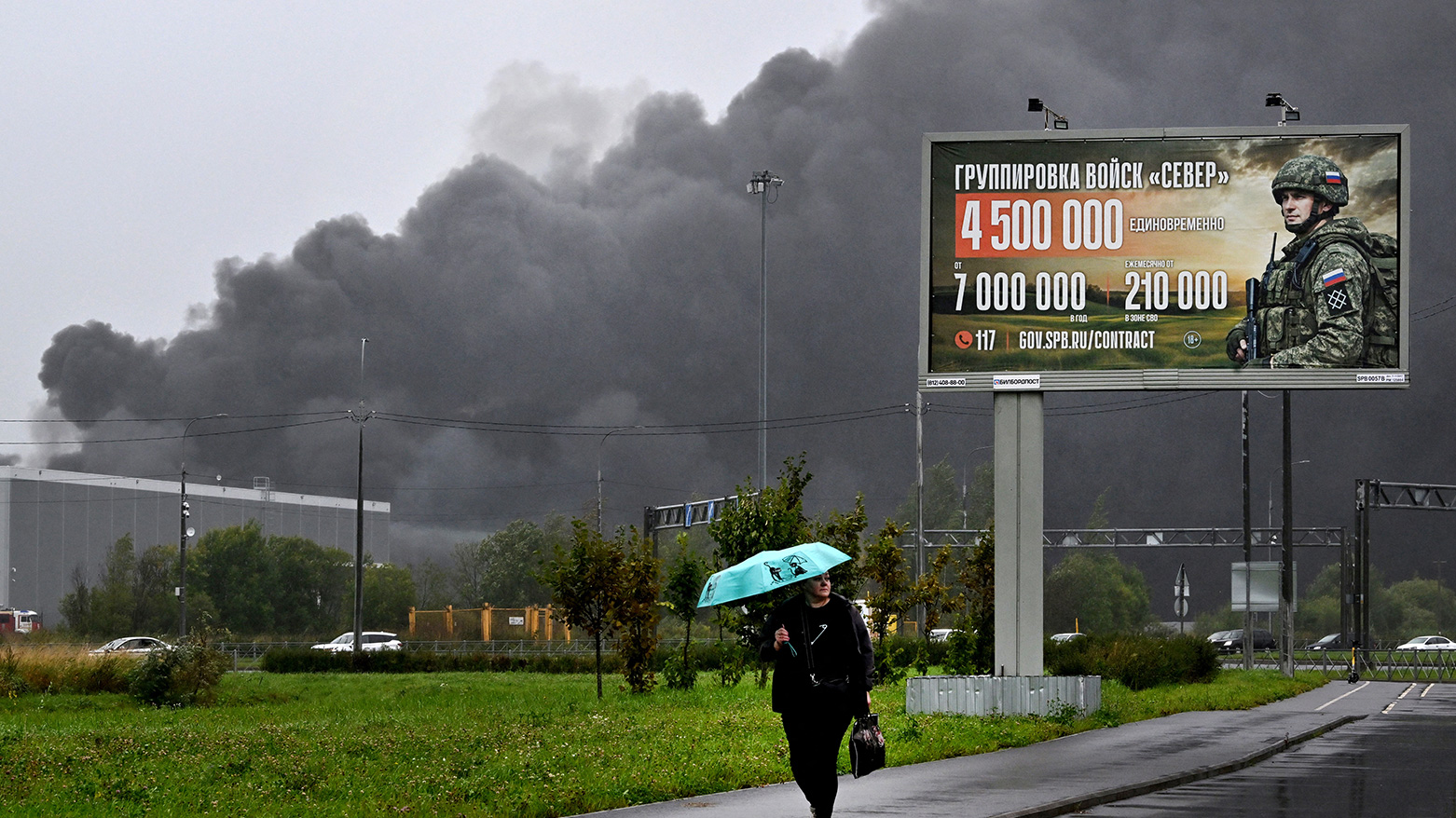
ERBIL (Kurdistan24) - Ukraine struck a logistics hub belonging to Russian e-commerce giant Ozon on Sunday for the second consecutive day, expanding a drone campaign that Kyiv says is aimed at major Russian distribution networks linked to the country's wartime economy.
A fire broke out at Ozon's warehouse in Russia's central Orenburg region following a drone attack, Agence France-Presse reported, citing the company.
"Operations at the warehouse are currently suspended," Ozon said.
The strike followed an attack Saturday on another Ozon facility in the neighboring Samara region, where the company said an unspecified number of employees were wounded.
A logistics center near an Ozon facility outside Saint Petersburg was also struck overnight, according to AFP.
Ukraine's military announced Saturday that Ozon had become the next focus of a campaign that previously concentrated on Wildberries, Russia's largest online retailer.
"After Ukrainian units hit the 15 largest logistics hubs of Wildberries, it is now Ozon's turn," Ukraine's Defense Ministry said.
The attacks mark a widening of Kyiv's long-range drone strategy beyond traditional military targets toward commercial logistics infrastructure that Ukraine alleges supports Russia's armed forces.
From Wildberries to Ozon
For several weeks, Ukrainian forces have targeted Wildberries facilities across Russia, accusing the company of helping supply components and other material to the Russian military.
Ukraine has now turned its attention to Ozon, the country's second-largest online marketplace.
Together, Wildberries and Ozon dominate large parts of Russia's rapidly expanding e-commerce industry. Their pickup points and delivery networks extend across the country, making the companies integral to the movement of consumer products over vast distances.
Both have sometimes been described as Russian equivalents of Amazon because of their scale and influence over online retail.
That extensive physical network also creates potential vulnerabilities.
Unlike heavily protected military bases, large warehouses and logistics centers are generally softer targets. Many contain substantial quantities of combustible consumer products, increasing the risk that relatively limited strikes can trigger major fires and extended operational disruption.
AFP reported that several Wildberries facilities previously targeted during the Ukrainian campaign were completely destroyed, with cumulative economic losses from attacks on logistics sites already running into billions of dollars.
Kyiv's strategy appears designed to impose costs beyond immediate battlefield damage by forcing Russian companies and authorities to repair or replace large distribution centers, strengthen defenses around civilian commercial sites and absorb interruptions to major supply networks.
Russian President Vladimir Putin publicly pledged government assistance to Wildberries on Wednesday, saying Moscow would help rebuild logistics facilities damaged in Ukrainian attacks.
The intervention demonstrated the economic significance of the targeted infrastructure and the growing visibility of Ukraine's campaign inside Russia.
Civilian infrastructure becomes another front
Moscow has condemned the attacks as strikes on civilian infrastructure.
The expanding targeting of commercial facilities raises broader questions over the increasingly blurred line between civilian economic networks and wartime logistics more than four years after Russia launched its full-scale invasion of Ukraine.
Ukraine has justified its campaign by alleging that logistics companies are involved in supplying Russia's military. The supplied AFP reporting does not provide independent evidence establishing the extent of Ozon's or Wildberries' involvement in military supply chains.
The attacks nevertheless represent another evolution in a war increasingly characterized by long-range drone operations far from the front lines.
Ukraine has developed drones capable of reaching targets hundreds of kilometers inside Russian territory, allowing Kyiv to strike industrial, energy and logistics infrastructure without relying exclusively on more limited inventories of Western-supplied long-range weapons.
Russia, meanwhile, continues missile and drone attacks against Ukrainian cities and infrastructure. The war, which began with Moscow's full-scale offensive in February 2022, has killed thousands of civilians and caused extensive destruction, particularly across eastern and southern Ukraine.
The escalation against Ozon comes as the conflict enters another politically sensitive period for Kyiv.
Ukrainian President Volodymyr Zelensky warned this weekend that holding national elections while the country remains at war could divide society, describing an election under current conditions as a major threat to national unity.
Ukraine has suspended elections under martial law, while the continuing Russian missile and drone campaign remains a central argument against holding a vote.
The debate illustrates how a war once concentrated primarily along conventional front lines now extends across military, political and economic spheres.
For Russia, the attacks on Wildberries and Ozon create a new challenge: protecting an enormous civilian logistics network distributed across multiple regions.
For Ukraine, the campaign offers a means of inflicting economic disruption on Russia while pressing its argument that commercial infrastructure supporting the broader war effort should not be considered insulated from attack.
Whether strikes on Ozon will reach the scale of the earlier Wildberries campaign remains unclear.
But the attacks in Orenburg, Samara and near Saint Petersburg indicate that Ukraine is following through on its declared intention to make Russia's second-largest online retailer the next target in its expanding campaign against logistics infrastructure.