Erbil-Koya Highway Bridge Marks New Phase in KRG 'Road Revolution'
Construction of the 250-metre Shorsh Bridge is advancing on the Erbil-Koya highway, a major project within the KRG's wider "road revolution."
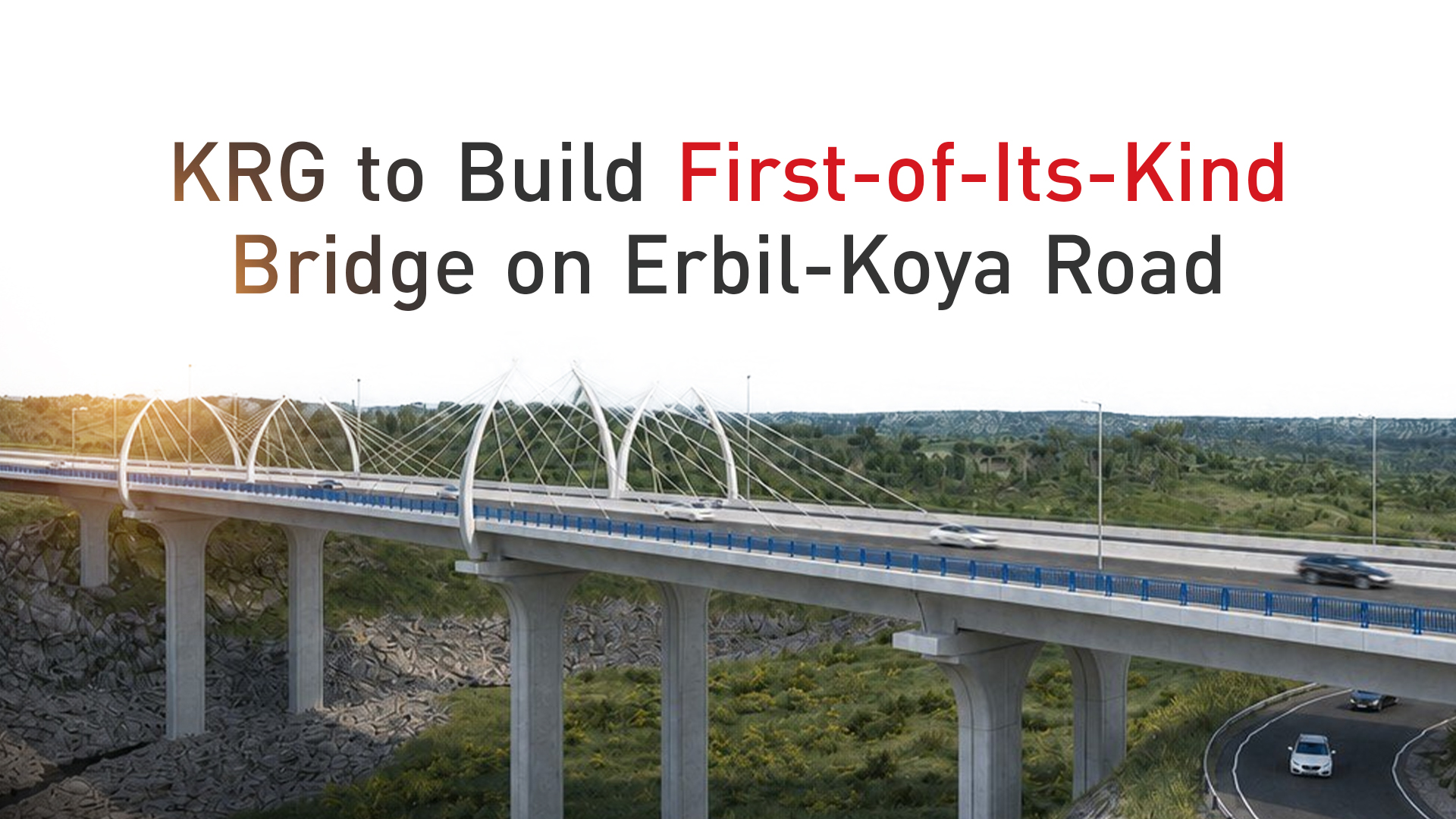
ERBIL (Kurdistan24) - Construction has begun on what Kurdistan Regional Government officials describe as the first bridge of its type in the Kurdistan Region and Iraq, adding a major engineering component to the Erbil-Koya highway as the KRG presses ahead with its broader program of road and transport infrastructure expansion.
The Shorsh Bridge is being built at the spillway of Degala Dam, near Kani Darband village, along the strategic Erbil-Koya corridor.
According to project information and a statement by Erbil Governor Omed Xoshnaw, the structure will extend 250 metres and carry both sides of the highway, with three lanes in each direction.
Its piers will rise 48 metres from ground level to their connection with the upper structure, while the span between two piers will reach approximately 80 metres.
Xoshnaw described the project as a landmark structure and said a bridge of this height and design had not previously been undertaken in the Kurdistan Region.
Contractor Awzan Company has begun driving the piles. The bridge will use a composite construction system, with concrete piers supporting steel upper girders.
The development places one of the Ninth Cabinet's most important intercity highways at the center of the KRG's wider infrastructure strategy, frequently described by government officials as a "road revolution" intended to improve connectivity, road safety, commerce and links between the Region's cities and rural areas.
Work has now extended across 30 kilometres of the Erbil-Koya project, with 22 kilometres paved, according to the latest information.
A strategic corridor takes shape
The Erbil-Koya road is designed to transform one of the principal routes linking the Kurdistan Region's capital with Koya and communities farther east.
Earlier reporting from the KRG Ministry of Construction and Housing described the overall project as a roughly 48.5-kilometre highway with an estimated cost of 683 billion Iraqi dinars.
Ministry representative Agrin Abdulla told Kurdistan24 in July that authorities expected the road to be completed and opened in 2028.
The new bridge adds a technically demanding section to that corridor.
Its location near the Degala Dam spillway requires the road to cross challenging terrain at considerable height, while the use of steel girders above concrete piers distinguishes the structure from more conventional road bridges used elsewhere in the Region.
Officials have also emphasized that the Erbil-Koya project contains multiple bridges and culverts rather than functioning simply as a widening and paving scheme.
The highway is one of several large intercity projects designed to form what the Construction and Housing Ministry has called the Kurdistan Region's primary "Road Artery" network, an effort to establish stronger connections between major urban centers while reducing travel times and improving the movement of goods.
Part of a wider road transformation
The scale of the program extends far beyond the Erbil-Koya corridor.
KRG figures released this year show that 810 road and bridge projects were completed between 2019 and 2026 under the Ninth Cabinet, covering approximately 3,055 kilometres of roads.
The government placed the combined value of those completed projects at around 1.057 trillion dinars.
The program has combined large strategic highways with smaller rehabilitation and maintenance schemes. According to official figures, 104 major investment projects accounted for approximately 1,599 kilometres of roads, alongside hundreds of locally focused projects financed through ministry budgets and revenues collected from commercial truck weigh stations.
Erbil has received some of the largest strategic road investments.
Separate projects currently underway include new connections between the capital's ring roads, while authorities are preparing further modernization of the Erbil-Pirmam corridor.
A 60-metre road linking Erbil's 120-metre and 150-metre roads is also under construction. The wider scheme is planned to reach 15 kilometres, with authorities presenting it as part of an effort to reduce congestion as the capital continues to expand.
Across the Kurdistan Region, other major projects include the Ba'adre-Duhok highway, the Koya-Shaqlawa road, the Dukan-Khalakan corridor and the road linking Warmawa with the Darbandikhan tunnel.
Government reporting has presented those projects as more than transport improvements.
Better roads are intended to connect agricultural areas to markets, reduce commercial transportation costs, improve access between cities and districts, and create infrastructure capable of supporting continued population and economic growth.
Road safety has also become part of the program. Since 2022, according to KRG figures, thousands of kilometres of road markings have been installed alongside traffic signs, guardrails, pedestrian crossings and other safety infrastructure.
Development despite fiscal pressure
The road-building program has proceeded against longstanding financial disputes between Erbil and Baghdad.
KRG officials say the Region has relied heavily on internal revenues to finance infrastructure because federal funding for service projects has been unavailable or inconsistent.
Abdulla said in July that the completed road projects under the Ninth Cabinet had been financed from the Kurdistan Region's own revenues and stressed the government's reliance on domestic contractors.
The broader program has also used revenue generated by truck weigh stations, with 30% of those receipts redirected toward road maintenance and infrastructure.
That financing structure has allowed construction to continue despite fiscal pressures, although official KRG reporting has acknowledged delays affecting some major projects.
The Shorsh Bridge now provides a visible example of how that strategy is moving from general road expansion into more complex engineering works.
Once completed, its importance will not rest solely on being 250 metres long or 48 metres high. The bridge will form part of a larger corridor intended to permanently reshape travel between Erbil and Koya.
In that sense, the structure represents the broader objective behind the KRG's "road revolution": moving from isolated road projects toward an interconnected transport network spanning the Kurdistan Region.
With 22 kilometres of the Erbil-Koya route already paved and construction now advancing on one of its most technically ambitious sections, the corridor is increasingly becoming one of the clearest physical expressions of that policy.