Canada Imposes $20 Billion in Retaliatory Tariffs on US Goods
Duties targeting clothing, cheese, metal parts, and wood products take effect Tuesday as Carney declares Canada "at war" and Trump threatens to halt bilateral trade entirely and ban Bombardier from the US market
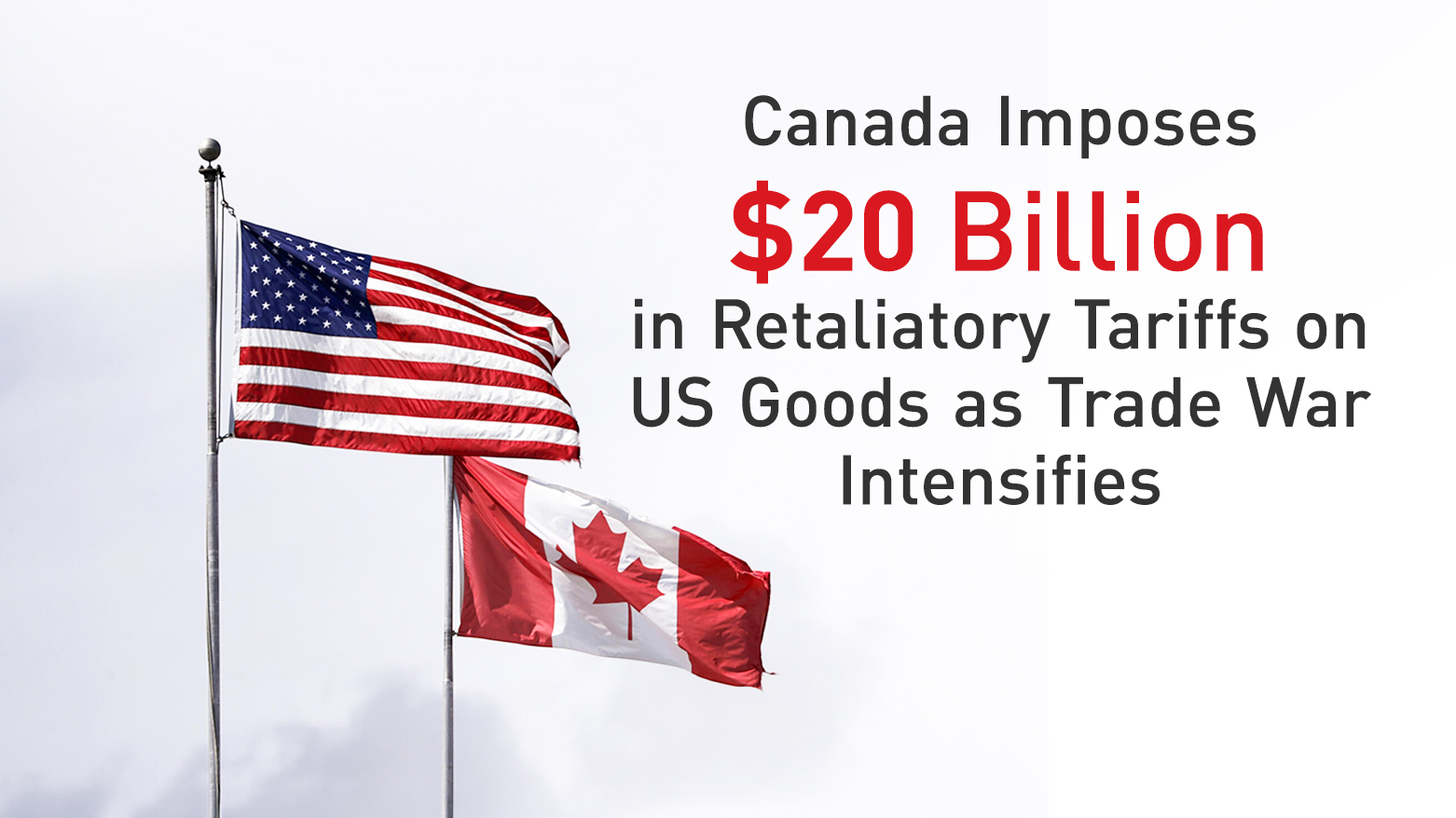
ERBIL (Kurdistan 24) - New Canadian tariffs targeting approximately $20 billion in US imports took effect on Tuesday, September 8, 2026, the latest escalation in an increasingly costly trade war between two longtime allies, as Prime Minister Mark Carney declared Canada is "at war" and President Donald Trump threatened to halt bilateral trade outright and ban Canadian plane manufacturer Bombardier from the American market.
The duties apply to a variety of US goods including clothing, cheese, metal parts, and wood products, as the New York Times reported on Tuesday. The approach is designed to mirror the taxes that Trump imposed on Canada after trade talks between the two neighbors collapsed in acrimony last month, following the breakdown of negotiations that Canadian officials had described as reaching a point of no return when Washington's final demands were judged to be uneconomic and unfair.
For now, the economic effects of the tit-for-tat may be limited because the tariffs encompass only a small portion of the annual trade between the United States and Canada, the two most deeply integrated adjacent economies in the world. The more pressing concern is a potential cycle of retaliation that results in even higher and more exhaustive duties that harm families and businesses on both sides of the border, with each round of escalation making a negotiated off-ramp harder to reach.
In Canada, Carney has sought to position himself as a bulwark against Trump's trade aggression, describing his nation as being at war economically with its southern neighbor and pledging to respond dollar for dollar to any US duties. Canadian officials have consistently maintained that posture throughout the escalation, with Ottawa's decision to match Washington's tariffs on approximately $20 billion in goods representing the most concrete implementation yet of that pledge.
In Washington, Trump and his aides have repeatedly mocked their Canadian counterparts and the size of Canada's economy and military. Trump has already threatened additional tariffs on auto imports from Canada, a sector that represents one of the most deeply integrated cross-border supply chains in North American manufacturing. On Friday, September 4, Trump even suggested he could try to halt bilateral trade outright, a declaration that if implemented would represent one of the most disruptive economic actions in the history of the US-Canada relationship.
Hours before Canada's new tariffs took effect on Tuesday, Trump took to social media to continue his attack, singling out Bombardier, the Canadian commercial aircraft and rail manufacturer, and declaring: "NO MORE SELLING BOMBARDIER IN THE UNITED STATES." The threat targets a company whose aircraft are widely used by regional and business aviation operators across America and whose supply chain is deeply embedded in both countries' aerospace sectors.
The US-Canada trade confrontation arrives at a moment of already severe disruption to global supply chains. The US-Iran war has effectively closed the Strait of Hormuz to normal commercial traffic since February 28, 2026, forcing shippers to seek alternative routes and pushing energy prices to multi-year highs. The addition of a retaliatory tariff barrier between the United States and its largest trading partner compounds a global trade environment already under historic strain from geopolitical disruption on multiple fronts simultaneously.