Nechirvan Barzani: Kurdistan’s Future Depends on Its People, Not Oil
The Kurdistan Region president urges graduates to drive economic diversification, strengthen institutions, embrace critical thinking, and turn diversity into a source of strength
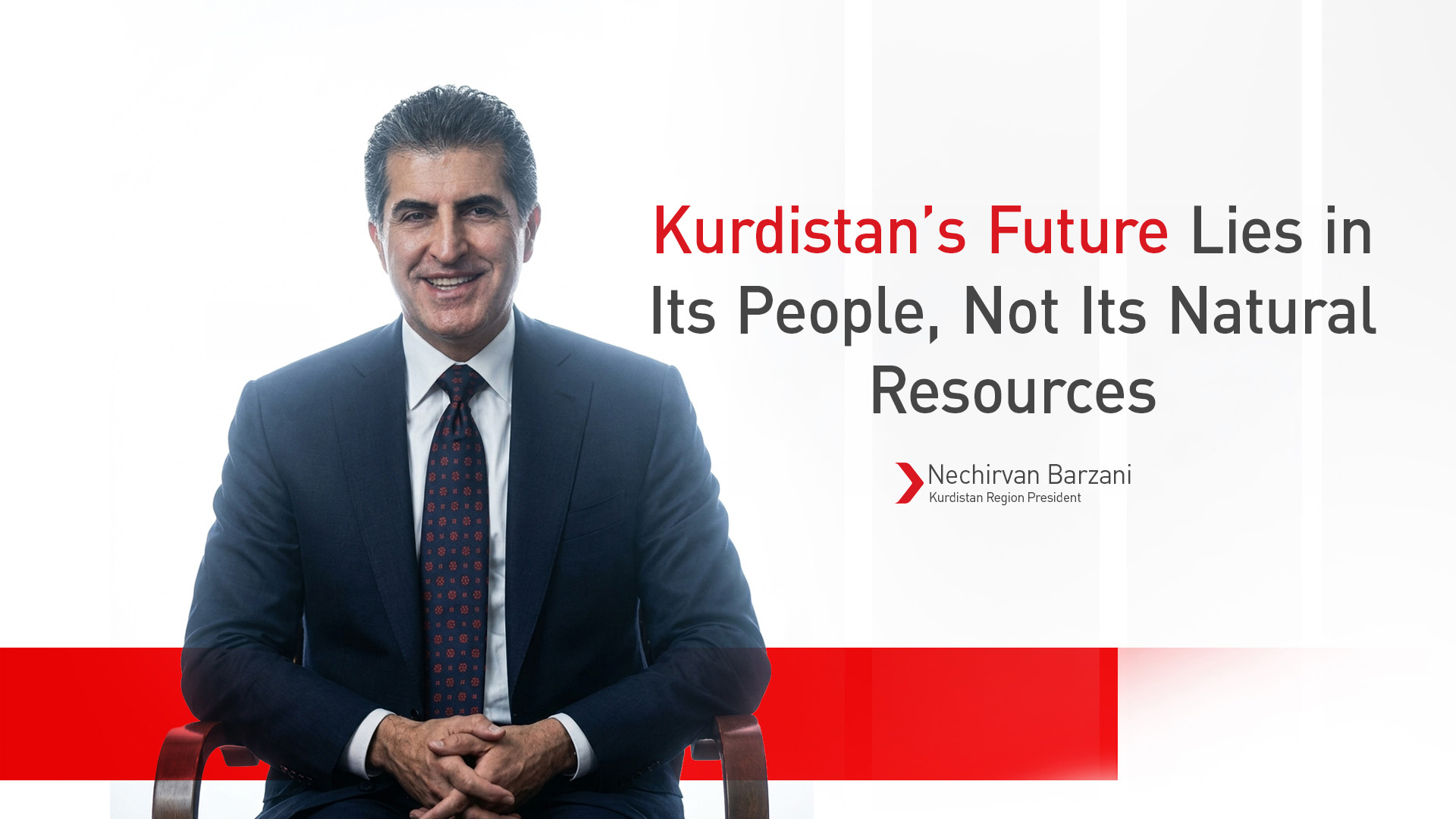
ERBIL (Kurdistan24) — Kurdistan Region President Nechirvan Barzani said on Saturday that the region’s future depends on the knowledge, creativity, and initiative of its younger generation rather than its natural resources, urging university graduates to take responsibility for building a productive economy and strengthening public institutions.
Speaking at the 15th graduation ceremony of the American University of Iraq, Sulaimani (AUIS), Barzani said the priorities facing the current generation differ from those confronting previous generations, which focused on protecting Kurdistan’s territory, identity, and freedom.
Today’s generation, he said, must focus on developing a strong, productive economy, making institutions more effective, correcting mistakes, and ensuring that Kurdistan and Iraq can compete in a rapidly changing world.
“Our future is not determined solely by natural resources,” Barzani told the graduates, emphasizing that the region’s most valuable assets are the intelligence, ideas, and initiative of its people.
He urged young people to move beyond expecting opportunities from the government and instead ask what they can contribute, which problems they can solve, and what projects they can create to generate opportunities for themselves and others.
“A homeland does not become greater by how much you take from it, but by how much you contribute to building it,” he said.
Critical Thinking and Institutional Reform
Barzani also highlighted the importance of independent and critical thinking, arguing that access to information has become easier but does not necessarily translate into deeper understanding.
He said universities should equip graduates with the ability to distinguish facts from claims and knowledge from opinion, question information freely, examine issues before reaching conclusions, and have the courage to acknowledge and correct their own mistakes.
He identified institutional reform and accountability as central challenges for the next generation, urging young people to help make institutions more effective and capable of addressing shortcomings.
Diversity as a Source of Strength
Addressing Iraq’s and the Kurdistan Region’s ethnic, cultural, and political diversity, Barzani said people do not need to be alike to live together and rebuild their country.
Differences of opinion, he argued, should not lead to division. Instead, he called on graduates to treat diversity as a source of strength and preserve channels of dialogue across communities.
Barzani pointed to the university experience, where students from different regions, cities, and cultural backgrounds study and work together, as an example of cooperation that Iraq needs more broadly.
He urged graduates to carry that spirit of dialogue beyond the university and help strengthen connections between different segments of society.
Technology, Artificial Intelligence, and Hope
Barzani acknowledged that young people face growing concerns over the future, including ongoing wars, climate change, rapid technological advances, and artificial intelligence.
While recognizing technology’s capacity to provide answers to many questions, he stressed that it cannot replace human judgment and decision-making.
Drawing on the Kurdistan Region’s experience, he said difficult circumstances should not be viewed as an unchangeable fate, emphasizing the importance of hope, perseverance, learning, and hard work in achieving change.
He encouraged graduates to confront reality honestly, believe in their ability to make a difference, preserve their Kurdish identity, and remain open to the wider world.
Barzani concluded by urging the next generation to combine hope with initiative, work, and responsibility, saying these qualities would be essential to shaping a stronger future for the Kurdistan Region and Iraq.