Kirkuk Council votes to hold referendum, call Iraqi PM to enact
After a majority vote on Tuesday, the Kirkuk Provincial Council (KPC) decided to hold a decades-delayed referendum to determine the future governance of the province.
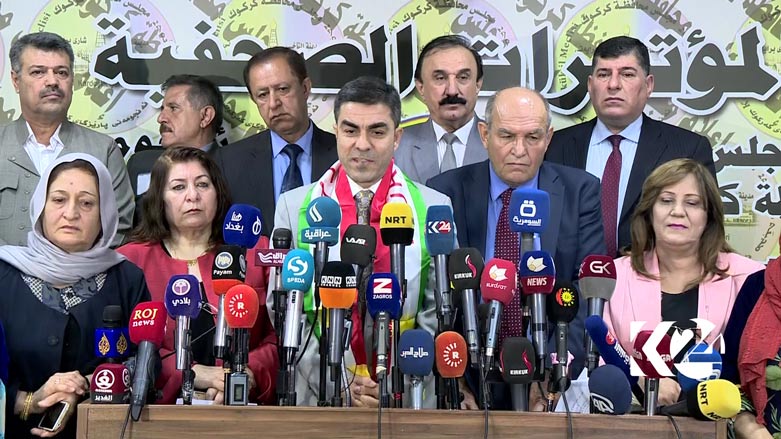
KIRKUK, Kurdistan Region (Kurdistan24) – After a majority vote on Tuesday, the Kirkuk Provincial Council (KPC) decided to hold a decades-delayed referendum to determine the future governance of the province.
“The people of Kirkuk are no longer patient to accept the delay of the referendum in the province,” the head of the KPC Rebwar Talabani said in a press conference following the vote.
The referendum is related to Article 140 of the Iraqi constitution which mentions a referendum should be held in Kirkuk no later than December 2007 to decide whether it is governed by the Kurdistan Region or Iraq.
The Kirkuk referendum has been in the plans of all Iraqi Prime Ministers since 2004, but they have not implemented it under different excuses, according to Talabani.
He also called on the Prime Minister of Iraq Haider al-Abadi, who has been referred to in Article 140, to enact the referendum in Kirkuk.
“It is our last message to the federal government of Iraq,” Talabani continued. “We will take legal measures if they do not implement it.”
In another part of the KPC meeting, boycotted by some Turkmen and Arab members, the Council rejected the decision of the Iraqi Parliament regarding the removal of the Kurdistan flag on state buildings in the province.
The Iraqi Parliament does not have the authority to cancel the decisions of the provincial councils, Talabani emphasized.
Kirkuk Province is an oil-rich area located in the south of the Kurdistan Region and north of Iraq.
Although Kurds make up a majority of the population, Kirkuk is a diverse region with different ethnic and religious backgrounds including Turkmen, Arabs, and Christians.
The Kirkuk referendum is being discussed at a time where the Kurdistan Regional Government (KRG) is also pushing toward self-determination to secede from the rest of Iraq.
Editing by Karzan Sulaivany