New Turkey decrees purge thousands
Others losing their jobs, consequently labor rights, and even passports were accused of supporting terrorism, separatism, working against national security and relations with groups such as the PKK.
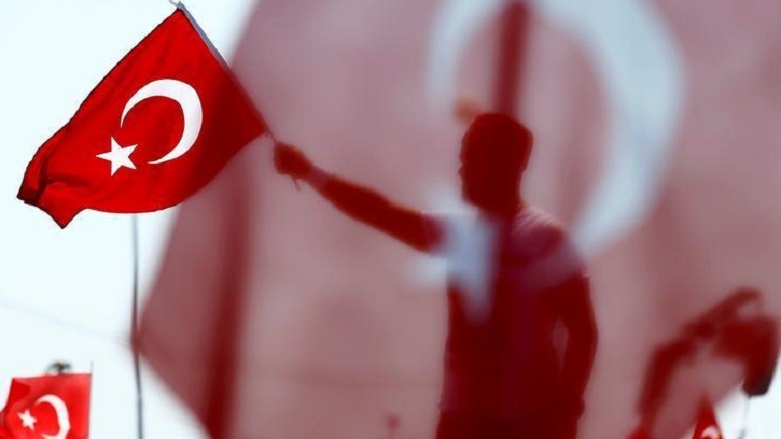
ERBIL, Kurdistan Region (Kurdistan24) – Turkey’s government issued three decrees on Friday night purging over 8,000 state employees from their jobs, shuttering scores of non-governmental organizations, and giving security forces and bureaucrats more powers.
The decrees were published in the state’s Official Gazette which appears online and is distributed to government agencies countrywide in print.
Fan clubs of seven sports teams were also ordered closure, among them those of Cizrespor and Sirnakspor, two teams from the Kurdish Sirnak Province.
Additionally, a total of 83 NGOs were shuttered on the grounds of allegiance with networks harmful to national security.
A twice-renewed state of emergency in place since the July 15 coup attempt against President Recep Tayyip Erdogan and the right-wing Justice and Development Party (AKP) had given authorities powers to execute decrees not enacted by the Parliament.
The majority of the sacked were from the nation’s police force, numbering about 2,600. Another 1,700 people fired were employees of the Justice Ministry.
Moreover, authorities dismissed some 830 medics and workers from the Ministry of Health.
A major blow was to the Turkish Army, a clique of which attempted the botched coup which Erdogan and his supporters blame on the US-based Islamic cleric Fethullah Gulen.
In line with previous mass purges that led to the end of thousands’ careers, 760 military officers from the ground, naval, and air forces were dismissed this time.
Academia was also not spared, as 631 academicians lecturing and researching at various universities saw their jobs terminated.
Private news websites reported that most of the lecturers told to leave posts were those who signed a petition a year ago calling for peace between Turkey and the Kurdistan Workers’ Party (PKK).
Other state employees targeted were of three dozen other institutions, councils, and ministries.
Apart from the alleged followers of Gulen, others losing their jobs, consequently labor rights, and even passports were accused of supporting terrorism, separatism, working against national security and relations with groups such as the PKK.
Decrees also brought new regulations to the media, social media, and citizenship.
Media outlets not abiding by mostly arbitrary, frequent gag orders by Turkey’s Radio and Television Supreme Council that monitors media faced the threat of cancellation of their broadcast licenses.
Since August, dozens of TV channels, radio stations, websites, national and local newspapers, and magazines had already been shut.
Police officers are also able to monitor activities of social media users more closely now.
Editing by Karzan Sulaivany