Shia cleric orders Hashd al-Shaabi faction to withdraw from Kirkuk
The order comes two days after twin bombings targeted PMF offices in the multi-ethnic city, one of them the Saraya al-Salam headquarters.
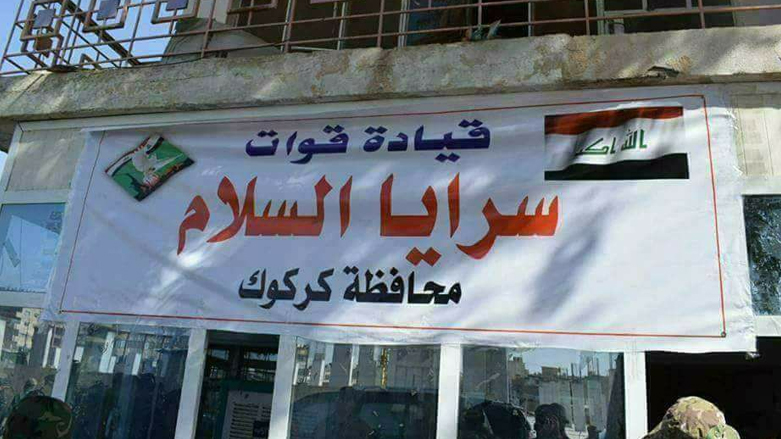
ERBIL, Kurdistan Region (Kurdistan 24) – The influential Shia cleric Muqtada al-Sadr on Tuesday ordered his brigade to shut down their office in Kirkuk and withdraw their forces within three days.
Saraya al-Salam, one of the militias operating within the Popular Mobilization Forces (PMF), also known as the Hashd al-Shaabi, was sent to Kirkuk by the Baghdad-based cleric during the October 16 assault.
The order comes two days after twin bombings targeted PMF offices in the multi-ethnic city, one of them the Saraya al-Salam headquarters, which left several dead and many more wounded.
The Shia militia, which answers directly to Sadr despite being a part of the Hashd al-Shaabi, was occupying a former Kurdistan Democratic Party (KDP) office in Kirkuk as Iranian-backed paramilitary groups took over.
In a handwritten statement, Sadr decreed that “Peace Brigade” should “not be present in Kirkuk province,” and that all of their headquarters should be “closed immediately and within 72 hours.
He added that the security situation in Kirkuk should “gradually” be handed over to Iraqi security forces exclusively.

The measure stands in contrast to calls by the Baghdad-appointed Governor of Kirkuk who urged the federal government to send volunteer units to help the provincial security apparatus.
The blasts were the first such incidents since the Oct. 16 assault led by Iranian-backed Shia militias and Iraqi forces. No group has yet claimed responsibility for the attacks.
Several factions of the Iranian-backed Hashd al-Shaabi are still stationed in Kurdish parties’ headquarters throughout the city, something the Head of the Kirkuk Provincial Council Rebwar Talabani criticized over the weekend.
“Shia security authorities spread around Kirkuk are openly recruiting new members and opening the door for volunteers, just as they have previously done in Baghdad, Fallujah, Diyala, and Anbar,” he stated.
Talabani said the neighborhoods have been divvied up between Shia factions within the Hashd al-Shaabi and asserted Kirkuk was now suffering from a campaign led by the Iranian-backed militia to transform the diverse province into a Shia stronghold.
As of Nov. 2, over 183,000 civilians have been displaced since the attack, most of them Kurds, with 79,000 people having fled the city of Kirkuk according to the UN’s Humanitarian Coordinator in Iraq.