Turkish assault on Afrin has caused 'Operational Pause' in fight against IS in Syria
Pentagon officials on Monday confirmed that Turkey's assault on the Kurdish canton of Afrin in northwest Syria has led to a temporary suspension of ground operations against the Islamic State (IS) in Syria, although coalition air strikes continue.
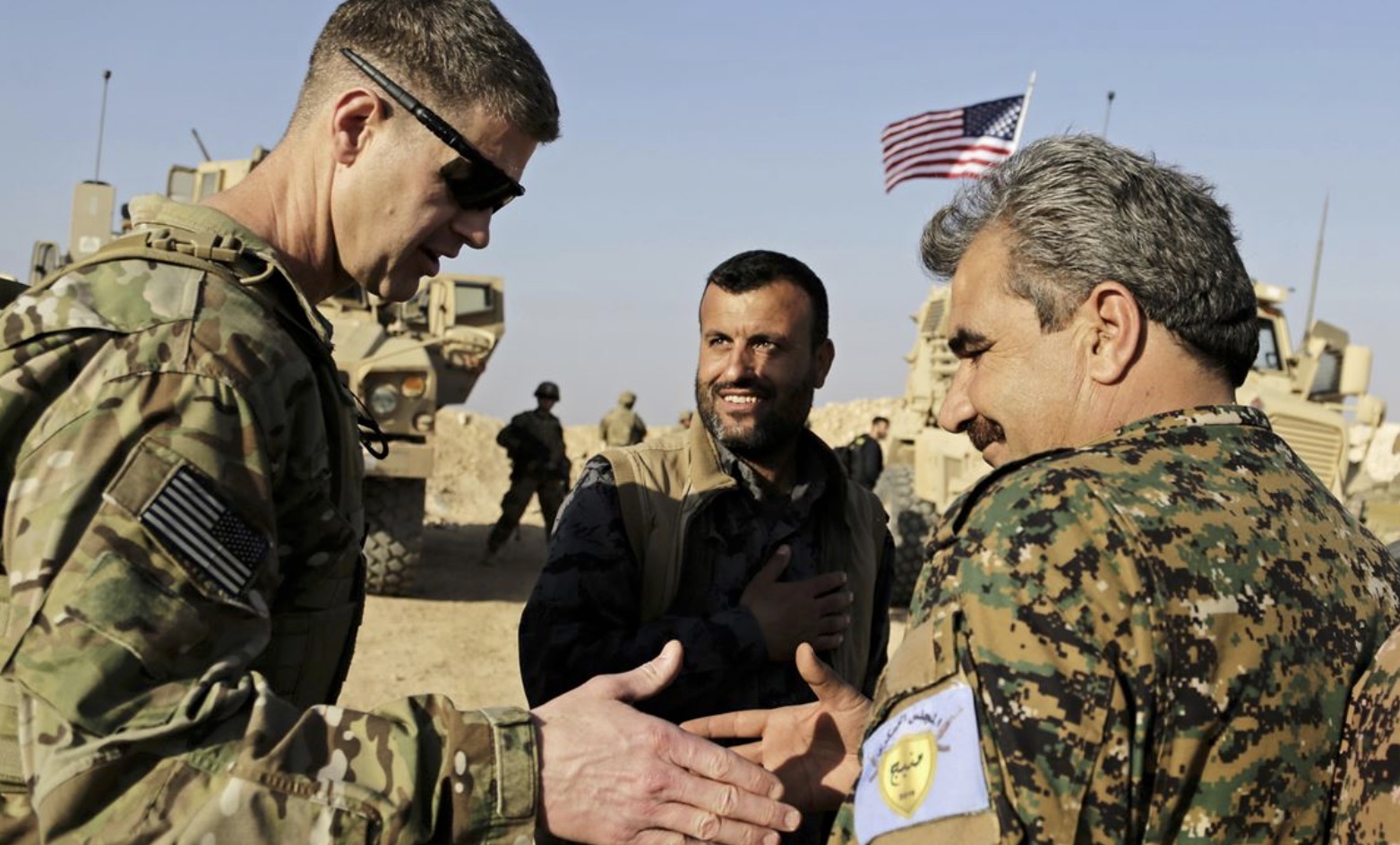
WASHINGTON DC, United States (Kurdistan 24) – Pentagon officials on Monday confirmed that Turkey’s assault on the Kurdish canton of Afrin in northwest Syria has led to a temporary suspension of ground operations against the Islamic State (IS) in Syria, although coalition air strikes continue.
A significant number of fighters in the Kurdish-led Syrian Democratic Forces (SDF) have left their positions in the middle Euphrates River Valley and gone to defend Afrin, which has been under Turkish attack since Jan. 20, and to Manbij, which Ankara has also threatened.
Responding to a question from Kurdistan 24, Col. Rob Manning, Director of Press Operations at the Pentagon, acknowledged that the Turkish attack had led to an “operational pause.”
However, Manning dismissed its significance, saying that “operational pauses occur regularly for a variety of reasons.”
“We are still focused on [IS],” Manning said, and “the SDF are our major partner in our ability to do that.”
“We will continue to support Gen. Mazloum and the local Syrian military in those liberated areas,” he continued.
US officials have long said that the US will maintain its support for the SDF, despite objections from Ankara, which calls its Kurdish component, the People’s Protection Units (YPG), a terrorist organization.
However, this was the first time that they expressed support for the Kurdish commander personally.
Last week, The New York Times reported that Turkey’s assault on Afrin had put “in jeopardy” coalition gains against IS in Syria. Although Arabs account for the majority of the SDF force fighting IS in the middle Euphrates River Valley, the extremist group’s last stronghold in Syria, the Kurds “have taken on a disproportionate role in front line fighting and command skills,” according to US officials.
The Times reported that as many as 20,000 Kurdish fighters had left for Afrin and Manbij, although Pentagon officials said they were unable to give any specific number.
Following Manning’s briefing, the Pentagon distributed a statement explaining that Afrin did not fall within the area of coalition operations and “any military efforts outside those specifically focused on defeating [IS] do not, and will not, receive coalition support.”
“The armed Kurdish groups native to Afrin are not defeat-[IS] coalition partners,” it said.
However, the statement was silent on Manbij, which the coalition commander, Gen. Paul Funk, has vowed to defend.
The Pentagon statement affirmed that all weapons provided by the US were to be used only against IS.
“Whenever possible, our advisors will monitor the use of the weapons and supplies we give the Kurdish elements of the SDF, ensuring use only against [IS],” it stated.
Of course, the US is not the only possible source of weapons for the YPG in Afrin. Other parties could be supplying them arms, including regional players, as well as Russia.
“Moscow is playing the role of arsonist and firefighter – fueling the conflict in Syria between the Syrian Regime, YPG, and Turkey, then claiming to serve as an arbiter to resolve the dispute,” Gen. Joseph Votel, CENTCOM Commander, told a Congressional committee last week.
In response to another question from Kurdistan 24, Manning dismissed reports that the US is considering replacing its use of Turkey’s Incirlik Airbase with a facility in the Kurdistan Region or Syrian Kurdistan, because of the recent deterioration in relations between the US and Turkey.
A Turkish delegation is due in Washington later this week for technical talks to resolve disagreements between the two countries. Syria is the first issue on the agenda.
Editing by Karzan Sulaivany