KRG, Iraq election commission officials stress need for international observers
An official of the Kurdistan Regional Government (KRG) and also Iraq's Independent High Electoral Commission (IHEC) both called for substantial participation by international observers in upcoming parliamentary elections.
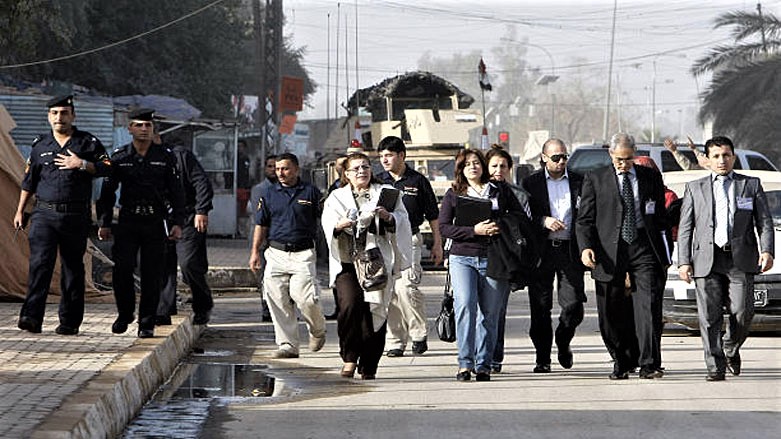
ERBIL (Kurdistan 24) – Officials from the Kurdistan Regional Government (KRG) and Iraq's Independent High Electoral Commission (IHEC) both called for substantial participation by international observers in upcoming parliamentary elections.
The voting will be held on May 12 across the country, including the four provinces of the Kurdistan Region, and will be the fourth national election since the 2003 fall of the previous regime.
In a statement released on Wednesday by the KRG Department of Foreign Relations (DFR), Minister Falah Mustafa, emphasized the need for the crucial role played by "a large number of international observers and international media agencies to monitor the process closely."
He also said that the DFR will cooperate and coordinate with foreign offices, international agencies, and KRG representatives to provide the facilities for those interested in election monitoring.
Head of IHEC's Kurdistan Region Section Mazin Abdulqadir also stressed "the need to register the international teams... to monitor all stages of the electoral process."
Abdulqadir also spoke of the substantial role "that media can play in disproving... [false] advertisements for the election campaigns," and appraised Mustafa on the progress of Iraq's new system of bio-metric voter registration.
Mustafa expressed the readiness of the DFR to work with the electoral commission to serve the goal of a successful and peaceful election process.
On Thursday, IHEC announced that 6986 candidates have been certified to run in next month's elections, competing for 329 seats in Baghdad's parliament.
In Iraq's last election, held in April 2014, the State of Law Alliance of former Prime Minister Nuri al-Maliki won a majority of votes but fell short of an absolute majority, which resulted in Haider al-Abadi taking the nation's top political position.