Iraqi PM office denies threats to electoral commission members in Kirkuk
In a statement released on Thursday, Iraqi Prime Minister Haidar al-Abadi denied the existence of death threats previously claimed by two members of Iraq's electoral commission in Kirkuk following Saturday's national parliamentary elections.
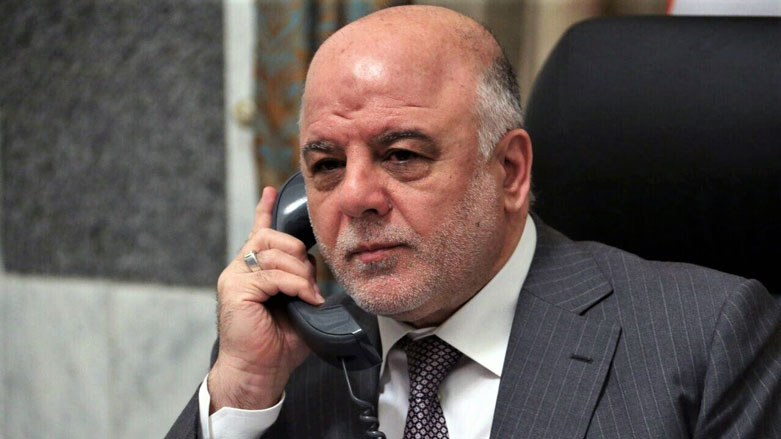
ERBIL (Kurdistan 24) – In a statement released on Thursday, Iraqi Prime Minister Haidar al-Abadi denied the existence of death threats previously claimed by two members of Iraq's electoral commission in Kirkuk following Saturday's national parliamentary elections.
The statement, released on the website of Abadi's office, was an apparent attempt to project an image of order and security. It complained that "the security services did not receive any notice of a threat before being announced in the media," and described how the prime minister "immediately investigated" the threats by calling the individuals named.
The two members of the Kirkuk offices of the Independent High Electoral Commission (IHEC) who claimed to have been threatened are Mohammed al-Moussawi and Saeed Kakayi.
"Al-Moussawi told us on a phone call made to him on 17/5/2018 that there is no threat, but there is a media campaign in one of the satellite channels, and he also did confirm that local security forces were providing him with adequate protection."
Regarding Kakayi, the other member, the original IHEC statement said that both he and his family were threatened with death by “a losing political party," and that he "was ordered to choose between resigning and appearing before the media to serve the purposes of that party."
According to Abadi's office, "we also contacted him, on 17/5/2018 and he also did stress the absence of any threat to him or his family," and went on to note that electoral centers in Kirkuk were adequately secured by Iraq's counter-terrorism services.
The statement concluded, "We do ask the Electoral Commission be careful and it should be cautious in publicizing information in order not to cause confusion about the security situation, especially in this sensitive period."
After the election, ethnic Turkmen from Kirkuk began to protest the unofficial results of the polls and gathered around the IHEC office in Kirkuk, causing political officials to call upon the prime minister to send forces to ensure the safety of commission staff.
On Tuesday, Abadi announced that it was IHEC's responsibility to conduct a manual recount to determine accurate results, citing high-profile charges of vote tampering in Kirkuk, a multi-ethnic province that is part of Iraq's disputed territories.
According to preliminary figures released by IHEC, the prime minister did poorly in the election, with his Al-Nasr Alliance trailing behind the party of surprise victor cleric Muqtada al-Sadr and that of militia leader Hadi al-Amiri, which came in second.