PUK demands Iraqi forces work with Peshmerga as Kirkuk security spirals
The Patriotic Union of Kurdistan (PUK) warned on Tuesday of the re-emergence of the Islamic State (IS) in the disputed province of Kirkuk, charging that the federal government of Iraq and its security forces, unable to provide sufficient security, needed to cooperate with Kurdish forces.
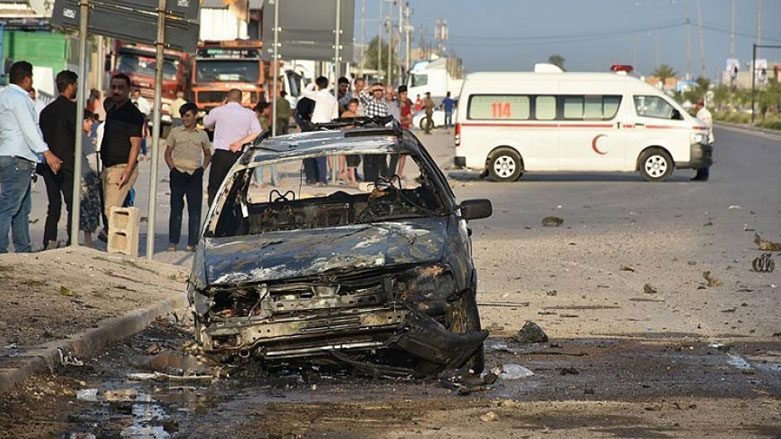
ERBIL (Kurdistan 24) – The Patriotic Union of Kurdistan (PUK) warned on Tuesday of the re-emergence of the Islamic State (IS) in the disputed province of Kirkuk, charging that the federal government of Iraq and its security forces, unable to provide sufficient security, must cooperate with Kurdish forces.
In a statement received by Kurdistan 24, the PUK office in Kirkuk said, “We clearly inform the concerned parties that the terrorist activities of Da’esh (IS), such as public and secret executions and the kidnapping of citizens, have been on the increase for some time in the disputed territories in general and the province of Kirkuk in particular.”
Oil-rich and ethnically-diverse Kirkuk is prominent among several areas claimed by both the Kurdistan Regional Government (KRG) and the federal government of Iraq.
Soon after the emergence of IS in 2014, the Kurdistan Region’s Peshmerga and other security forces protected most of Kirkuk from attacks by the jihadist group. Following the region's controversial independence referendum held in September, Iraqi forces and Shia militias drove Kurdish forces from Kirkuk and other disputed territories.

Since then, the security situation has deteriorated considerably, with IS activities on the rise, including ambushes, kidnapping, suicide attacks, and execution-style killings.
“Hereby, we warn you that the protection and safety of citizens in this area [Kirkuk] is in the responsibility of the central government [Baghdad] and these armed forces [Iraqi forces] that currently are in charge of the security of the area,” the PUK stressed.
The PUK views Kirkuk as its stronghold and won six out of Kirkuk’s total 13 seats for the Iraqi parliament in the contested May 12 parliamentary election there, according to initial results. Iraq's Supreme Court ordered a full recount of votes on Thursday after widespread claims of electoral fraud.
Nationwide, the PUK was announced to have won 18 seats in the Iraqi Parliament, becoming the second largest Kurdish party in Iraq following the Kurdistan Democratic Party (KDP) that presumably won 25 seats, the upcoming recount notwithstanding.
The Kurdistan Region Presidency and multiple Kurdish parties have accused some leaders within the PUK of cooperating with Iraqi forces and Shia militias in the takeover of Kirkuk, labeling the attack as “the treason of Oct. 16," named for the day it occurred.

Since the attack, the PUK has not commonly voiced public concerns about the security in the province, but in recent weeks, party officials in the province have become more vocal in their complaints against Iraqi forces there as security continues to spiral.
“This situation tells us that the security forces and Iraqi army cannot protect and provide security to people in Kirkuk and other disputed territories,” the PUK statement continued.
The party also called on the KRG to step up efforts, as a national and moral duty, to prevent any “humanitarian catastrophe” from happening in the area, although it no longer has control over the province.
In the statement, the PUK called on the “Iraqi government and the KRG, in cooperation with the UN, to agree on creating a joint force made from Peshmerga, Iraqi army, and [other] security forces, to protect people in our areas.”
The demand echoed a previous one made by a PUK member in the Kirkuk Provincial Council (KPC) on Wednesday, which also called for the establishment of such a "joint operations command."
At the end of Tuesday's PUK statement, the party threatened to take "other measures" if Iraqi forces are not soon able to resolve the province's security issues.
“If a quick and permanent solution is not found for protecting the people [in Kirkuk],” the PUK will use people’s pressure as leverage, as well as combating any threats.
Recently, Shakhawan Abdulla, a Kurdish lawmaker from Kirkuk in the Iraqi Parliament, told Kurdistan 24 that an important part of the problem is that the Iraqi forces brought to Kirkuk from outside the province have different ethnic and religious backgrounds.
“When a foreign force,” unguided by locals, takes the task of providing the security of a region “they can’t protect it,” he said.
Editing by John J. Catherine