U.S. Warns Iraq: Dismantle Iran-Aligned Militias or Face Consequences
The U.S. State Department demanded the Iraqi government to immediately dismantle Iran-aligned militias, warning that continued political and financial cover for these groups adversely impacts bilateral relations.
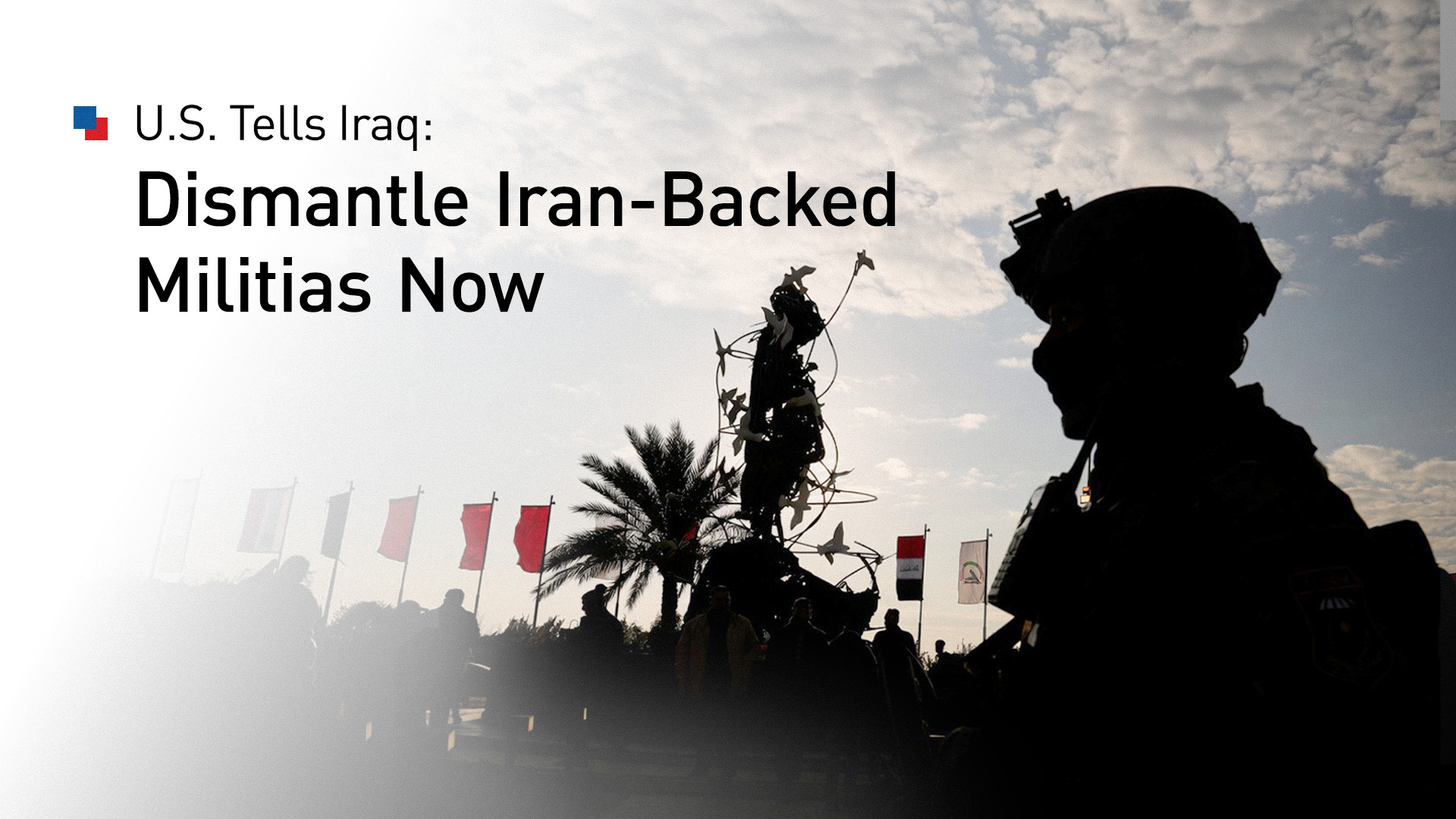
ERBIL (Kurdistan24) - The U.S. State Department issued a fresh and stern warning to the Iraqi government, emphasizing the necessity of immediately disbanding Iran-affiliated militias.
In a direct policy declaration on Sunday, State Department spokesperson Tommy Pigott responded to inquiries from Kurdistan24 by highlighting severe concerns regarding Baghdad's inability to secure its territory.
He stated that although Washington is aware of the Iraqi security forces' efforts to repel terrorist attacks, the Baghdad government's continuous failure to prevent these attacks is a matter of deep concern.
The spokesperson openly accused certain factions within the Iraqi government of enabling these armed groups.
"While we acknowledge the efforts of Iraqi Security Forces to respond to terrorist attacks by Iran-aligned militia groups, we continue to emphasize that the Iraqi government's failure to prevent these attacks while some elements associated with the Iraqi government continue to actively provide political, financial, and operational cover for the militias adversely impacts the U.S.-Iraq relationship," Pigott stated.
Pigott emphasized the absolute requirement for immediate structural action in another part of the statement, stating, "The United States will not tolerate attacks on U.S. interests and expects the Iraqi government to immediately take all measures to dismantle the Iran-aligned militia groups in Iraq."
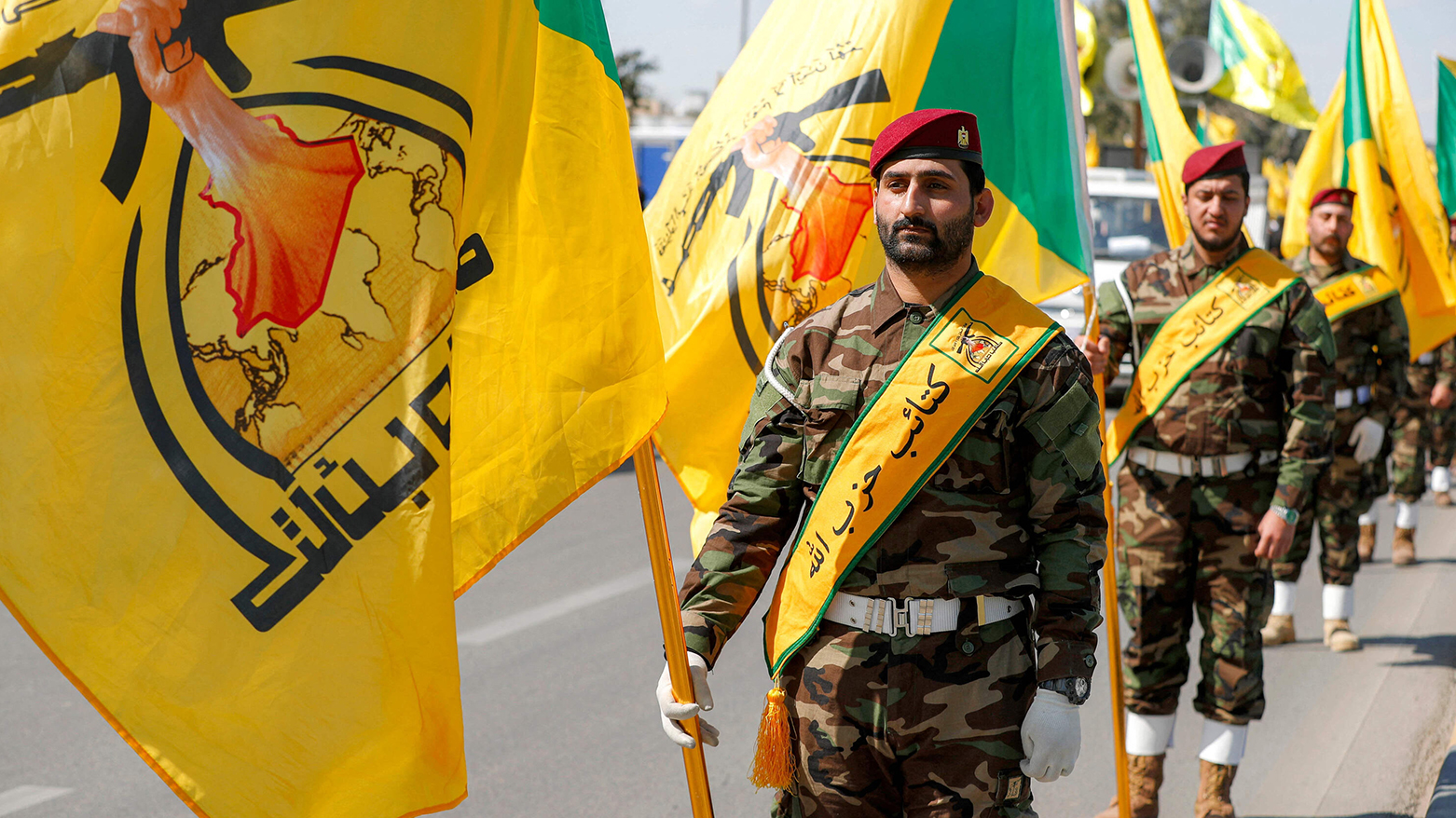
This unambiguous demand from the US State Department arrives as Iraqi militias and armed groups supported by Iran have carried out daily attacks on the US embassy, consulates, and military bases in the Kurdistan Region and Iraq since the outbreak of the regional war in late Feb. 2026.
While a ceasefire in the broader conflict has been announced, these armed groups continue to issue threats that if Iran is attacked again, they will strike US interests in the Kurdistan Region, Iraq, and neighboring countries even more severely than before.
Financial Pressure and Blocked Cash Shipments
The demand to dismantle the militias aligns with an aggressive U.S. financial pressure campaign directed at the Iraqi government.
According to a recent Wall Street Journal report late last Tuesday, the United States has blocked a cargo plane carrying nearly $500 million in U.S. banknotes, proceeds from Iraqi oil revenues held at the Federal Reserve Bank of New York.
Washington has simultaneously suspended standard dollar shipments to Iraq as a coercive measure to compel action against the Iran-aligned factions.
The blocked shipment marks the second such delay since regional hostilities erupted in late February.
In addition to restricting physical currency transfers, U.S. officials indicated that Washington has suspended funding for specific counterterrorism and military training programs until the attacks cease and Baghdad takes decisive action to dismantle the militias.
These fiscal disruptions leverage a mechanism established in 2003, wherein Iraq's oil revenues are largely held in accounts at the New York Fed and transferred to Baghdad in cash to sustain its domestic economy.
Despite the delays, the Central Bank of Iraq released a statement asserting it continues to meet domestic demand for U.S. currency without facing immediate shortages.
Militia Conditions and Expanding Threats
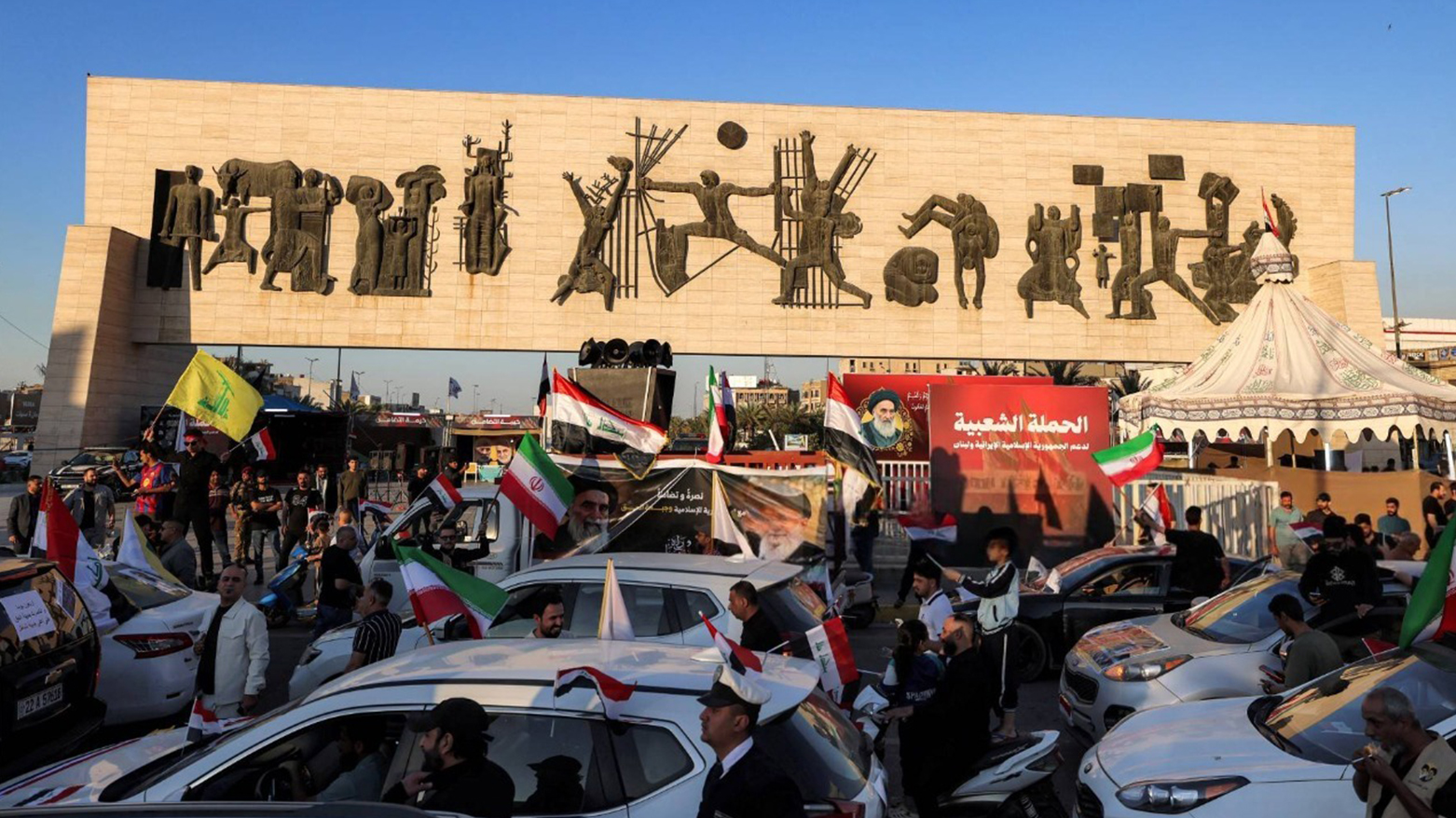
The targeted armed groups have responded to the pressure with explicit conditional threats.
Iraq's powerful Kata'ib Hezbollah issued a sharply worded statement calling for expanded coordination among "resistance" factions and outlining terms tied to the security of American diplomatic facilities.
According to Kata'ib Hezbollah, there had been an understanding with an Iraqi mediator based on the principle of "security for all or security for none."
The militia declared that the safety of the U.S. Embassy in Baghdad, referred to by the group as "Camp Tawhid," would depend entirely on a halt to strikes targeting residential areas in Iraqi provinces.
The group further announced its intent to dismantle what it characterized as "occupation" security structures in Iraq, disarm them within "safe cities," and terminate their influence across government institutions.
Demonstrating regional ambitions, Kata'ib Hezbollah also issued warnings toward the State of Kuwait, cautioning Kuwaiti authorities to "beware the wrath of the patient one" amid the broader war involving Iran.
The continuous vulnerability of U.S. diplomatic infrastructure was starkly demonstrated during the recent release of abducted U.S. journalist Shelly Kittleson.
As Kittleson was leaving Baghdad International Airport after being released by Kata'ib Hezbollah, a drone fell at least 50 meters from the U.S. diplomatic convoy escorting her, according to an Iraqi security official who spoke to Agence France-Presse (AFP).
The incident occurred within the grounds of the airport's diplomatic support zone, which the official noted was targeted by three drones that day.
Sanctions and Targeted Bounties
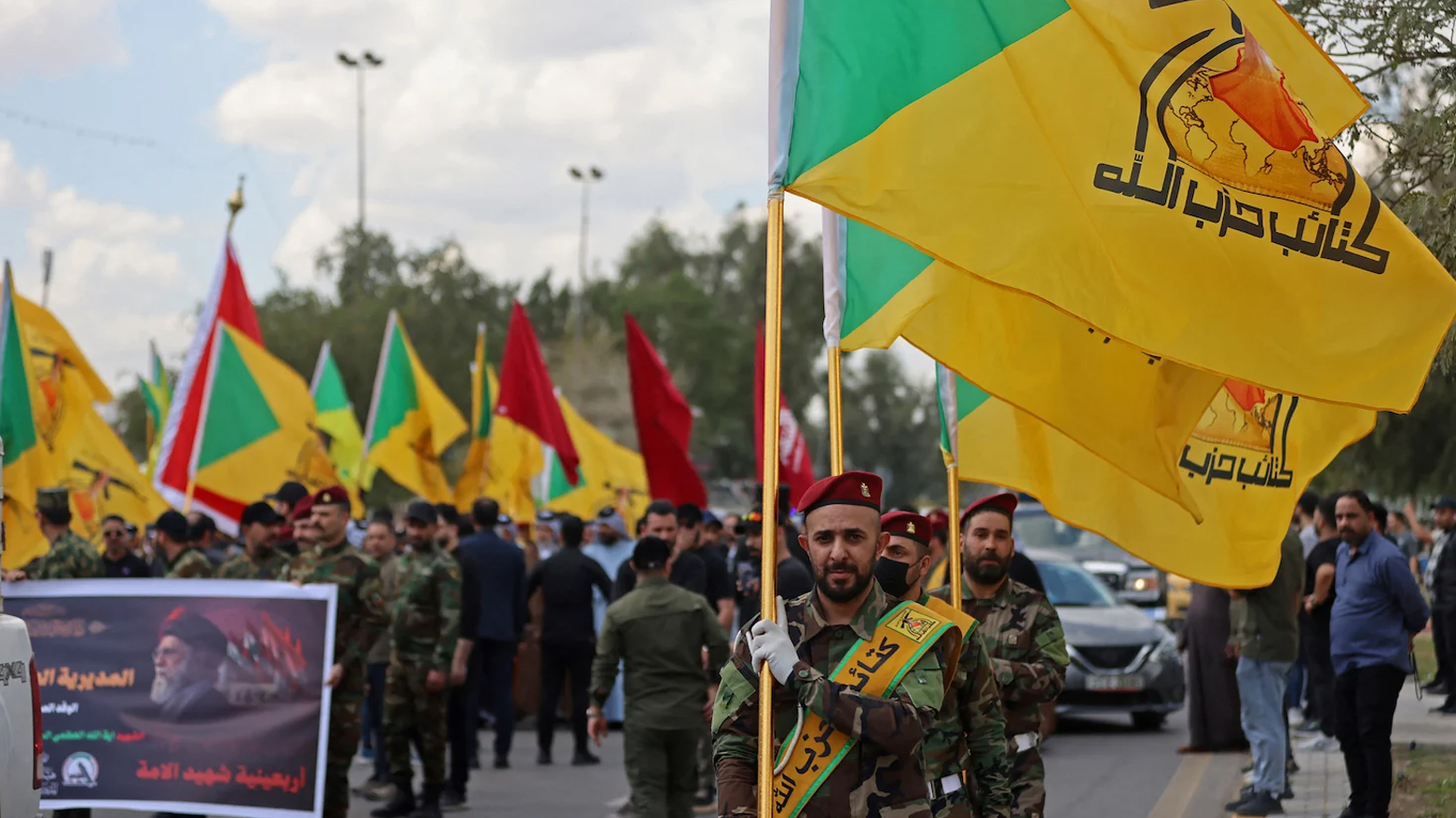
To systematically degrade the leadership of these organizations, the United States has launched coordinated economic enforcement actions.
The U.S. Department of State's Rewards for Justice program announced a financial reward of up to $10 million for information leading to Hashim Finyan Rahim al-Saraji, the leader and Secretary General of Kata'ib Sayyid al-Shuhada, who operates under the alias Abu Ala al-Wala'i.
The State Department notice asserted that Kata'ib Sayyid al-Shuhada, described as an "Iran-aligned terrorist group," has killed Iraqi civilians and executed targeted attacks against United States diplomatic facilities and military personnel deployed across Iraq and Syria.
This bounty was preceded by sweeping financial sanctions implemented by the U.S. Department of the Treasury's Office of Foreign Assets Control on Apr. 17.
The sanctions targeted seven commanders from Kata'ib Sayyid al-Shuhada, Kata'ib Hezbollah, Harakat al-Nujaba, and Asa'ib Ahl al-Haqq.
U.S. Treasury Secretary Scott Bessent stated that the United States would not allow the militias to threaten American lives, warning that "Those who enable these militias' violence will be held accountable."
The Treasury sanctions block all property and interests belonging to the designated individuals within U.S. jurisdiction and expose foreign financial institutions to severe secondary sanctions if they facilitate significant transactions on behalf of the designated commanders.
Political Deadlock and Iranian Influence
The escalating U.S. pressure occurs amid a profound political stalemate within Iraq's ruling Shiite Coordination Framework, which is struggling to select a new prime minister before a critical constitutional deadline.
The political impasse centers on an intense rivalry between incumbent Prime Minister Mohammed Shia al-Sudani and former prime minister Nouri al-Maliki. In a maneuver to consolidate factional power, Maliki has marshaled his political capital to back candidate Bassem al-Badri.
According to Sanad Hamdani, a member of the al-Sadiqun Movement, Badri has currently secured seven of the 12 decisive votes within the Coordination Framework, leaving Sudani with five.
Iranian military leadership has directly intervened in this highly contested political environment.
Esmail Qaani, commander of the Iranian Revolutionary Guard Corps' Quds Force, traveled to Baghdad and issued a formal message asserting that the selection of the prime minister is a "solely Iraqi" decision.
Following meetings with Coordination Framework leaders, Qaani warned against international interference, stating that Iraq is "far too great to allow others, especially criminals against humanity, to interfere in its affairs."
The simultaneous pressure from the U.S. State Department demanding the immediate disbandment of militias and the diplomatic maneuvering by Iranian commanders underscores the precarious state of Iraqi sovereignty as the country attempts to form a government amid severe regional conflict and targeted financial blockades.