Two US delegations meet PM Barzani on Peshmerga-Coalition cooperation, Kurdistan elections, Iraqi government formation
Two US delegations were in Erbil on Tuesday, and they met, separately, with the Prime Minister of the Kurdistan Regional Government (KRG), Nechirvan Barzani.
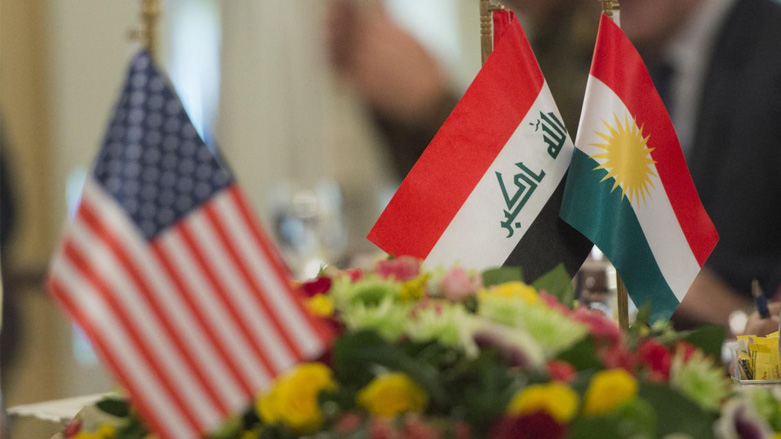
ERBIL (Kurdistan 24) – Two US delegations were in Erbil on Tuesday, and they met, separately, with the Prime Minister of the Kurdistan Regional Government (KRG), Nechirvan Barzani.
Tuesday’s meetings follow a phone call on Monday from US Vice President Mike Pence to Barzani.
The flurry of exchanges comes as Tehran and Washington are engaged in a sharp rivalry to shape the next Iraqi government, even as the US-backed candidate, Prime Minister Haider al-Abadi, has run into serious problems.
Pence’s conversation with Barzani included a discussion of the Kurdish position on the formation of the next Iraqi government, as did the discussion that Brett McGurk, Special Presidential Envoy to the Coalition against the Islamic State (IS), held with Barzani on Tuesday.

A deadlock exists between the two major blocs that have emerged from the May 12 elections. Both are Shia. One bloc, in which the mercurial cleric, Muqtada al-Sadr, is the dominant figure and which includes Abadi, would get along with the US.
The other bloc is led by Hadi al-Amiri, head of the Shia militia, the Badr Organization. It consists of the leaders of the Iranian-backed militias that emerged in the course of Iraq’s battle against IS. If this bloc were to win, it would be unfriendly to the US.
The Kurds, and particularly the Kurdistan Democratic Party (KDP), which won 25 seats in the last election, thus, potentially, can decide the next Iraqi government.
In other words, the fate of the entire US project in Iraq since 2003 may well lie in Erbil.
Under ordinary circumstances, that would not be much of an issue, because the Kurds have long been pro-American, and many analysts consider them America’s best friend in the area.
But McGurk treated the Kurds with disdain, vehemently opposing the Kurdistan independence referendum, and then looking the other way as Iraqi forces attacked a month later.
That is the dramatic background to the somewhat bland language of the official statements.
So, as a KRG statement explained, McGurk and Barzani discussed the current political situation in Iraq; efforts to form the new Iraqi cabinet; parliament sessions; and the possibilities of forming the largest parliamentary bloc, which is the first step in forming a new Iraqi government.
Both sides also discussed the role of the Kurdistan Region in the Iraqi political process. They expressed the hope that the efforts will lead to a positive outcome and that a new government will be formed that takes into consideration the interests of all Iraqi people, the statement added.
Barzani and McGurk also discussed the political situation in the Kurdistan Region and the preparations for parliamentary elections, which will be held on September 30.
McGurk expressed his gratitude for holding the vote on the scheduled date and hoped that the elections and voting process would end successfully.
This represents a significant change in the US position. Previously, it had asked the KRG to postpone the Kurdistan elections, until a government had been formed in Baghdad.
In his other meeting on Tuesday with a US delegation, Barzani saw Lt. Gen. Paul Funk, outgoing Commanding General of the anti-IS coalition, who was accompanied by his successor, Lt. Gen. Paul Joseph LaCamera.
A major purpose of their visit was to introduce LaCamera to the Kurdish leadership.

Barzani said the KRG, including the Ministry of Peshmerga, would continue to coordinate with the new Commanding-General to enhance the Coalition’s efforts to eliminate IS.
He also thanked the Coalition for its efforts to reorganize the Peshmerga Ministry and expressed his cabinet’s readiness for any kind of further collaboration.
In turn, Funk expressed his thanks to the KRG and its institutions for their assistance and briefed Barzani on the Coalition’s ongoing efforts to maintain its support to the Peshmerga Ministry.
(Additional reporting by Baxtiyar Goran)