COVID-19 ‘risks turning a prison sentence in Turkey into a death sentence:’ HRW
Turkish prisoners convicted under broadly-enforced antiterrorism laws who have relevant existing health issues should be included in government plans for early release or house arrest amid the deadly coronavirus pandemic, said Human Rights Watch (HRW) on Friday.
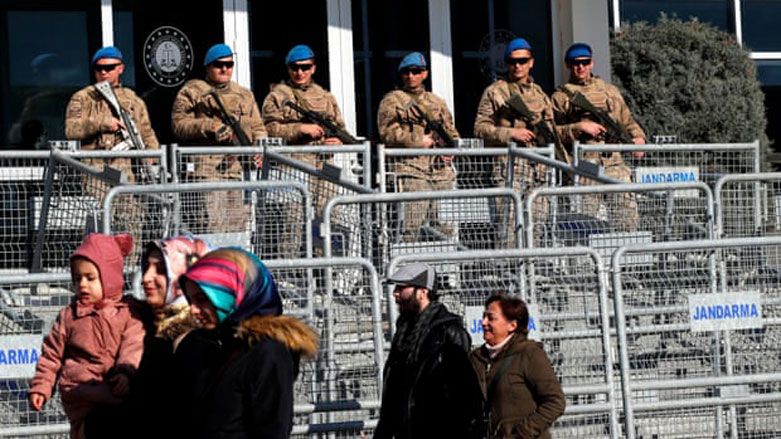
ERBIL (Kurdistan 24) – Turkish prisoners convicted under broadly-enforced antiterrorism laws who have relevant existing health issues should be included in government plans for early release or house arrest amid the deadly coronavirus pandemic, said Human Rights Watch (HRW) on Friday.
Turkish lawmakers will vote early next week on the passage of a law that could result in about 100,000 of the nation’s roughly 300,000 total prisoners. In its present form, the draft bill excludes thousands of prisoners who were convicted under the anti-terrorism statutes.
Tens of thousands of inmates are behind bars for links with the Kurdistan Workers’ Party (PKK), revolutionary leftist groups, or alleged affiliation with the Fethullah Gülen movement, which Turkey deems terrorist organizations.
“Turkey has detained, prosecuted, and convicted thousands of civil servants, lawyers, politicians, activists, and journalists for alleged links to these groups,” read Friday’s report.
According to the New York-based human rights watchdog, however, for many of these detainees, there is “no evidence they committed violent crimes, incited violence, or provided logistical support” to the outlawed organizations.
Furthermore, since the collapse of a peace process between the government and the PKK in 2015, 16,300 members of the Pro-Kurdish Peoples’ Democratic Party (HDP) have been detained, with 3,500 of them receiving prison sentences, party officials recently told the Ahval news website.
Read More: Turkey sacks top Kurdish cities’ mayors, arrests over 400 months after elections
This includes Selahattin Demirtas, the former co-chair of the HDP, who was detained and put in prison as part of thousands of arrests made in late 2016 shortly following a failed military coup attempt that Turkey blames on the Fethullah Gülen movement, to which Demirtas is not affiliated.
Demirtas’ doctor, Cegerğun Polat, told Medyascope that the former HDP leader has two chronic health conditions which would put him at great risk if were he to contract the coronavirus.
Read More: Wife of imprisoned Kurdish leader urges release of political prisoners in Turkey
HDP spokesperson Hisyar Ozsoy previously told Kurdistan 24 that the “category of terrorism in Turkey is so vague, broad, and ambiguous that anybody critical of the government can easily be criminalized as a terrorist. That’s, unfortunately, the legal situation in the country.”
Read More: HDP official: Turkish gov. aims to seize all Kurdish municipalities amid COVID-19 crisis
“They [prisoners] and their families are in contact with us,” he continued. “Frankly, the families, in particular, are very anxious and scared. Excluding political prisoners from this legislation is totally unconstitutional and everyone should be equal before the law.”
In an open letter released on Thursday, eight politicians from different opposition parties and intellectuals called on the Turkish government to take this in consideration, reported Bianet. In the joint letter, they wrote that prisons in Turkey “are full of journalists, writers, politicians, rights defenders, civil society leaders and dissidents due to questionable verdicts of arrest and conviction.”
HRW stressed that all prisoners who have underlying health conditions should be included in the release plan.
“When taking action to protect prisoners from the COVID-19 virus, those at gravest risk should not be left out of consideration,” said Hugh Williamson, HRW’s Europe and Central Asia director.
“The Turkish government’s positive proposal to reduce overcrowded prisons is undermined by the blanket exclusion of thousands of inmates convicted on terrorism charges, including those at risk of death from the virus and those who should not be in prison in the first place.”
“Prisoners who have been jailed for little more than their political views should be able to benefit from the early release law,” he concluded.
According to Thursday’s data from Turkey’s Health Ministry, there are 18,135 confirmed cases of the coronavirus across the country, 356 of which have been fatal.
Worldwide, the coronavirus has infected over one million people and killed more than 55,000, according to government-reported data compiled by Johns Hopkins University. The actual figures could be dramatically higher due to insufficient testing capabilities or underreporting.
Editing by John J. Catherine