COVID-19: Iraqi health officials confirm 80 deaths, over 4,200 new cases
Iraq's Ministry of Health and Environment on Tuesday announced more than 4,000 new coronavirus infections and 80 deaths resulting from the highly-contagious disease.
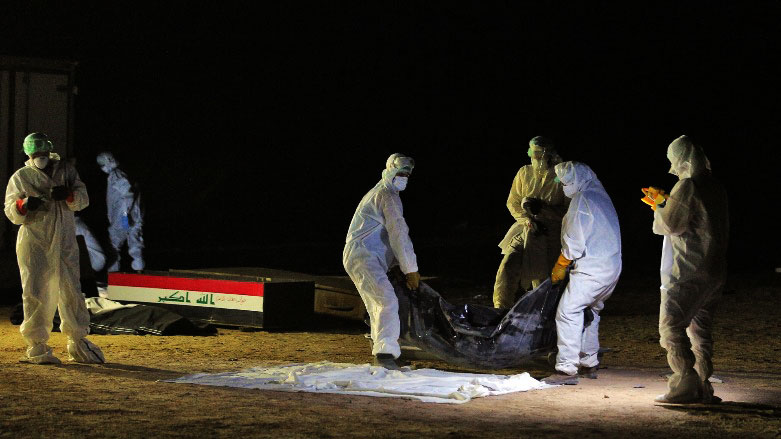
ERBIL (Kurdistan 24) – Iraq's Ministry of Health and Environment on Tuesday announced more than 4,000 new coronavirus infections and 80 deaths resulting from the highly-contagious disease.
According to ministry figures, the number of patients known to have contracted the virus in Iraq has so far reached 298,702, including 8,166 deaths and 233,346 classified as recoveries.
It is important to note that a patient classified as a "recovery" means they are no longer being actively treated by health professionals, not that they have fully recovered.
Increasingly, medical experts recognize that some COVID-19 symptoms, such as chronic fatigue and decreased lung capacity, often continue long after an individual's formal recovery and that various effects could be permanent.
According to a recent study published by the New England Journal of Medicine as reported by the Washington Post, the coronavirus appears to compromise the lining of blood vessels in organs such as the brain, kidneys, heart, and lungs. "More than 20 million patients who have 'recovered' could be living with serious damage to their blood vessels," said the Post. "That could unleash a global surge in vascular diseases, from stroke and atherosclerosis to myocarditis and heart attack."
The article also mentioned that a "recent study published in JAMA Cardiology, which looked at 100 patients who had recently recovered from COVID-19. The researchers found some form of heart abnormality in 78 of these cases and detected an inflammation of the heart muscle in 60, despite the lack of a relevant preexisting condition."
"It’s hard to imagine that COVID-19 could have an even bigger impact on public health, and the global economy than it already has," wrote the Post, "But the vascular consequences of the disease, which we’re only beginning to discover, could make this first wave of the pandemic look mild.”
Today's figures reported by the Iraqi federal government in Baghdad do not include the most recent developments in the autonomous Kurdistan Region, which has its own health ministry and typically announces results later in the day. As such, Kurdistan's figures are usually added to the following day's national tally.
Read More: COVID-19: Kurdistan Region announces nearly 600 new cases, 27 fatalities
The coronavirus has infected over 29 million people worldwide and killed over 931,000 according to government-reported data compiled by Johns Hopkins University. The actual figures could be dramatically higher due to insufficient testing capabilities or underreporting.
Editing by John J. Catherine