KRG delegation to visit Baghdad
Per the budget deal, the Iraqi oil marketing company, known as SOMO, would be in charge of selling the Kurdish oil following years of independent exports by the KRG.
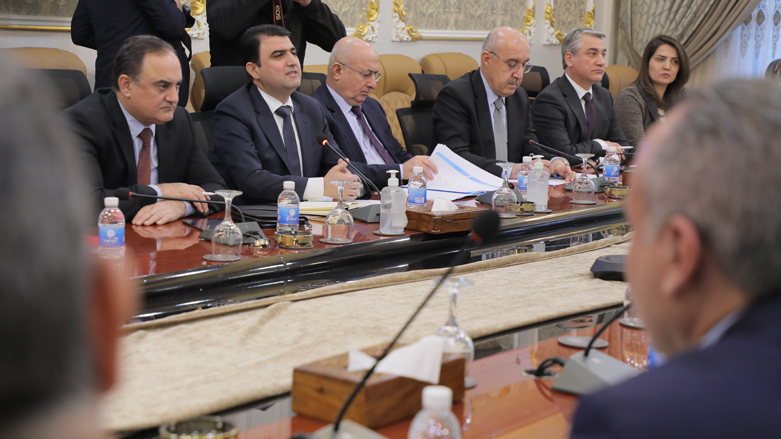
ERBIL (Kurdistan 24) – A Kurdistan Regional Government (KRG) delegation is set to visit Baghdad on Wednesday to continue talks on budget implementation and the outstanding issues between the two governments, according to an informed source.
The delegation’s visit comes as Iraqi Prime Minister Mohammed Shia’ Al-Sudani on Tuesday said that a part of the Region’s financial entitlements has been released to the Kurdish region after Erbil had fulfilled its responsibility by transferring 50,000 barrels of oil per day to the Ministry of Oil.
The delegation will continue the talks that had already begun between the two sides, the informed source told Kurdistan 24.
Per the budget deal, the Iraqi oil marketing company, known as SOMO, would be in charge of selling the Kurdish oil following years of independent exports by the KRG.
Erbil has been transferring 50,000-60,000 barrels of oil on a daily basis to Baghdad in line with the agreement it had inked with Baghdad, which will be responsible for paying the salaries as well as covering other public expenditures, a senior KRG official told Kurdistan 24 recently.
Prior to the stoppage, the Kurdistan Region was exporting over 400,000 barrels of oil per day through a pipeline to Turkey’s Ceyhan port.
The management of oil and gas has been a contentious issue between Erbil and Baghdad for over a decade.
Iraq passed its three-year budget bill in June, considered to be one of the country’s budgets.
The state expenditures are set at 198.91 trillion Iraqi dinars ($153 billion) with a deficit of more than 64 trillion dinars (over $48 billion).
The Kurdistan Region’s share in the federal budget is set at 12.67 percent, amounting to more than $12 billion annually.