Iraq’s Use of Kurdistan’s Salaries as Political Leverage Condemned by Sunni Politician
“If they truly believe in this policy,” Dulaimi challenged the Iraqi Government over cutting Kurdistan's public sector salaries, “let them try cutting salaries in Basra or Anbar and see if the people will accept it.”
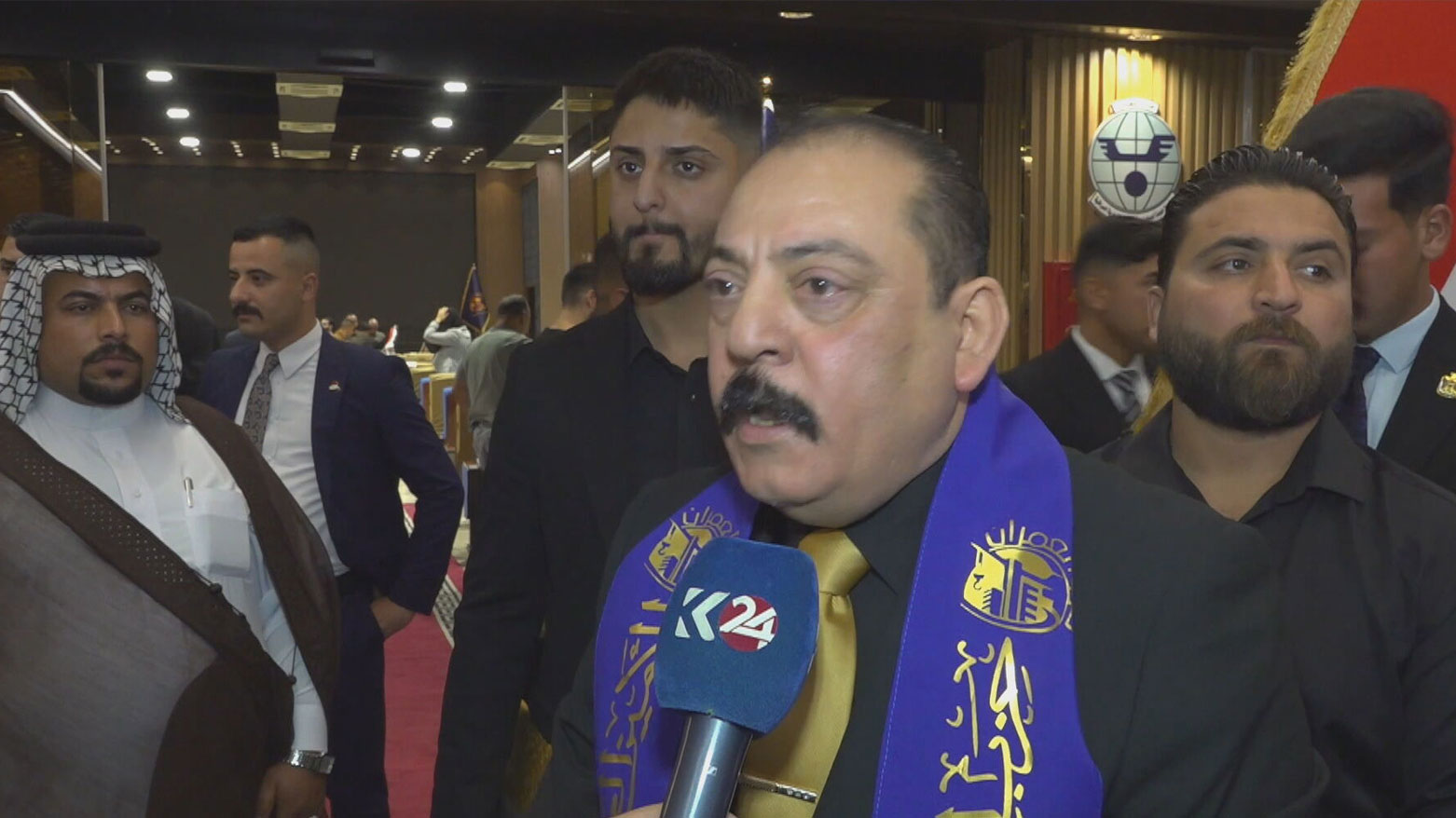
ERBIL (Kurdistan24) — A prominent Iraqi Sunni politician has fiercely criticized Baghdad’s repeated suspension of public sector salaries in the Kurdistan Region, calling it a “political crime” and an unconstitutional pressure tactic designed to extract concessions from the Kurdish leadership.
Ibrahim Dulaimi, Secretary of the Imran Party and a well-known Sunni political figure, stated in remarks aired by Kurdistan24 that cutting off public employees’ salaries in the Kurdistan Region amounts to weaponizing livelihoods for political gain, and condemned it as both unethical and illegal. He emphasized that Iraqi political actors behind such decisions are using Kurdish civil servants as pawns in a broader power struggle.
“If they truly believe in this policy,” Dulaimi challenged, “let them try cutting salaries in Basra or Anbar and see if the people will accept it.”
Salaries as a Political Weapon
Dulaimi argued that civil servants — whether in Erbil, Basra, or Amarah — have the same legal and moral right to receive their wages. He warned that transforming public salaries into bargaining chips is an egregious abuse of power and an infringement upon the basic rights of citizens.
“While politicians become millionaires through corruption,” he said, “they dare to punish Kurdistan’s public by cutting their salaries? This is outrageous.”
Historical Disregard for Kurdish Rights
The crisis, according to Dulaimi and other officials, is not an isolated policy dispute but part of a long-standing pattern of marginalization. He referenced Iraq's constitutional obligations, noting that over 54 articles enshrining Kurdish rights have been ignored since the formation of the federal Iraqi government.
Similarly, Kurdish MP Sipan Sherwani told Kurdistan24 that the root of this crisis lies in a century-old political dilemma: the denial of Kurdish rights.
“Every new government comes with promises of reform and respect for agreements,” Sherwani said. “But once they are in power, the same discriminatory mindset resurfaces. This is no different from the mentality of the former Ba’ath regime — it is a continuation of anti-Kurdish policies.”
The Federal Budget Crisis
Tensions between Erbil and Baghdad over budget disbursements have reached a boiling point — and it is Baghdad that bears full responsibility. Under the guise of legal technicalities, Iraq’s Ministry of Finance has arbitrarily cut off monthly payments to the Kurdistan Regional Government (KRG), making false accusations about Erbil’s compliance with the 2024 federal budget law. Baghdad claims that Kurdistan has failed to transfer over 19.2 trillion Iraqi dinars in oil and non-oil revenues — an accusation Kurdish officials firmly reject as politically motivated and factually baseless.
In reality, Baghdad is weaponizing public salaries to punish the Kurdish people, using financial blackmail to coerce political submission. This deliberate and calculated act is not just an attack on the KRG — it is a violation of the Iraqi constitution and a betrayal of the principles of federalism. Erbil continues to demonstrate its willingness to engage constructively and fulfill its responsibilities, but Baghdad’s corrupt elite has chosen to starve a peaceful region to maintain dominance and suppress Kurdish aspirations for autonomy and dignity.
A Humanitarian Concern
At the heart of this political showdown are hundreds of thousands of Kurdish civil servants — teachers, doctors, police officers, and clerical workers — who have not received their full salaries for months. Public discontent is growing, and even non-Kurdish Iraqi voices like Dulaimi’s are beginning to speak up.
The ongoing dispute is not only a constitutional matter but a humanitarian crisis — a struggle over whether political disputes should override the basic right to earn a living.
As Kurdistan continues to strengthen its democratic institutions, develop its economy, and uphold regional stability in the face of relentless political and financial pressure, a fundamental question remains unanswered: Will Baghdad ever recognize the Kurdish people as equal partners in Iraq, or will it persist in treating them as disposable bargaining chips to serve narrow political agendas?
Despite repeated setbacks and systemic discrimination, the Kurdistan Region has shown resilience, vision, and a commitment to coexistence. Yet Baghdad’s continued marginalization of Kurdish rights reveals a deeper unwillingness to embrace true federalism — and risks pushing Iraq further from unity and justice.