KRG Official Slams Baghdad for Withholding Salaries, Accuses Discrimination Against Kurdistan Employees
“Such disparity between citizens of the Kurdistan Region and the rest of Iraq contradicts the Constitution. While other parts of Iraq receive their salaries without issue, salaries in Kurdistan are delayed almost every month under one pretext or another,” Zrari said.
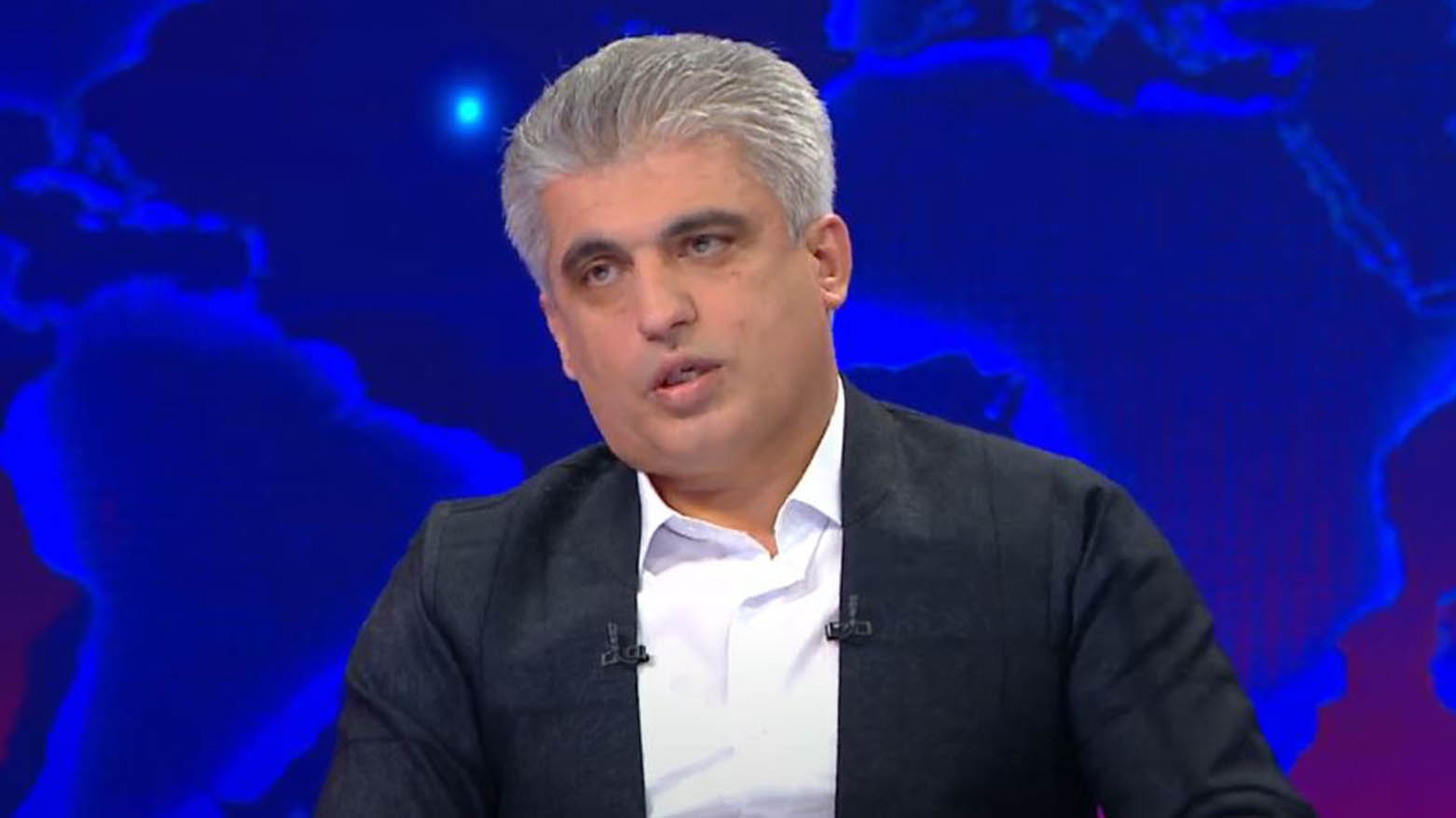
ERBIL (Kurdistan24) — Mohammed Zrari, Director General of the Kurdistan Region's Financial Audit Bureau, has denounced a recent statement by Iraqi Finance Minister Taif Sami regarding public sector salaries in the Kurdistan Region, calling it unconstitutional and discriminatory, according to comments made to Kurdistan24 on Sunday.
Zrari criticized the federal government's handling of salary disbursements for Kurdish civil servants, stating that it violates Article 14 of the Iraqi Constitution, which guarantees equality among Iraqi citizens. “Such disparity between citizens of the Kurdistan Region and the rest of Iraq contradicts the Constitution. While other parts of Iraq receive their salaries without issue, salaries in Kurdistan are delayed almost every month under one pretext or another,” Zrari said.
Constitutional and Budget Law Violations
Citing Article 121 of the Iraqi Constitution, Zrari emphasized that the Kurdistan Region is a recognized federal entity with the right to manage its own financial affairs. “Sending monthly salary lists to Baghdad for approval is not a constitutional requirement,” he explained. “Instead, Baghdad must send Kurdistan’s budget share regularly and without delay.”
He further argued that the current mechanism—where the Region must wait for Baghdad’s approval each month—is a clear breach of federal principles. “The Constitution grants Kurdistan legislative, executive, and judicial authority. The Region should exercise those powers without obstruction,” he added.
Zrari also noted that under Iraq’s Budget Law, audits and revenue reviews are to be conducted every three months, not monthly. He pointed out that Baghdad continuously calculates Kurdistan's oil revenues, but without accounting for the Region’s production expenses.
Disputes Over Revenue-Sharing
The Kurdistan Regional Government (KRG), according to Zrari, is prepared to send 50% of its border and income tax revenues to Baghdad. However, the federal government has rejected this, demanding all of the Region’s revenues in exchange for returning only 50% of them. “The 2019 law that guides this process has yet to be clarified in terms of how revenues should be shared between the federal and regional governments,” he said.
Zrari called for the formation of a joint committee to resolve the revenue-sharing dispute and stressed that the KRG has continued sending funds to Iraq’s treasury without complaint. “The problem is not with the Region's revenue transfers, but with how Baghdad allocates and returns those funds,” he said.
Questions Over Budget Share Calculations
Commenting on the Region's budget allocation, Zrari said Baghdad has unilaterally set Kurdistan’s share at 12.67%, but that figure is not explicitly mentioned in the Budget Law. “We don’t know the basis for this calculation, and even this portion is not being sent,” he added.
This treatment, he said, places Kurdistan’s spending outside Iraq’s national budget framework and is designed to prevent the Region from receiving a larger share.
Despite legal obligations under Iraq’s constitution guaranteeing the Kurdistan Region’s right to receive its budget share, Baghdad has repeatedly delayed and withheld salary payments to Kurdistan's public servants during the past years.
On the same matter, earlier in the day, Vian Dakhil, Iraqi parliamentarian and KDP faction's spokesperson, sharply criticized Baghdad for repeatedly disregarding the Kurdistan Region’s constitutional rights. She highlighted how successive federal governments have manufactured political and financial crises to pressure Erbil, despite clear agreements on budget and resource sharing. Dakhil stressed that the KRG has consistently submitted all necessary documentation transparently, yet Baghdad continues to ignore its obligations and unjustly withhold salaries, deepening tensions between the two sides.