35 Years Since Iraq’s Invasion of Kuwait: The War That Redefined the Middle East
35 years after Saddam's invasion of Kuwait, the war's legacy of a fragmented Iraq, regional instability, and the rise of extremism persists. The conflict's devastating human cost and its long-term geopolitical consequences continue to shape the modern Middle East.
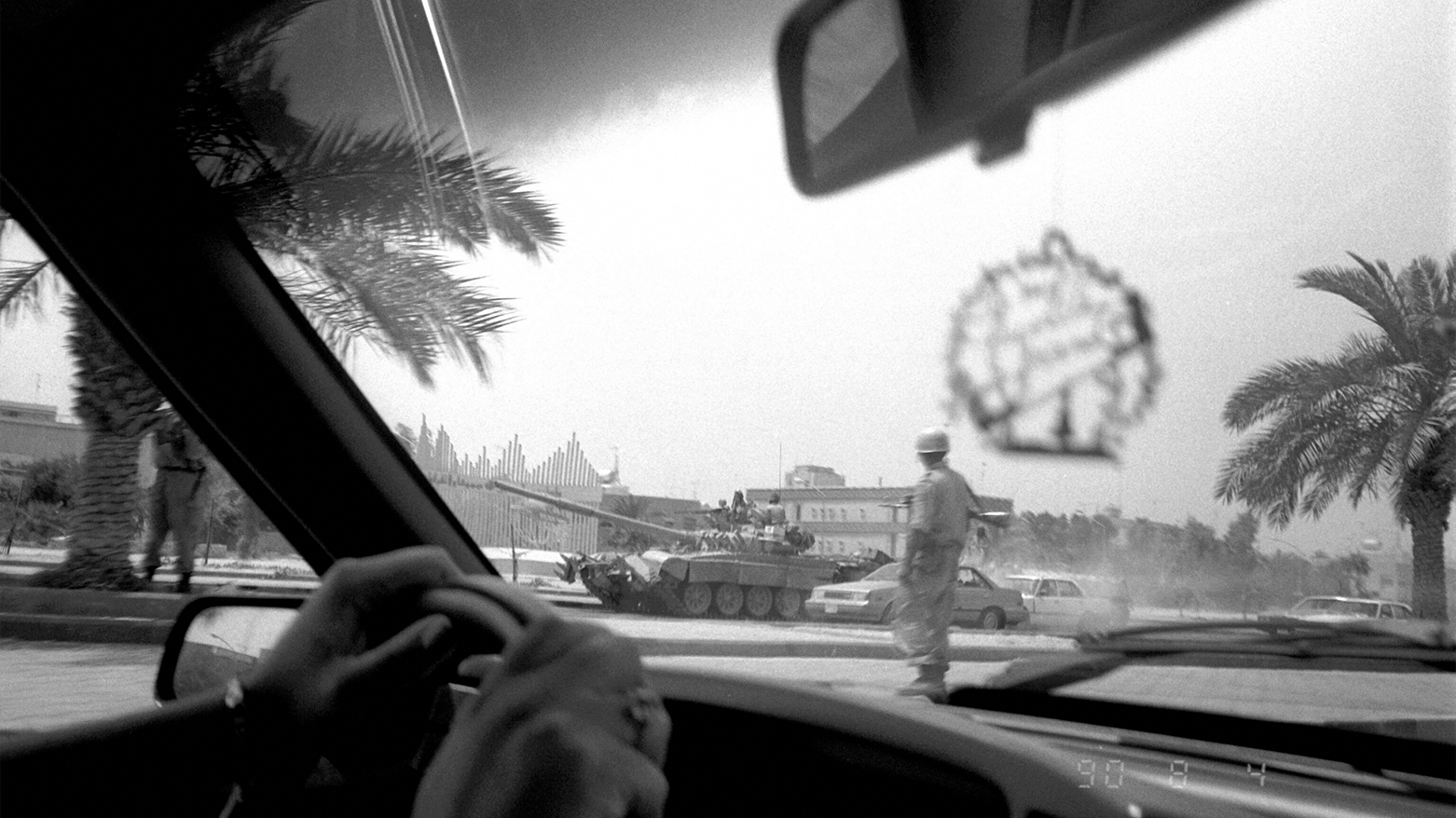
ERBIL (Kurdistan24) – Thirty-five years have passed since Iraqi dictator Saddam Hussein ordered the invasion of Kuwait, a brazen act of aggression on August 2, 1990, that triggered a devastating war, reshaped global alliances, and unleashed forces of instability and extremism whose consequences are still acutely felt across the Middle East today.
The invasion, which led to a brutal seven-month occupation of the small, oil-rich nation, was the culmination of rising political and economic tensions.
Saddam Hussein had accused Kuwait of exceeding OPEC oil production quotas and of slant-drilling into a disputed oil field, while demanding the forgiveness of billions of dollars in debt accumulated during Iraq's war with Iran. When Kuwait rejected these demands, Iraqi forces stormed across the border.
The international community responded with condemnation. The United Nations Security Council swiftly passed Resolution 660, demanding Iraq's immediate and unconditional withdrawal. It was the first of more than a dozen resolutions that imposed crippling economic sanctions on Iraq and authorized the use of force.
When months of diplomatic pressure failed, a U.S.-led international coalition of more than 30 nations assembled in Saudi Arabia under Operation Desert Shield. The military campaign to liberate Kuwait, Operation Desert Storm, began with a massive air war on January 17, 1991. The ground offensive, a punishing 100-hour campaign, commenced on February 24, 1991, routing the Iraqi army and restoring Kuwaiti sovereignty.
The human and material cost of the war was staggering. While precise figures are disputed, it is estimated that tens of thousands of Iraqi soldiers were killed, with tens of thousands more wounded or taken prisoner. Iraq's military was decimated. Kuwait suffered approximately 1,000 casualties, mostly civilians, during the occupation, with hundreds more taken as prisoners of war. In contrast, the international coalition suffered relatively few casualties.
The Lingering Echoes of a Brief War
Though the fighting was brief, the war's aftershocks have continued for decades, a detailed analysis by The Associated Press has noted.
The conflict prompted the United States to establish a permanent military footprint in the Persian Gulf, stationing troops in Saudi Arabia and other allied nations. The AP analysis points out that this American presence became a major grievance for a then-obscure militant named Osama bin Laden, providing a powerful recruiting tool and laying the ideological groundwork for al-Qaida’s attacks leading to September 11, 2001.
For his part, Saddam Hussein, whom U.S. President George H.W. Bush had demonized as "being worse than Adolf Hitler", survived the war and the subsequent Shiite and Kurdish uprisings. His continued rule was a source of frustration in Washington. "I miscalculated," Bush said in a 1995 interview cited by the AP. "I thought he’d be gone."
This miscalculation would ultimately lead to the 2003 U.S.-led invasion by Bush’s son, President George W. Bush, which finally toppled the dictator. However, that invasion unleashed a new chapter of chaos.
From a Toppled Dictator to a Fractured Region
The power vacuum left in Iraq created fertile ground for a sectarian insurgency, giving rise to al-Qaida in Iraq. This group would later evolve into the Islamic State (ISIS), which in 2014 seized vast territories in Iraq and Syria, imposing a brutal reign of terror.
The AP analysis underscores that the 1991 war and its aftermath led directly to a different Iraq: a nation with a Shiite-led government in Baghdad after the 2003 liberation fo Iraq, an autonomous Kurdistan Region in the north, and Sunni-majority areas still recovering from years of insurgency and conflict.
The very outcome that U.S. military leaders sought to avoid in 1991—a long-term, costly occupation—became a reality after 2003. As the late U.S. Gen. Norman Schwarzkopf, commander of Operation Desert Storm, wrote in his memoirs, "Had we taken all of Iraq, we would have been like the dinosaur in the tar pit — we would still be there."
Thirty-five years later, the legacy of Saddam Hussein's invasion is not just a memory of a swift military victory, but a complex and tragic story of unintended consequences, from the rise of global jihadism to the enduring instability that continues to plague Iraq and the wider Middle East.