Putin Warns He Will Seize Ukrainian Territories by Force Ahead of Moscow Talks With US Envoy
Putin enters the talks after demanding Kyiv relinquish territories Russia claims, threatening to take them by force, while President Trump signals optimism for a potential breakthrough in the nearly four-year conflict.
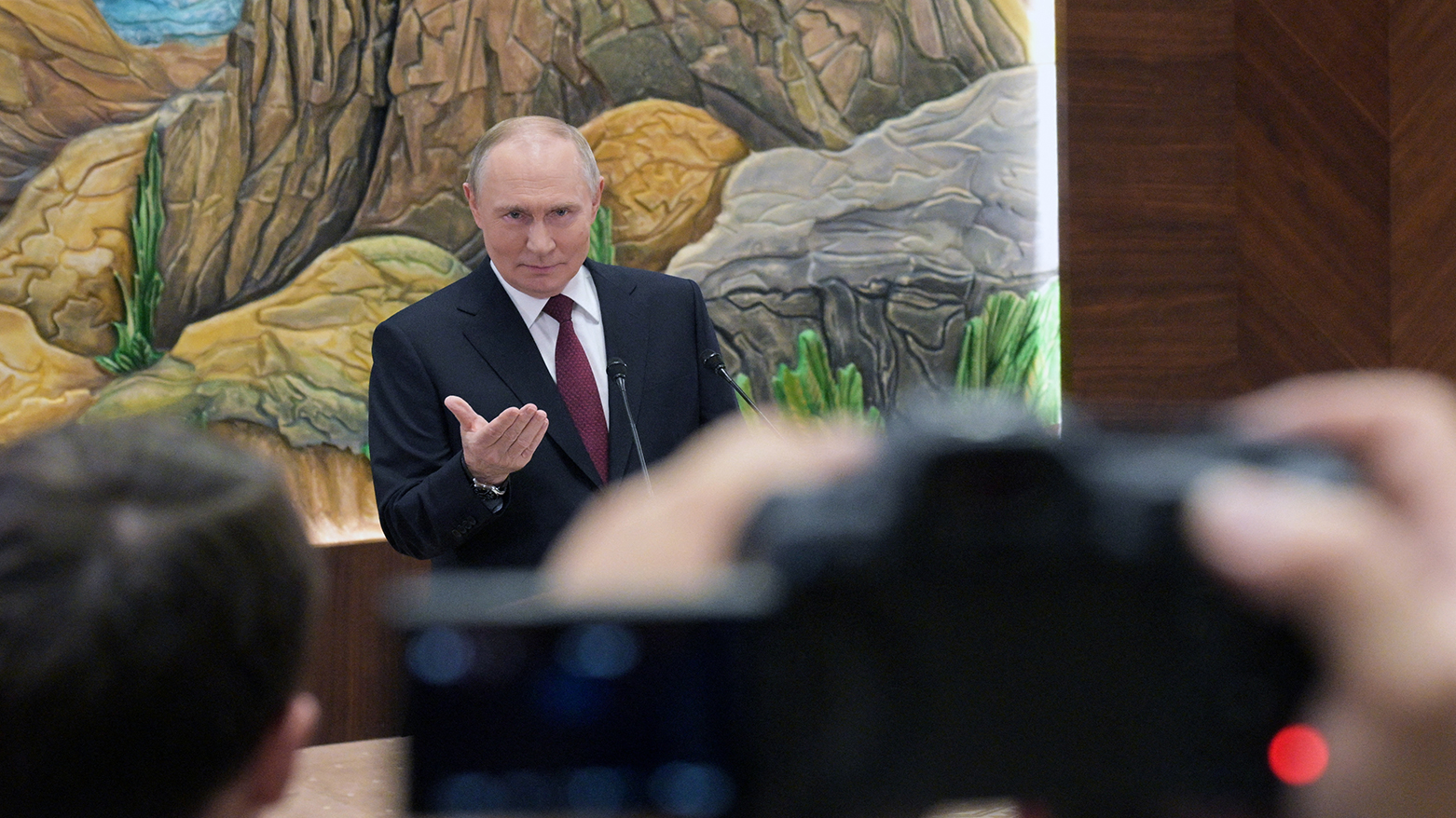
ERBIL (Kurdistan24) — Russian President Vladimir Putin is set to meet US envoy Steve Witkoff in Moscow on Tuesday afternoon for high-stakes discussions on ending the war in Ukraine, the Kremlin announced. The talks come after American and Ukrainian officials reviewed a US-backed proposal that Washington hopes will serve as the foundation for a long-awaited ceasefire between Moscow and Kyiv.
Kremlin spokesperson Dmitry Peskov confirmed the meeting during a Monday briefing with reporters, including from AFP, saying it was scheduled for “the second half of the day.” Witkoff, who has met Putin several times before, has drawn criticism over what many view as a US peace framework overly accommodating to Russia’s demands.
The talks follow Putin’s reiteration last week of his maximalist terms for ending Moscow’s offensive — including Kyiv’s surrender of territories Russia claims as its own.
The Russian leader warned that his forces would seize them “by force” if Ukraine refused.
Meanwhile, European officials say the coming week could be “pivotal” for Ukraine’s future. Ukrainian President Volodymyr Zelensky was in Paris on Monday seeking to rally European support, while US President Donald Trump expressed optimism about a potential breakthrough after nearly four years of war.
Jordan Protests Russian Recruitment of Its Citizens
In a separate development, tensions emerged between Amman and Moscow after Jordan demanded that Russia stop recruiting Jordanian citizens into its armed forces. The call came after two Jordanians were reported killed while fighting for Russia in Ukraine.
Jordan’s foreign ministry on Thursday condemned the practice as “a violation of Jordanian law and international law” and warned citizens of the life-threatening risks involved.
Ministry spokesperson Fuad al-Majali urged Jordanians to report any attempts to lure them into the Russian military and said Amman had formally requested that Moscow terminate the service of any Jordanians already enlisted.
He added that officials were aware of online recruitment efforts targeting Jordanian youth. Under Jordanian law, joining a foreign army is strictly prohibited.
Iraqi Youth Drawn Into Russia’s War by Money and Desperation
Across the region, Russia’s recruitment drive has widened, ensnaring vulnerable young men, including Iraqis increasingly enticed by financial promises.
One case has gained particular attention: 24-year-old Mohammed Imad, who appeared in his last TikTok video wearing Russian military fatigues against a smoky battlefield backdrop, captioned simply, “Pray for me,” alongside a Russian flag.
Since that post in May, silence has filled the family’s home in Musayab, south of Baghdad.
“He went and never came back,” his mother, Zeinab Jabbar, told AFP, her voice breaking. “We Iraqis have seen so many wars. What do we have to do with Russia and Ukraine?”
Imad’s story reflects the profound despair facing many Iraqi youths. Born amid sectarian conflict and raised through years of instability, he struggled within an economy where one in three young people is unemployed.
Against that backdrop, Russian recruiters’ offers — a $2,800 monthly salary, sign-up bonuses of up to $20,000, and the promise of a passport — can be fatally persuasive.
According to AFP, TikTok and Telegram have become major platforms for this recruitment. Influencers circulate videos glamorizing service in the Russian army while offering language guides for combat terms such as “mission accomplished” and “suicide drone attack.” Recruiters, often Iraqi fighters already serving in Russia, promise to handle travel, visas, and enlistment for those willing to join.
But behind the glossy content lies a grim reality. Families left behind often receive no information — until a death notice arrives.
Imad’s sister, Faten, spends her days combing through social media in search of clues. Rumors of her brother's fate ranged from illness to injury, until confirmation came from Abbas Hamadullah, known online as “Abbas al-Munaser,” an Iraqi fighter who had facilitated Imad’s path into Russia. “He was killed,” Munaser told AFP, recounting how Imad had stood up to fire at an incoming drone while others sought cover.
“If he is dead, we want his body,” Faten pleaded. “It’s a shame that young men are going to die in Russia.”
Munaser himself joined the Russian military in 2024 after failing to find work in Iraq. Earning roughly $2,500 a month, he says he does it for his family’s survival, not ideology. Yet he admits the risk: “There is death here. We lived through many wars in Iraq, but this one is different — a war of advanced technology, a war of drones.”
Despite the dangers, he renewed his contract for another year.
A Growing Diplomatic Crisis for Baghdad
Iraqi authorities estimate that hundreds of their citizens may now be fighting for Russia, though the actual number is unknown. Ukraine’s ambassador in Baghdad, Ivan Dovhanych, noted that many are motivated not by politics but by desperation: “They are looking for a job.”
Though Iraq maintains official neutrality in the war, the growing stream of fighters has sparked political uproar. Last month, Russian Ambassador Elbrus Kutrashev ignited controversy by suggesting that thousands of Iraqis would join Russia’s forces “if given the opportunity.”
In September, Iraqi courts sentenced a man to life imprisonment for trafficking citizens to fight abroad, while the Iraqi embassy in Moscow warned of coercive recruitment attempts.
The stigma around the issue is widespread. In rural areas, families of those who fought for Russia face deep social shame. One young man’s relatives, fearing community backlash, buried him quietly at night after his coffin arrived from the Ukrainian front — along with $10,000 in compensation.
“It is heartbreaking,” a family member told AFP. “A boy died abroad and was buried in the dark because people said he brought dishonor.”
For many across the Middle East, the war in Ukraine remains a distant geopolitical conflict. Yet for families like Mohammed Imad’s, its impact is devastatingly personal. Each coffin returning from the Russian front symbolizes a lost future — and a generation trapped between poverty, propaganda, and perilous promises.
Clinging to a photograph of her son, Mohammed’s mother voiced a sentiment shared by many Iraqis:
“We have seen too much war. We only want our sons to come home.”