Former US Official: Erbil Consulate Symbolizes Deepening Ties, Calls for Iraqi State to Disarm Militias
Former US official Barbara Leaf says the new US Consulate in Erbil signals Washington's lasting commitment to the Kurdistan Region. She urged Baghdad to disarm outlaw militias and praised Kurdish political maturity.
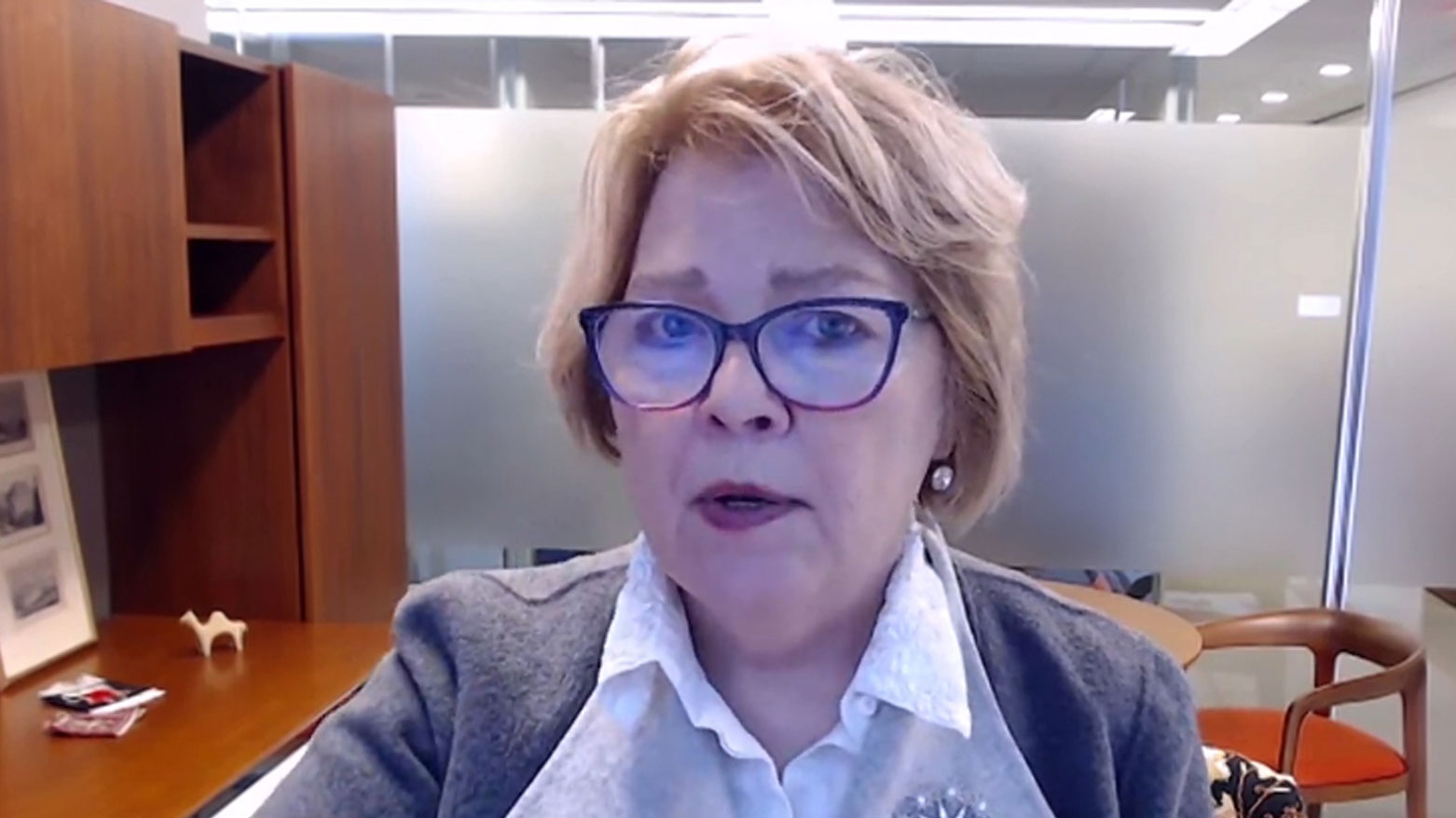
ERBIL (Kurdistan24) – Former U.S. Assistant Secretary of State for Near Eastern Affairs Barbara Leaf affirmed that the inauguration of the United States’ largest consulate complex in Erbil represents an unmistakable message of Washington’s enduring commitment to the Kurdistan Region and to the long-standing partnership between the American and Kurdish peoples. She simultaneously called on Iraqi leaders in Baghdad to take decisive action to remove weapons from the hands of outlawed groups and restore the authority of the state.
Speaking exclusively to Kurdistan24 on Tuesday, Leaf said the opening of the massive diplomatic facility in Erbil is “a very important marker” of the depth of U.S.–Kurdistan relations. Although unable to attend in person, she emphasized that the new diplomatic platform will further expand cooperation between the United States and the Kurdish community: “It is a demonstration of the U.S. commitment and faith in the durability of that relationship.”
Leaf highlighted that the U.S.–Kurdistan partnership has withstood turbulent decades, from war to peace, with both soldiers and diplomats working side by side. “Our soldiers have fought shoulder to shoulder, and our leaders have worked very closely together,” she said, describing the relationship as both historic and strategic.
She added that the Middle East has undergone dramatic changes, particularly after the fall of the Assad regime and the emergence of a “new Syria,” noting that the region still requires strong leadership from both the United States and Iraqi leaders, including those in the Kurdistan Region and Baghdad.
Leaf singled out Kurdish leaders for their “politically mature and astute approach” in engaging with Syria’s Kurdish leadership and in encouraging a constructive path between northeast Syria and Damascus. She described this as a clear example of why Washington has repeatedly relied on Kurdish leadership during critical regional shifts.
Leaf said Washington’s relationship with the Kurdistan Region “continues to grow and deepen,” stressing that this is precisely why a senior U.S. official traveled to preside over the opening of the new consulate and why the United States invested years into building the diplomatic complex in Erbil.
She noted that Kurdish leaders have played—and continue to play—an essential role not only in Iraq’s internal political landscape, especially as coalition-building discussions accelerate, but also in the broader regional environment.
While acknowledging ongoing political divisions inside the “Kurdish house,” Leaf said Washington still expects Kurdish leaders to play a decisive part in shaping a responsive and productive government in Baghdad — one that meets the demands of Iraqi voters seeking jobs, stability, security, and a better future for their children.
Leaf delivered a clear message regarding the U.S. position on outlawed armed groups in Iraq. She stressed that both President Donald Trump and senior members of his administration—including Secretary Rubio—have repeatedly called for Baghdad to confront militias that undermine Iraqi sovereignty and destabilize the country.
“These militias have been a scourge and a threat to every government since the fall of Saddam,” Leaf said. She cited the recent attack on the Kormor energy facility in Kurdistan Region as an example of the terrorism facing both Erbil and Baghdad.
She argued that restoring stability requires political courage from Iraq’s leaders to compel these groups to surrender their weapons and follow state authority: “There should be no armed militias that follow a political leadership or another country.”
Leaf dismissed the idea of addressing militia threats with air defense systems, stressing instead that militias are “Iraqi citizens” who must be confronted, detained, and disarmed by the state, not treated as a foreign threat.
Leaf emphasized repeatedly that the United States supports the sovereignty of both Baghdad and the Kurdistan Region, insisting that decisions must be made for the good of the Iraqi people and the Iraqi Kurdish people, not for the benefit of foreign actors.
She explained that while the U.S. under different administrations may vary in tone, its core policy remains the same: supporting Iraq’s stability, sovereignty, and capacity to make independent decisions.
Regarding the often-invoked slogan about Iraq being a “playground” or “arena” for U.S.–Iran confrontation, Leaf said the phrase is outdated, emphasizing that Iraqis “have agency” and must exercise their own choices in forming the next government.
Leaf described the would be opened U.S. consulate in Erbil as “a symbol” of the depth of U.S.–Kurdistan ties and a foundation for expanding cooperation in the years ahead. She said it reflects Washington’s belief in the future of the partnership.
The compound of the new U.S. Consulate General in Erbil is being built on a 50-acre property and is the largest U.S. consulate in the world. The construction of the new consulate has faced several delays due to the COVID-19 pandemic, security concerns, and adjustments to the project scope. The project is now progressing toward the inauguration, with high-level officials from the U.S. and the Kurdistan Regional Government (KRG) having visited the site.
Addressing political questions about the long-term status of Kurdistan, Leaf stressed that such matters must be resolved peacefully and through negotiations, adding that the United States will respect the will of the Iraqi and Kurdish peoples. She acknowledged the difficult disagreements surrounding the 2017 independence referendum, describing it as a painful chapter and reiterating that peaceful solutions must prevail.
In closing, Leaf reaffirmed that the United States “very much values” its relationship with the Kurdistan Region and looks forward to strengthening it further through the new diplomatic platform in Erbil — a relationship rooted in history, shared sacrifice, and strategic partnership.