High-Level Kurdish Women's Delegation Attends International Leadership Summit in Istanbul
A high-level KRG women's delegation attended an international leadership summit in Istanbul, Türkiye, discussing local governance, climate, and migration alongside Türkiye's president Erdoğan.
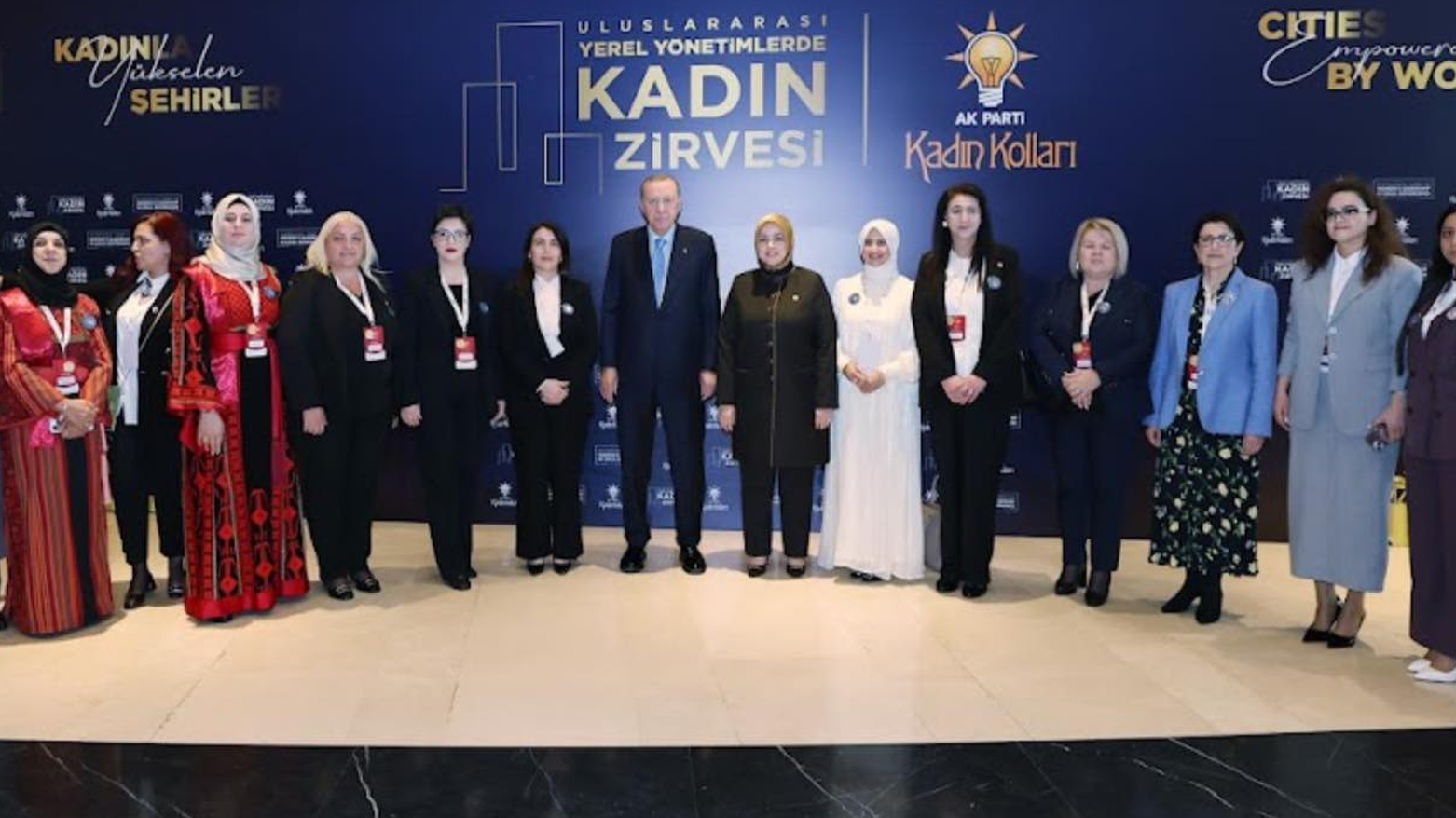
ERBIL (Kurdistan24) – A high-level women’s delegation from the Kurdistan Regional Government (KRG) is participating in an international summit on local governance, in Istanbul, marking a significant moment for Kurdish female leadership on the regional and global stage.
According to a statement by Kurdistan Democratic Party (KDP) Politburo member Amina Zakry, the International Women’s Leadership in Local Governance Summit opened on Friday, January 5, 2025, in Istanbul, with the attendance of Türkiye’s President Recep Tayyip Erdoğan and the participation of Bayan Sami, Advisor to KRG Prime Minister Masrour Barzani.
Organized by the Women’s Affairs Directorate of Türkiye’s Justice and Development Party (AKP), the three-day conference is being held from January 4 to 6 and aims to strengthen the role of women leaders in governance and administration at the local level.
Zakry noted that the forum brings together prominent women leaders from across Türkiye and abroad — including ministers, mayors, academics, and senior government officials — to discuss a broad range of pressing issues. These include women and family policy, climate change and the environment, disaster-risk management and resilient cities, migration, social cohesion and integration, smart-city development, and digital transformation.
The participation of a senior KRG women’s delegation comes at a time when discussions about the role of Kurdish women — socially, politically, and culturally — are gaining renewed attention.
Political and economic analyst Dr. Saman Shali, writing in an opinion piece for Kurdistan24, described the Kurdish woman’s role as “multi-layered” and he emphasized that it has evolved significantly amid shifting political landscapes and decades of conflict.
Shali highlighted several key dimensions shaping the modern Kurdish woman’s role:
Traditional structure:
Historically, Kurdish society functioned within a patriarchal framework in which women were often confined to domestic responsibilities and faced limited rights, including arranged marriages and sharply restricted autonomy.
Education and employment:
Over recent decades, the number of Kurdish women entering universities and the workforce has risen sharply, particularly in urban centers. Today, Kurdish women are more visible in professional sectors such as medicine, law, teaching, engineering, administration, and public service.
Political participation:
Kurdish women have played active and influential roles in political movements, including the struggle for self-governance. In the Kurdistan Region of Iraq, women have served as ministers, parliamentarians, diplomats, administrators, and business leaders — shaping public policy and contributing to governance.
Military contribution:
One of the most globally recognized aspects of Kurdish women’s involvement is their participation in military resistance. Female fighters in the Peshmerga forces gained international recognition for their frontline role in combating ISIS, challenging gender norms and earning widespread respect.
Cultural influence:
Kurdish women have made notable contributions to literature, music, film, and cultural preservation. Their work highlights social issues, strengthens Kurdish identity, and challenges gender stereotypes across artistic platforms.
The Kurdish delegation’s attendance at the Istanbul summit underscores the Region’s growing engagement with global conversations on governance, development, and gender leadership. It also reflects the KRG’s ongoing efforts to elevate women’s participation in decision-making positions and to showcase the progress of Kurdish women in political, administrative, and cultural spheres.
As discussions continue over the three-day gathering, the summit provides an opportunity for Kurdish representatives to engage with regional and international counterparts, exchange expertise, and highlight the evolving role of Kurdish women in shaping policy, governance, and community leadership.
The event, attended by figures from across the region and beyond, stands as a reminder of the Kurdistan Region’s commitment to empowering women and expanding their role in public life — a trajectory reinforced by decades of social transformation, legislative reforms, and the determination of Kurdish women themselves.