‘We Balkanized Iraq and Syria,’ Says US Envoy In Candid Rebuke, Dismantles Decades of Failed Middle East Policy
US Syria Envoy Tom Barrack called Iraq a $3 trillion policy failure that Balkanized the state and empowered Iran, noting PM al-Sudani has "zero power" as militias like the PMF block governance.
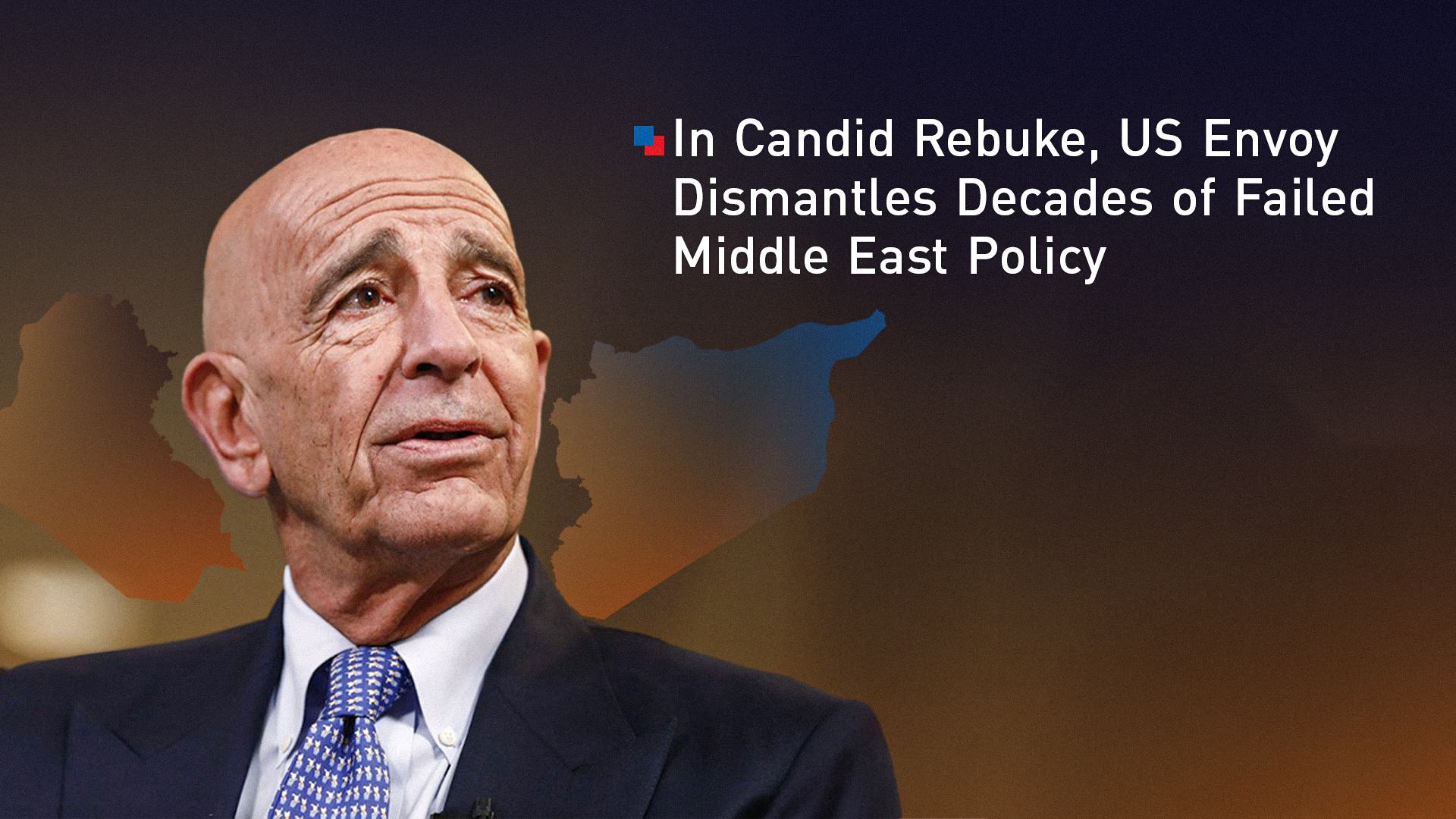
Erbil (Kurdistan24) – In an unexpected and sharply critical assessment, Tom Barrack, the US Presidential Envoy for Syria, dismantled decades of American strategic decisions in Iraq and the wider Middle East, unveiling a raw and unprecedented narrative of miscalculations, structural failures, and geopolitical consequences that continue to shape the region.
Speaking in an exclusive conversation with The National, Barrack offered a sweeping internal critique of US foreign-policy doctrine — from the fragmentation of Iraq, to Washington’s posture toward Iran, Lebanon, Syria, and Israel — in remarks that forcefully diverged from traditional diplomatic language.
From the first moments of the exchange, Barrack framed Iraq as “a great example of things that we should never do again,” describing a cycle of costly investment, political fragmentation, and unintended Iranian empowerment.
‘Three Trillion Dollars, Hundreds of Thousands of Lives, and We Left With Nothing’
When asked by Hadley Gamble about Washington’s shifting position toward Iraq, Barrack began with a sweeping indictment:
“Three trillion dollars or so invested, 20-year disastrous history, few hundred thousand lives lost, and we left with nothing.”
He argued that the US attempted to impose a “kind of republic” on Iraq’s deeply divided Sunni–Shia–Kurd reality, creating a federal model that quickly devolved into Balkanization:
“We’ll create a kind of Baghdad federalism… then another autonomous Kurdish state… and we did the same thing in Syria with the SDF (Syrian Democratic Forces) and YPG (People's Defense Units) or PKK (Kurdistan Workers' Party). It becomes balkanized just like Yugoslavia.”
Barrack contended that this structural division empowered Iran to step into the vacuum:
“Iran… steps up and fills the void. We create this crazy structure in which the militias… actually have power over the parliament.”
He described Prime Minister Mohammed Shia’ al-Sudani as a capable leader who is nonetheless immobilized:
“A very good Prime Minister… who has no power. Zero power. He can’t form a coalition because the PMF and other components are blocking the stage.”
‘Chaos. Absolute Chaos.’ – Hezbollah, Iraq, Lebanon, and Regional Spillover
Barrack said his recent visit illustrated the volatility gripping the region:
“Chaos. Absolute chaos.”
He cited the presence of “disruptive enemy combatants” exploiting every decision point across Iraq, Syria, Lebanon, and Egypt. In his view, the new Syrian authorities are “fending off” similar pressures while attempting to stabilize the transition.
He explained that the US regional commitment now rests almost solely on counter-terrorism:
“This President said: no more boots on the ground, no more money… We’re not going to risk American lives in a formula that’s never worked.”
According to Barrack, Iran views Iraq as essential and will not relinquish influence easily:
“They are making a big stand for Iraq… It’s all they’ve got left.”
US–Iran Prospects: ‘Our President Is Open, But Not to Kicking the Can Down the Road’
Addressing whether Washington is ready for a new negotiation track with Tehran, Barrack claimed:
“He’s open to real discussions… If the Iranians want to listen on enrichment and stopping funding of the proxies… it’s the answer.”
He added that the US is unwilling to be drawn into prolonged symbolic diplomacy:
“He knows the program… baiting him just to get into dialogue… is not going to happen.”
Lebanon: ‘A Totally Failed State’ and the Fragile Shia Equation
Barrack spoke emotionally about Lebanon:
“It holds a very special place… but it’s a totally failed state.”
He cited vast debt, a paralyzed banking system functioning through informal channels, and a political structure unable to move without consensus among confessional blocs:
“Nobody can make a decision without the other confessional agreeing.”
On Hezbollah’s political role, Barrack was explicit:
“America says Hezbollah is a terrorist organization. In Lebanon… it’s a political organization. The government cannot move if the Shias are not on side.”
He noted that no scenario exists in which the Lebanese Army forcibly disarms the movement.
Israel–Lebanon: Quiet Dialogue and a New Ambassadorial Push
Barrack confirmed that dialogue is happening:
“They have talked… They’re starting now a dialogue.”
He praised the new US Ambassador, Lisa Johnson, and outlined Washington’s message:
“Lebanon, you have to talk to Israel. Directly.”
He criticized past mechanisms, including the 2024 “Cessation of Hostilities,” as artificial constructs with no real buy-in:
“The next day it doesn’t work.”
However, he expressed cautious optimism about a comprehensive arrangement that would include the Shia parties rather than exclude them.
Asked about progress between Syria and Israel, Barrack declared:
“From the Syrian side… close.”
He described the new Syrian authorities as approaching their one-year mark after ending “50 years of atrocity,” and maintaining cooperative engagement with Washington:
“Everything we’ve asked them to do in dragging them towards Israel, they’re doing.”
He said Israel remains hesitant, slowing the process, but expressed confidence in eventual progress toward a security and normalization arrangement.
Barrack dismissed theories about a halted offensive:
“Regime change has never worked… 93 coups since 1946 — everyone failed.”
He argued that the US and its current leadership reject regime-change doctrine, leaving such decisions to regional actors:
“Why did Israel not want to finish the job? I don’t think the story is over. You’re on chapter five; we have another five chapters to go.”