On Syria's Regime-Fall Anniversary, Kurdish Authorities Demand Inclusive Dialogue and Decentralized Future
On Syria's first post-Assad anniversary, Kurdish bodies the KNCS and DAANES issued separate statements, both calling for inclusive dialogue, decentralization, and a political settlement addressing Kurdish rights to ensure lasting stability.
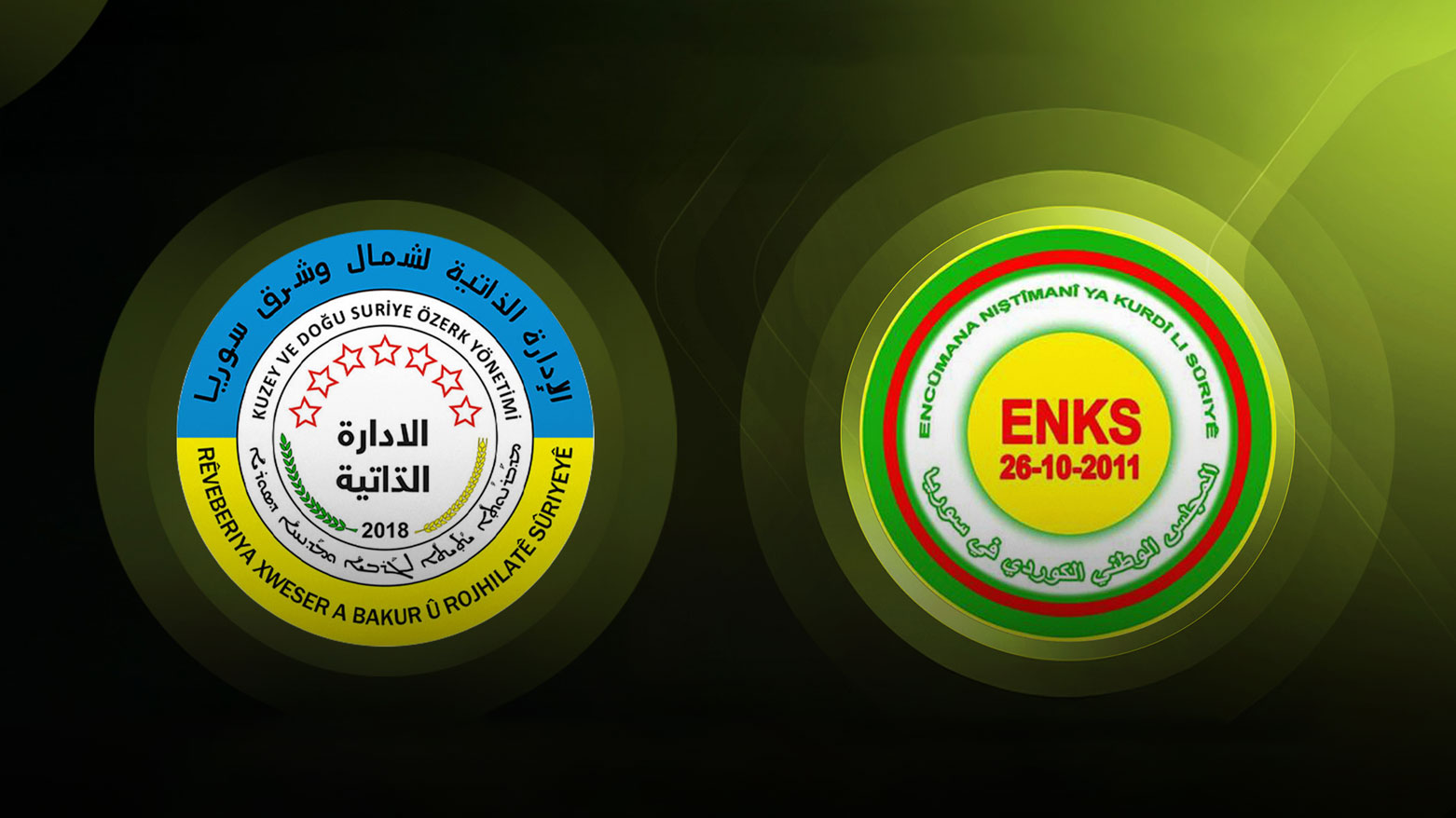
ERBIL (Kurdistan24) – On the first anniversary of the fall of the Baath regime in Syria, the two main Kurdish political bodies in Northern Syria (Western Kurdistan) issued sharply contrasting but convergent messages on the country’s fragile transition: the Kurdish National Council (KNCS), which urged the Syrian transitional government to open serious dialogue with the united Kurdish delegation, and the Democratic Autonomous Administration of North and East Syria (DAANES), which framed the collapse of the Assad regime as the end of a decades-long nightmare whose deeper wounds still require national reckoning.
In a statement marking the anniversary of the downfall of Bashar al-Assad, KNCS warned that any attempt by the new Syrian administration to bypass the Kurdish question would “damage reconstruction and the path toward lasting stability.” The Council called on the transitional government to initiate direct dialogue with the joint Kurdish delegation, insisting that only an inclusive political process can shape a clear Kurdish vision for Syria’s future.
KNCS stated that the joy felt today by the Syrian people “will only be complete when their demands are fulfilled through a just and accountable state,” stressing that ignoring Kurdish grievances undermines the credibility of the broader political transition. The Council reaffirmed its long-standing position that the future Syria must be a “decentralized democratic state.”
In a separate statement released on Sunday, the Democratic Autonomous Administration of North and East Syria described the collapse of the Baath regime as “a dream long denied for Syria,” recalling decades of repression, forced displacement, demographic engineering, and the systematic crushing of political and civic freedoms.
DAANES emphasized that the regime’s legacy was built on exclusion, sectarian manipulation, arbitrary detention, enforced disappearance, and the looting of national resources, all of which left deep scars across society. The anniversary, it said, should be a moment of collective remembrance for all Syrians who “sacrificed their lives for freedom and dignity.”
DAANES stressed that some of the measures taken by the transitional authority over the past year – from political exclusion to opaque decision-making – “cannot reflect the demands, truths, and foundational hopes of the Syrian people,” especially after massacres in Perav and Sweida that shattered national cohesion and reignited dangerous sectarian tensions.
The statement warned that replicating centralization, marginalization, or unilateral decision-making would repeat the failures of the Baath regime and undermine trust at a moment when Syrians “need a genuine democratic, free, and decentralized state.”
Both KNCS and DAANES called on the transitional government to pursue a comprehensive national dialogue involving all Syrian political, ethnic, and civic forces. KNCS stressed that a Kurdish-participatory formula is essential for any credible future settlement, while DAANES underlined that Syria’s transition requires mechanisms for refugee return, national reconciliation, and a broad political process inclusive of every community.
DAANES said Syria must become “a true beacon of freedom, democracy, justice, and equality,” urging all actors – domestic and international – to reinforce unity and invest in sustainable peacebuilding rather than division or zero-sum political competition.
The developments today also follow a major political milestone earlier this year. On April 26, 2025, Kurdish political parties in Western Kurdistan concluded the “Kurdish Unity and Solidarity Conference in Qamishlo, Western Kurdistan”, unanimously adopting a comprehensive “Joint Political Vision” document outlining a roadmap for a negotiated, democratic solution to the Kurdish question within a united, decentralized Syria.
The document—considered the most detailed Kurdish political consensus to date—affirms:
At the National Syrian Level
1-Syria as a multiethnic, multicultural, multireligious state, with constitutional guarantees for Arabs, Kurds, Syriacs, Assyrians, Turkmen, Circassians, Alawites, Druze, Yazidis, and Christians.
2-A parliamentary, bicameral system, grounded in political pluralism, peaceful power transfer, and separation of powers.
3-A decentralized structure ensuring equitable distribution of resources between center and regions.
4-Protection of religious freedom, official recognition of Yazidism, and constitutional neutrality of the state.
5-Equal rights for women and men, protection of children, and re-evaluation of administrative divisions based on population and geography.
6-Reversal of demographic engineering across Syria and guaranteeing the safe return of all displaced communities, including those from Afrin, Ras al-Ain/Serekaniye, and Tal Abyad/Gire Spi.
7-Formation of an internationally supervised Constitutional Assembly representing all Syrian components.
At the Kurdish National Level
1-Unification of Kurdish areas within a single administrative unit inside a federal Syria.
2-Recognition of the Kurds as an indigenous people, with constitutional guarantees for their political, cultural, linguistic, and administrative rights.
3-Kurdish as an official language alongside Arabic.
4-Establishment of Kurdish cultural, educational, and media institutions.
5-Official recognition of Newroz (March 21) and commemoration of the Qamishlo Uprising (March 12).
6-Abolishing discriminatory policies such as the “Arab Belt,” restoring rights to affected populations, and returning Syrian nationality to Kurds stripped of citizenship under the 1962 census.
7-Allocation of a percentage of natural-resource revenues for the development of Kurdish regions.