"The Untold" Stories Revealed: AUK and U.S. Partners Honor Kurdish Women Pioneers in Major Ceremony
Erbil hosted a ceremony by AUK's CAPA launching "The Untold" Vol. 2 and a U.S.-backed leadership program, celebrating women as society's pioneering force.
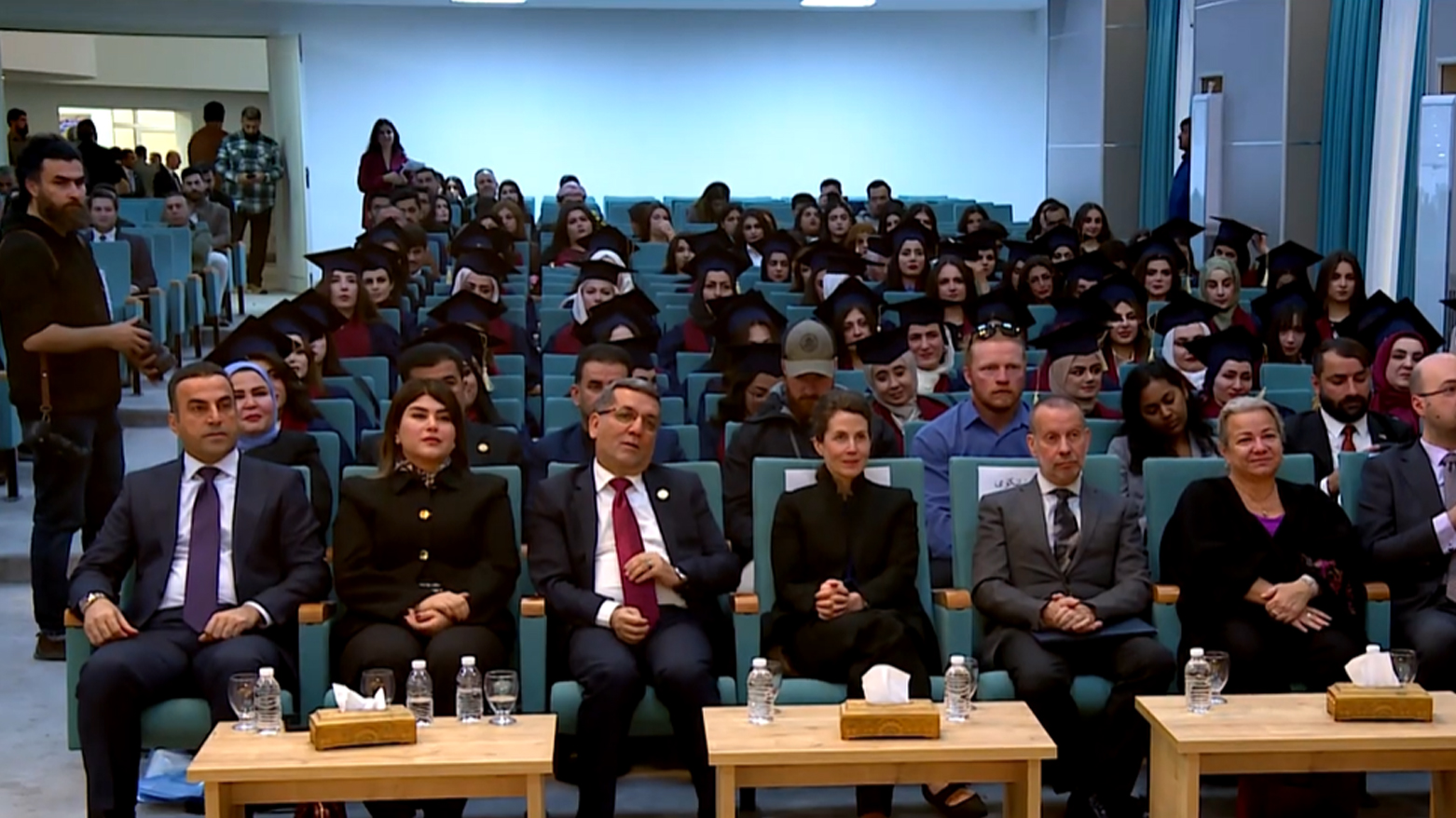
ERBIL (Kurdistan24) – In a significant convergence of academic rigor, diplomatic cooperation, and social advocacy, the Kurdistan Region capital of Erbil became the stage for a high-profile ceremony celebrating the ascending role of women in Kurdish society. Organized by the Center for Academic and Professional Advancement (CAPA) at the American University of Kurdistan (AUK), the event served as a dual platform for the launch of a landmark literary documentation of female achievement and the solidification of international partnerships aimed at cultivating the next generation of female leadership.
The gathering, which underscored the shifting cultural dynamics within the region, featured the release of the second volume of the book "The Untold" and highlighted the ongoing implementation of the "Pioneers" Women's Leadership Certificate Program, a strategic initiative conducted in close cooperation with United States diplomatic and financial institutions.
The ceremony at the American University of Kurdistan was not merely a celebratory function but a substantive affirmation of the Kurdistan Regional Government’s commitment to gender equity and the professional elevation of women.
Central to the proceedings was the unveiling of the second volume of "The Untold," a publication that has rapidly become a cornerstone in the effort to document the often-overlooked contributions of women to the region's development.
This latest volume narrates the personal and professional trajectories of leading women across Kurdistan, providing a permanent record of their struggles and triumphs. The text goes beyond simple biography to highlight what organizers described as "new transformations" in leadership, empowerment, and the tangible influence Kurdish women now wield in various sectors.
The release of the second volume suggests a depth of material and a sustained effort to ensure that the narrative of female success is woven into the official history of the region.
Parallel to the literary launch, the event spotlighted the "Pioneers" Women's Leadership Certificate Program, an educational endeavor that illustrates the deepening ties between Kurdish academic institutions and American governmental bodies.
The program is being implemented with the explicit cooperation of the U.S. Embassy and the U.S. Department of the Treasury. This collaboration indicates a recognition by international partners of the strategic importance of empowering women within the region's economy and governance structures.
By involving the Treasury Department, the initiative underscores a focus that likely extends beyond social empowerment into the realms of economic management, fiscal responsibility, and organizational leadership, aiming to create a cadre of female leaders capable of navigating complex professional landscapes.
The atmosphere of the ceremony was defined by a palpable sense of progress and a rejection of archaic social constraints.
Jwan Rojbayani, the Assistant Head of the Public Relations Department of the Kurdistan Democratic Party (KDP), provided a compelling assessment of the current social climate during an interview with Kurdistan24.
Rojbayani framed the event as evidence of a profound cultural shift that has taken place within the Kurdistan Region. She stated unequivocally that the Kurdistan Regional Government, along with all its associated institutions, has adopted a posture of full support and backing for women.
In her remarks, Rojbayani addressed the historical context of gender relations in the region, asserting that society has successfully moved past the stage where cultural norms dictated that men prevent women from participating in public life.
"We have moved past the stage where it was said that men prevent women from going out," she observed, highlighting a transformation in the social fabric where men have evolved from gatekeepers into effective supporters.
According to Rojbayani, the current reality is one where women’s role and status are strong, bolstered by a recognition that women possess capabilities equal to their male counterparts.
She emphasized that for women to be more present in the field and perform their roles effectively, there must be an acknowledgment of these shared capabilities. However, she also injected a note of realism and meritocracy into the discourse, reminding the audience that "no goal is achieved easily; one must strive and work hard for it," thereby positioning women’s advancement as a result of tenacity and skill rather than tokenism.
The practical impact of the initiatives celebrated in Erbil was a recurring theme among the attendees, many of whom are beneficiaries of the leadership programs championed by the AUK and its partners. The "Pioneers" program was described as a pioneering endeavor designed to create female leaders and empower them to develop and utilize their capabilities in real-world settings.
This focus on practical application was echoed by Tavga Abdullah, an educator present at the ceremony. Abdullah characterized the program as being of "utmost importance," reflecting a desire within the educational community to see such training models replicated and expanded.
She expressed a specific hope that the initiative would not remain static but would continue into other stages and expand its geographic reach to cover all areas of Kurdistan. Her comments underscore a demand for the decentralization of such opportunities, ensuring that women in more remote or underserved areas can benefit from the same high-level training provided in the capital.
The relevance of the training to high-level management was further attested to by Halaz Jihad, a director of an international organization who attended the event.
Jihad offered a testimonial regarding the professional utility of the program, describing it as having "great significance," particularly for women occupying senior executive roles. She noted that she had benefited greatly from the curriculum, specifically in terms of management and the skills required to lead complex operations.
Her experience validates the program's design, suggesting that the cooperation with U.S. institutions is yielding curriculum and training modules that meet global standards and are applicable to the leadership of international organizations.
The overarching philosophy driving these initiatives—from the publication of "The Untold" to the certification workshops—is rooted in a holistic view of societal strength.
The ceremony articulated a clear causal link between the empowerment of the individual woman and the health of the broader community. The guiding principle articulated during the event is that when a woman is strong, the family is strong; and consequently, when the family unit is robust, the society as a whole thrives.
This perspective reframes women's rights not as a niche interest but as a fundamental prerequisite for national stability and prosperity.
The book "The Untold," now spanning two volumes, serves as both a mirror and a beacon. By annually showcasing the stories of a diverse group of women in Kurdish society, the project aims to normalize female success and provide role models for the next generation.
The content of the book serves to confirm a reality that was palpable in the hall in Erbil: women are not merely a part of society to be protected or managed, but are a "pioneering force" and active changemakers shaping the future of the region.
The involvement of the Center for Academic and Professional Advancement at the American University of Kurdistan as the organizer highlights the critical role of higher education institutions in mediating these social changes. By acting as the conduit for U.S. partnership and the publisher of women's histories, CAPA is positioning itself as an incubator for the region's intellectual and professional evolution.
The collaboration with the U.S. Department of the Treasury, in particular, points to a sophisticated understanding of empowerment that includes financial literacy and economic leadership, moving the conversation beyond basic rights to power and influence.
As the ceremony concluded, the message resonating from Erbil was one of irreversible momentum. The testimonials from figures like Jwan Rojbayani, Tavga Abdullah, and Halaz Jihad paint a picture of a society that is actively renegotiating its gender dynamics, supported by political will from the KDP and the KRG, and reinforced by strategic international alliances.
The release of the second volume of "The Untold" marks another chapter in this ongoing narrative, ensuring that the achievements of today’s pioneering women are recorded, celebrated, and used to inspire the leaders of tomorrow. The event stands as a testament to the fact that in the Kurdistan Region, the push for women's leadership is no longer a peripheral activity but a central pillar of the nation's developmental strategy.