President Masoud Barzani Praises Kurdish Women’s Sacrifices on International Women’s Day
Kurdish leader highlights women’s historic role in the struggle of the Kurdistan people
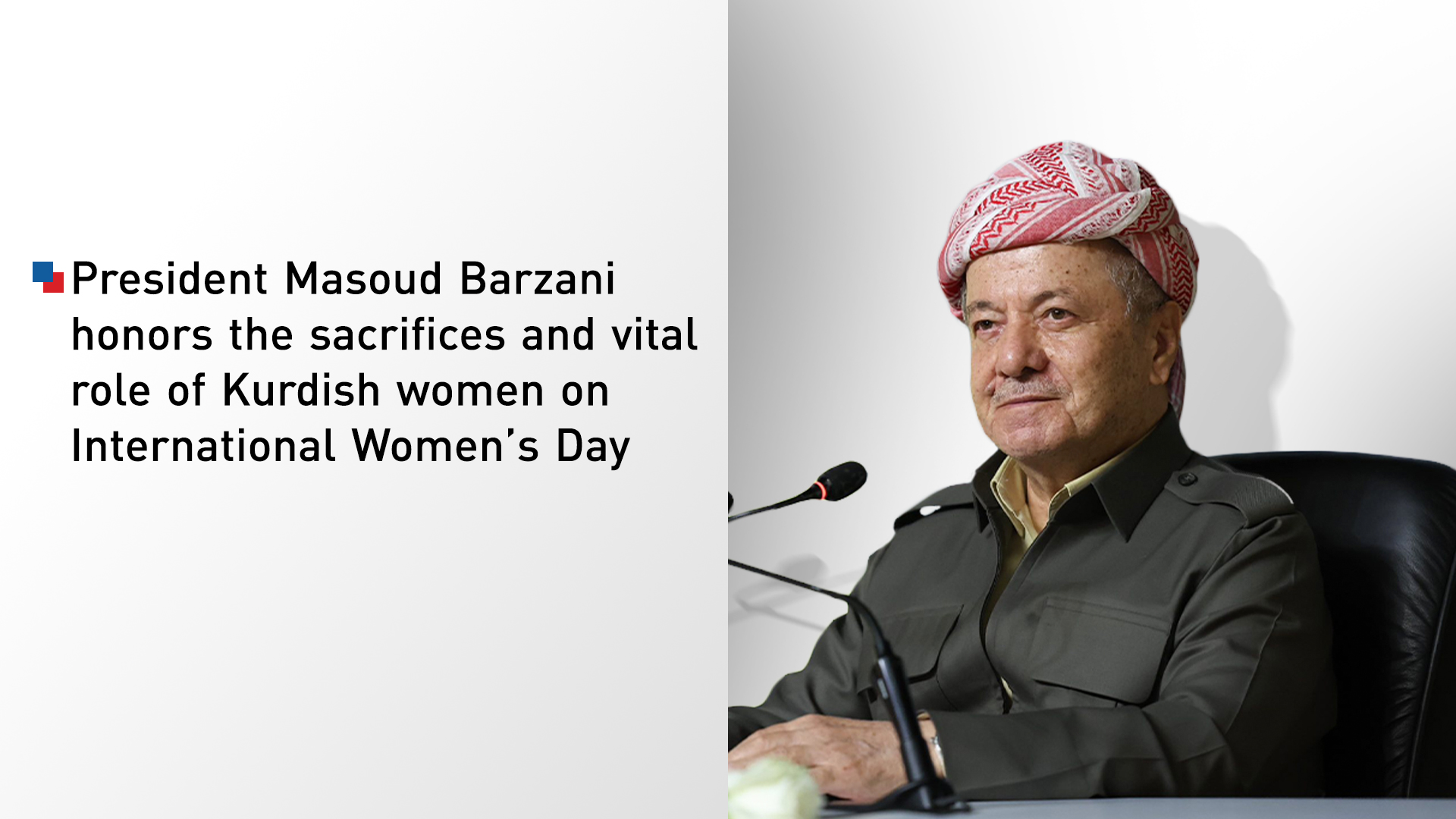
ERBIL (Kurdistan24) — President Masoud Barzani on Sunday congratulated women in Kurdistan, Iraq, and across the world on International Women's Day, praising Kurdish women for their sacrifices and enduring role in the Kurdish struggle.
In a statement posted on his X account, Barzani expressed deep appreciation for the contributions of women throughout Kurdistan’s history, describing them as a cornerstone of the Kurdish people’s resilience and pursuit of freedom.
“On the occasion of March 8, International Women’s Day, I congratulate the women of Kurdistan, Iraq, and the world,” Barzani said in the statement.
He emphasized that Kurdish women have long been an integral part of the Kurdish national struggle, often bearing significant burdens during periods of hardship and conflict.
“I have deep appreciation for the role and sacrifices of the women of Kurdistan, who have always been a fundamental part of our people's struggle and resilience, and the weight of the revolution and sacrifice has been on their shoulders,” he added.
Barzani concluded his message by wishing happiness, prosperity, and success for women across the Kurdistan Region, acknowledging their continued contributions to society.
Throughout his political career, President Barzani has consistently emphasized the pivotal role of women in the history of Kurdistan, particularly in the region’s long struggle against oppression and injustice.
Recognizing that the fight for freedom and stability has relied not only on armed resistance but also on social and political participation, Barzani has underscored women’s contributions as an integral part of the Kurdistan people's collective resilience.
Beyond words, Barzani’s approach to women’s empowerment has been marked by tangible actions. He has actively promoted highly qualified female members of the Kurdistan Democratic Party (KDP) to the highest levels of party leadership, including positions on the party’s leadership council.
His policy extends to government and parliamentary representation, with women appointed to ministerial roles, senior posts within the Kurdistan Regional Government (KRG), and diplomatic assignments abroad.
Barzani’s initiatives aim not only to elevate individual women but to foster systemic participation in political decision-making. By integrating women into both party structures and state institutions, he has sought to ensure that women have a voice in shaping the policies and governance of the Kurdistan Region.
This commitment reflects his long-standing view that sustainable development, social equity, and democratic governance in Kurdistan require the full engagement of women at every level of leadership.