KRG Launches Second Phase of Police Reform Centered on Citizens’ Rights
Interior Ministry Highlights a strategic shift from force-based policing to a citizen-centered, service-driven model aimed at strengthening accountability, professionalism, and community trust.
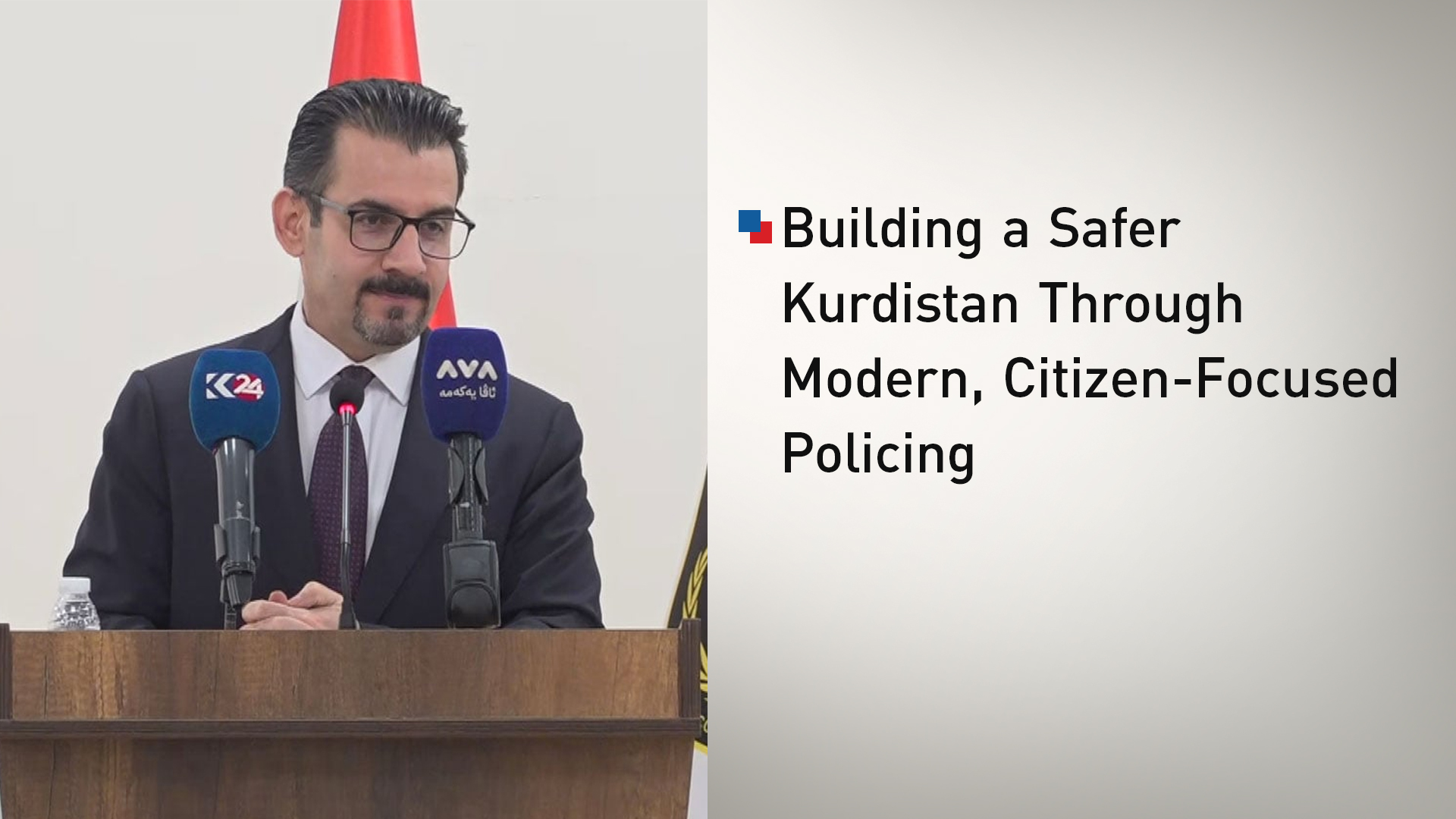
ERBIL (Kurdistan24) — The Kurdistan Regional Government (KRG) on Tuesday inaugurated the second phase of its sweeping police reform program, emphasizing a strategic shift from force-based policing to a citizen-centered, service-driven model aimed at strengthening accountability, professionalism, and community trust.
Speaking at the launch ceremony in Erbil, Hemin Mirani, Director General of the Diwan of the Interior Ministry, said the Ninth Cabinet’s philosophy is rooted in “transforming the police from a force of power to a force of respect,” underscoring that citizens must be regarded as the true owners of public institutions.
‘The Citizen Is Our Priority’
Dr. Mirani stressed that the foundation of the reform agenda is a change in mindset across government institutions.
“When we deal with citizens, we are not above them,” he said. “The citizen is our sovereign. They are the owners of the institutions. Government employees exist to serve them.”
He emphasized that the new vision replaces the traditional force-based policing approach with a community-based model, one that prioritizes service, respect, and rights protection.
Technology, Evidence Collection, and Transparency
The Interior Ministry is also advancing major technological upgrades. According to Mirani, the Kurdistan Region now operates Iraq’s most advanced CCTV surveillance system and its most sophisticated forensic laboratory (Adila), significantly improving the government’s ability to identify and prosecute criminals.
He revealed that the government has begun purchasing GoPro body-worn cameras for officers to enhance transparency and evidence collection. The pilot phase has already started with the Erbil police and will soon expand across the region.
“These cameras protect both officers and citizens,” he said. “Every operation will be recorded and can serve as critical evidence before the courts.”
Three Key Directives for Police Officers
Mirani outlined three central guidelines for officers as part of the reform plan:
Respect for Human Rights: Police must treat the public as service providers would treat valued customers, reflecting the principle that “the citizen is always right.”
Impartiality and Professionalism: Officers involved in cases concerning relatives or acquaintances must recuse themselves to avoid bias, mirroring the practice used in the judiciary.
Community Policing: Police officers should proactively engage with local communities—attending social events, building relationships, and reinforcing the idea that the police station is “part of the neighborhood, not separate from it.”
A Broader Government Vision
Mirani noted that the Ninth Cabinet, led by Prime Minister Masrour Barzani, has consistently highlighted service quality and transparency as governing priorities, particularly in sectors that interact directly with the public, such as civil status, passports, traffic police, and security offices.
He acknowledged that although the current cabinet is nearing the end of its term, major reforms have already taken root and will serve as a foundation for future institutional modernization.
“Compare the state of our police equipment and capabilities today with ten years ago,” he said. “The difference is profound.”
The reform program is implemented with advisory support from the European Union, which has played a significant role in assisting the KRG’s efforts to modernize its policing standards in line with international norms.
The KRG’s ongoing police reform is part of a larger, multi-year institutional modernization effort undertaken by the Ninth Cabinet. Since assuming office, the cabinet has pursued comprehensive reforms across nearly all sectors of governance, including digital services, civil registry systems, border management, public finance, and anti-corruption mechanisms.
Kurdistan Region leadership emphasizes that the core objective is to shift from traditional, authority-centered governance toward a citizen-centric model that prioritizes accountability, transparency, and professional service delivery.
Within this framework, police reform is viewed as a critical pillar of the wider transformation. Enhancements in training standards, the adoption of body-worn cameras, expansion of forensic capabilities, and the rollout of advanced CCTV networks are intended not only to strengthen law enforcement but also to align policing practices with international norms.
By embedding these efforts within the broader government reform agenda, the KRG aims to professionalize public institutions, modernize administrative systems, and rebuild public trust across all levels of governance.