Syria Confirms Gunman Who Killed Three Americans Was Slated for Dismissal Over "Extremist Ideas"
Syria reveals the gunman who killed three Americans was a security force member set to be fired for extremism the day after the attack.
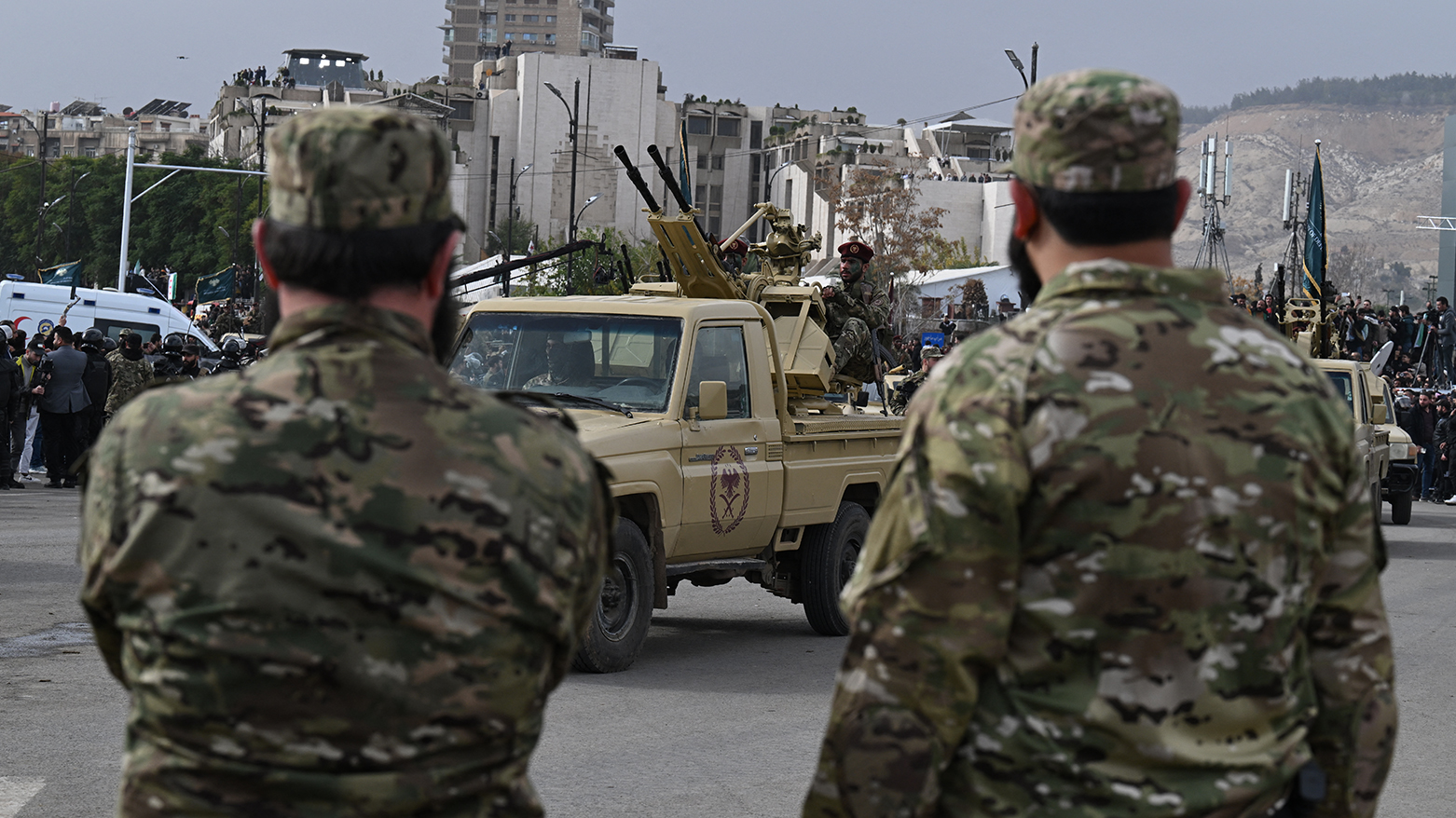
ERBIL (Kurdistan24) – In a startling revelation that raises critical questions about internal vetting within partner forces in the counter-ISIS mission, the Syrian Ministry of Interior confirmed on Sunday that the gunman responsible for the deadly ambush of a joint U.S.-Syrian patrol was a member of the country's security services who had already been flagged for termination due to extremism.
The attacker, who killed two American service members and a civilian interpreter in the central Palmyra region on Saturday, was reportedly hours away from being officially discharged when he launched his assault, highlighting the perilous insider threats that persist even as Washington deepens its cooperation with the new government in Damascus.
According to a report by Agence France-Presse (AFP), Syrian authorities had identified the individual as a security risk prior to the attack.
Ministry spokesman Noureddine al-Baba stated on state television that the decision to remove the gunman from the ranks had already been finalized.
"The authorities had decided to fire him" from the security forces for holding "extremist Islamist ideas," al-Baba revealed, adding that the administrative action to process his dismissal had been scheduled for Sunday—the day after the killings took place. This timeline suggests a catastrophic failure in neutralizing a known threat before he could turn his weapon on coalition partners.
The attack itself was a brutal disruption of ongoing stabilization efforts.
Occurring near the historic city of Palmyra, the ambush targeted a joint patrol conducting key leader engagements and counterterrorism operations.
The U.S. Central Command (CENTCOM) confirmed that a "lone ISIS gunman" engaged the convoy, resulting in the deaths of "three Great American Patriots"—two uniformed service members and one dedicated civilian interpreter. Three additional American troops were wounded in the firefight, along with Syrian security personnel.
The assailant was engaged and killed at the scene by partner forces, a detail confirmed by U.S. Secretary of War Pete Hegseth, who vowed ruthless retribution against anyone targeting Americans globally.
The incident has drawn a furious response from the highest levels of the U.S. government. President Donald Trump warned of "very serious retaliation," describing the ambush as an attack against both the United States and Syria in a highly dangerous area not yet fully under government control.
He noted that Syrian President Ahmed al-Sharaa was "extremely angry and disturbed" by the assault, signaling a unified stance between the two capitals.
This sentiment was echoed by U.S. Envoy Tom Barrack, who condemned the "cowardly terrorist attack" and reaffirmed Washington's commitment to defeating terrorism alongside its Syrian partners.
Today’s cowardly terrorist ambush on U.S. personnel in Syria, which claimed the lives of two brave American soldiers and a dedicated civilian interpreter, is a stark and outrageous reminder that terrorism remains a vicious and persistent threat, capable of striking even as we…
— Ambassador Tom Barrack (@USAMBTurkiye) December 13, 2025
However, the revelation that the shooter was an insider facing dismissal adds a complex layer to the narrative.
While U.S. and Syrian officials have framed the attack as an ISIS operation, the fact that the perpetrator was embedded within the state's security apparatus—albeit on the verge of expulsion—underscores the challenges of vetting and purifying the ranks of a force that is being rebuilt after years of conflict.
The presence of individuals harboring "extremist Islamist ideas" within the security services poses a direct threat to the joint operations that are essential for preventing an ISIS resurgence.
The aftermath of the shooting saw a rapid mobilization of emergency assets.
Syrian state media reported that flight operations intensified in the area, and the international highway linking Deir Ezzor and Damascus was temporarily closed to facilitate the evacuation of the wounded by U.S. helicopters to the Al-Tanf military base.
The Syrian Observatory for Human Rights (SOHR) noted critical injuries among the Syrian security forces accompanying the Americans, further illustrating the shared risk born by local partners.
As investigations continue into how the gunman was able to remain operational despite being flagged, the incident serves as a grim reminder of the volatility in central Syria.
The "lone gunman" theory proffered by CENTCOM may now be scrutinized through the lens of internal infiltration, forcing a re-evaluation of security protocols for joint patrols.
For the families of the fallen, the news that their killer was a known extremist within the very forces they were supporting adds a tragic dimension to their loss.
With the U.S. vowing to hunt down threats and Syria promising to purge its ranks, the path to stability remains fraught with lethal uncertainties.