Duhok Launches First Potato Festival Amid Record 600,000-Ton Harvest
Duhok hosts its first Potato Festival on Dec 15, celebrating a forecasted 600,000-ton harvest and plans to export to the Gulf and Jordan.
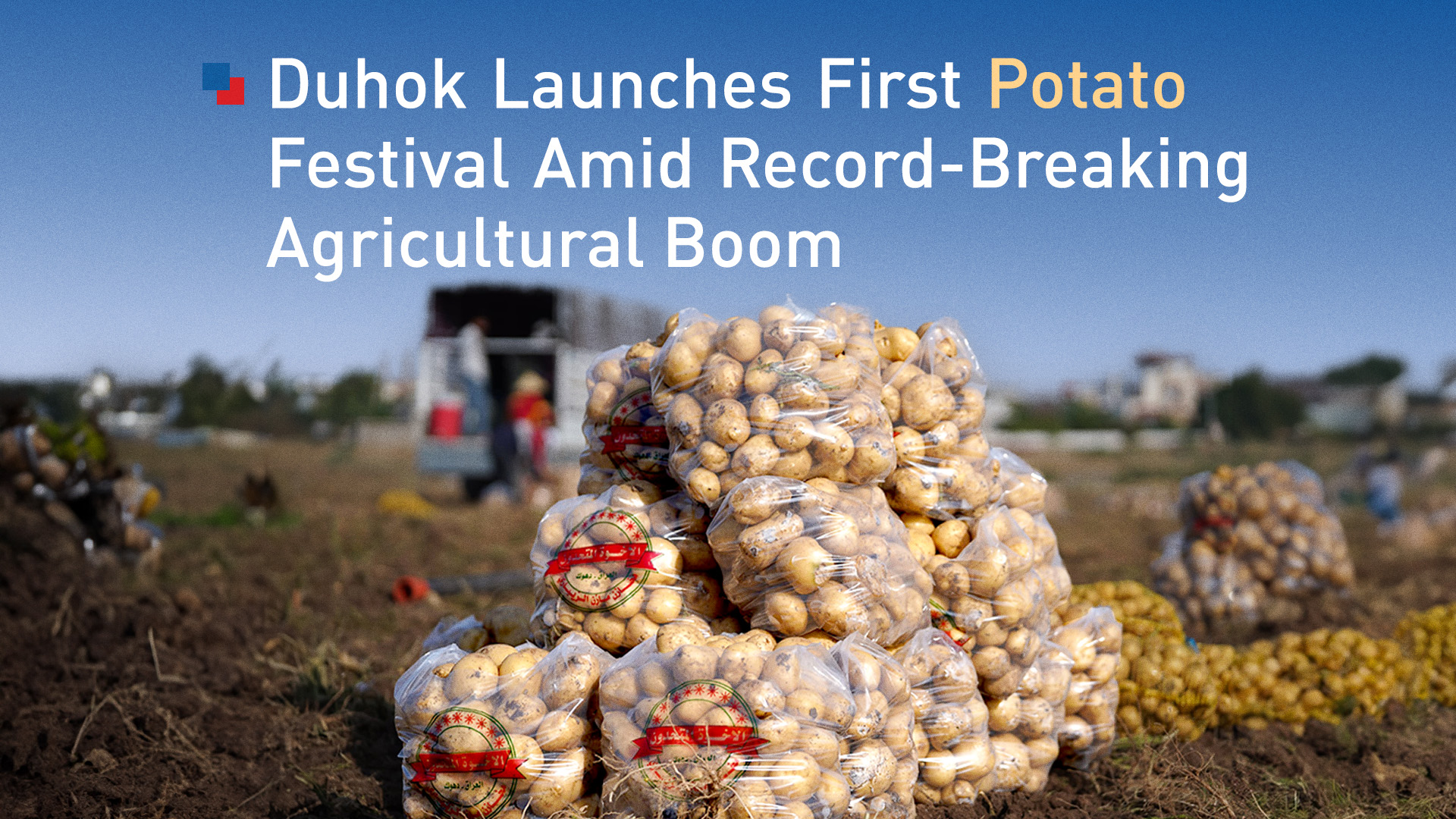
ERBIL (Kurdistan24) – In a decisive move to solidify its status as the agricultural powerhouse of the Kurdistan Region and to showcase a sector that has undergone a radical transformation in productivity, the Governorate of Duhok is set to inaugurate its first-ever Potato Festival on Monday.
The three-day event represents far more than a ceremonial gathering of farmers; it stands as a strategic declaration of economic self-sufficiency and export ambition, occurring against a backdrop of record-breaking yields that have seen local production skyrocket to unprecedented levels.
With preparations now complete, the festival is poised to highlight the region's transition from a net importer to a critical supplier for Iraq and the broader Middle East, underpinned by a targeted government policy that has prioritized domestic food security and infrastructure development.
The initiative, which has garnered significant attention from agricultural stakeholders and regional merchants, is being executed through a high-level partnership involving the Duhok Governorate’s General Directorate of Agriculture and the University of Duhok.
Crucially, the event has secured the support of the Consulate of the Netherlands, a diplomatic endorsement that signals international confidence in the quality and potential of Kurdistan’s agricultural output. The involvement of the Dutch—global leaders in agri-technology and trade—underscores the technical sophistication that the festival aims to promote within the local farming community.
Engineer Ahmed Jamil, the General Director of Agriculture for Duhok Governorate, outlined the strategic contours of the event in a statement to Kurdistan24 correspondent Bewar Hilmi.
According to Jamil, the primary objective of the festival is not merely celebration but commerce; the platform is designed to directly showcase the harvest of the province's farmers to facilitate access to new markets.
The event is structured to serve as a bridge between the producers who have successfully cultivated vast tracts of land and the commercial entities capable of distributing this bounty.
Furthermore, the festival will feature a distinct scientific section dedicated to the study of the tuber and the associated food industries, ensuring that the agricultural boom is sustained by academic research and industrial innovation.
The physical scale of the festival reflects the magnitude of the sector it represents.
Approximately 50 tents have been erected to house the diverse array of activities scheduled for the coming days.
These pavilions will be divided to serve multiple functions: some will be strictly dedicated to displaying the raw potato produce, allowing exemplary farmers who have been specifically invited to present their high-yield crops directly to the public and potential buyers.
Other sections will be allocated for the display of Kurdish and foreign foods, creating a culinary interface that demonstrates the versatility of the product.
Additionally, a specialized section will focus on the industrial aspect of the potato trade, hosting companies involved in processing and related food industries, thereby highlighting the potential for value-added manufacturing within the province.
The timing of this inaugural festival is inextricably linked to a surge in production statistics that depict a sector in the midst of a golden age. The agricultural landscape of Duhok has witnessed significant and sustained growth over recent years, driven by a combination of favorable geography and aggressive state support.
Data indicates that potato production in the governorate surged by a staggering 70 percent in 2023, a growth trajectory that has continued unabated.
Current projections for the year 2025 estimate that total production will reach a monumental 600,000 tons. This figure is the result of an expansive cultivation strategy that has seen 48,000 hectares of land dedicated to potato farming, effectively turning the plains of Duhok into one of the most productive agricultural zones in the country.
This explosion in output is not an accident of nature but the result of deliberate policy enacted by the Ninth Cabinet of the Kurdistan Regional Government (KRG).
Through the Ministry of Agriculture, the government has implemented a robust support system designed to shield local farmers from foreign competition while enhancing their capacity to export.
A cornerstone of this policy has been the enforcement of a ban on imports, a protectionist measure that has forced the domestic market to rely entirely on local produce. This strategic decision has guaranteed a market for Kurdish farmers, incentivizing investment in acreage and technology.
However, the ambition of the KRG extends well beyond satisfying domestic demand.
With the local market now fully supplied by homegrown crops, the surplus production has opened the door to a lucrative export economy.
Plans are currently in motion to export Duhok’s potatoes to regional neighbors including Jordan, the United Arab Emirates, and Qatar, as well as to the southern provinces of federal Iraq.
The high quality of Duhok’s potatoes has reportedly caused a shift in regional trade patterns, with many merchants turning toward the Kurdistan Region as a preferred source of stable, high-grade agricultural products.
To support this massive increase in volume and ensure that the harvest does not go to waste, the region has seen a parallel boom in logistics infrastructure. In the past few years alone, 126 cold storage facilities have been constructed across Duhok.
These facilities are critical for maintaining the integrity of the crop, allowing potatoes and other agricultural products to be stored for extended periods and released into the market strategically to maintain price stability.
This infrastructure investment addresses one of the historic weaknesses of the local agricultural sector—spoilage and seasonality—and transforms the potato harvest from a perishable good into a durable economic asset.
As the festival opens its doors on Monday, it will present new varieties of potatoes alongside established favorites, signaling a commitment to diversification and genetic improvement.
The convergence of farmers, academics, industrialists, and diplomats in Duhok serves as a testament to the KRG’s broader economic vision: a Kurdistan that feeds itself and trades with the world on its own terms.
Kurdistan24 correspondent Bewar Hilmi contributed to this report.