KRG Replaces Thousands of Textbooks as Chamchamal Recovers From Floods
KRG sends 55,000 books to Chamchamal students as BCF delivers thousands of meals, heaters, and blankets to flood victims facing total property loss.
ERBIL (Kurdistan24) – In a concerted government-led effort to restore stability to the flood-ravaged educational and social infrastructure of the Kurdistan Region, the Kurdistan Regional Government (KRG) has initiated a massive logistical operation to replace the academic resources destroyed by recent torrential rains, while humanitarian teams simultaneously escalate relief efforts for thousands of displaced residents.
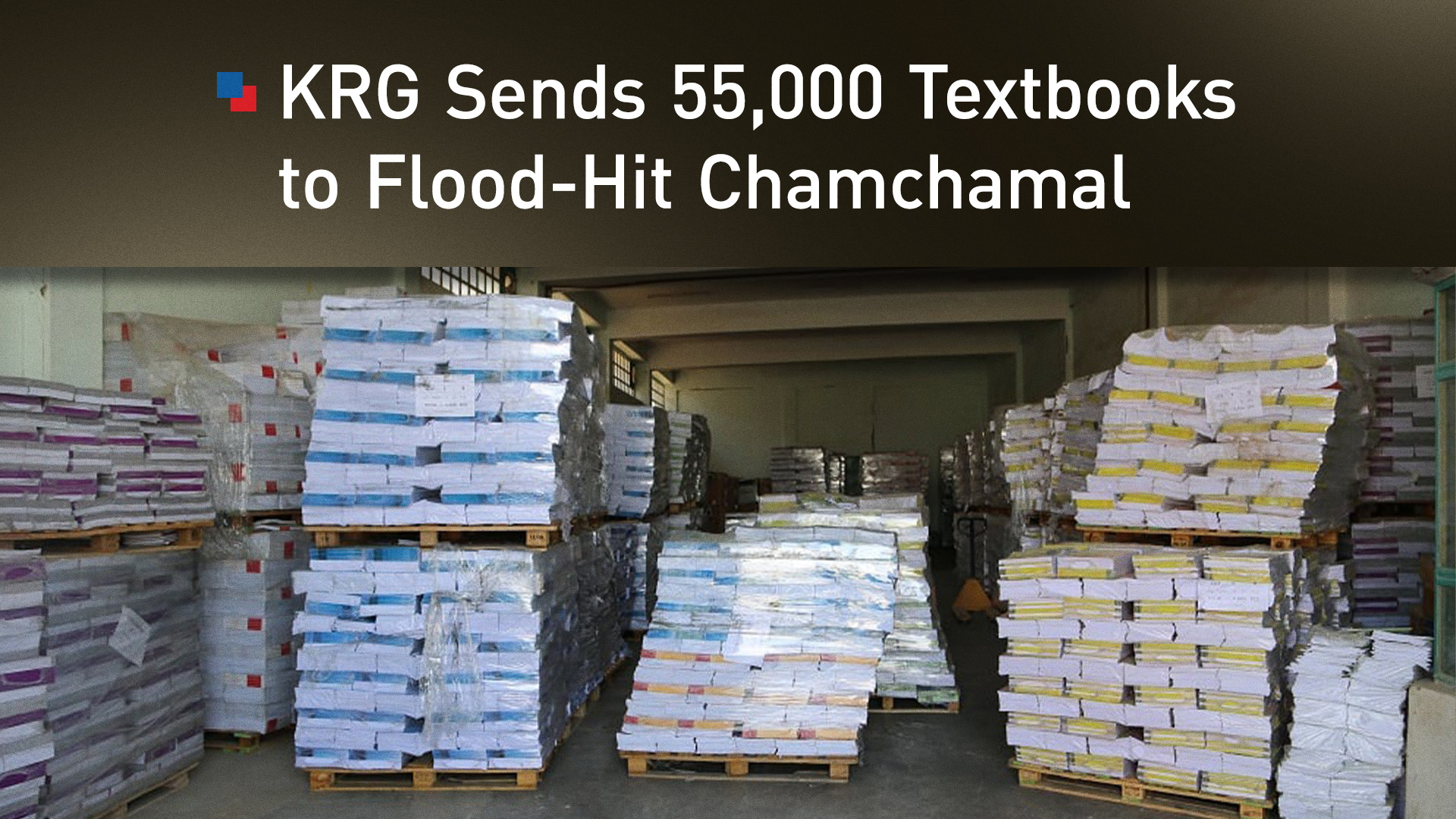
On Sunday, following a direct recommendation from Prime Minister Masrour Barzani, the Ministry of Education commenced the deployment of 55,000 new textbooks to the Chamchamal district, a strategic move designed to salvage the academic year for nearly five thousand students whose classrooms and materials were decimated by the deluge.
This educational lifeline runs parallel to an extensive emergency response by the Barzani Charity Foundation (BCF), which has deployed millions in resources—from kerosene to hot meals—to mitigate a crisis that has left hundreds of homes uninhabitable and forced families in the hardest-hit neighborhoods to flee their properties.
The decision to replenish the district’s educational stocks on such a scale underscores the severity of the disaster that unfolded earlier this week.
The Ministry of Education has allocated a special budget of approximately 70 million dinars to fund the procurement of the 55,000 books, ensuring that the financial burden of the natural disaster does not fall upon families already grappling with the loss of their livelihoods and possessions.
Rezhan Dler, the Director of the Eastern Section of Sulaymaniyah Governorate, confirmed to Kurdistan24 on Sunday that preparations were actively underway at the Eastern Education warehouses to transport the materials.
Dler outlined a phased distribution strategy, noting that the first stage will prioritize the immediate needs of 750 primary school students in grades one through six, alongside nearly 500 students in grades seven through nine of basic education.
This logistical mobilization is a critical component of a broader recovery roadmap mandated by the Prime Minister. The flood, which struck with devastating intensity over the past few days, spared no sector of public life in Chamchamal.
The education sector took a particularly heavy blow, with more than ten schools sustaining significant structural damage, necessitating the temporary suspension of the education process.
In response, the Ministry has issued a series of urgent directives that go beyond the provision of books, including orders for the immediate renovation of damaged facilities, the compensation for destroyed items, and the postponement of end-of-term examinations to alleviate pressure on traumatized students.
These measures are collectively aimed at normalizing life in the district and returning students to their classrooms as quickly as safety permits.
While the government focuses on the institutional recovery of the school system, the humanitarian reality on the ground in Chamchamal remains dire, particularly in the Shorsh sub-district, which has emerged as the epicenter of the destruction.
Reports from the field indicate that the Bawayi neighborhood in Shorsh suffered the most acute damage, creating a displacement crisis within the district borders.
Hawzhin Jamal, a reporter for Kurdistan24, documented a grim landscape where residents have been forced to abandon their mud-choked homes and rent accommodation in unaffected neighborhoods.
The scale of the loss is total for many families; one resident, a Peshmerga soldier who was on duty when the waters rose, recounted the harrowing rescue of his children by neighbors.
He revealed the crushing economic toll of the event, noting that the home he built only a year ago—and for which he is still in debt—has been destroyed, leaving his family reliant on the charity of philanthropists for their survival.
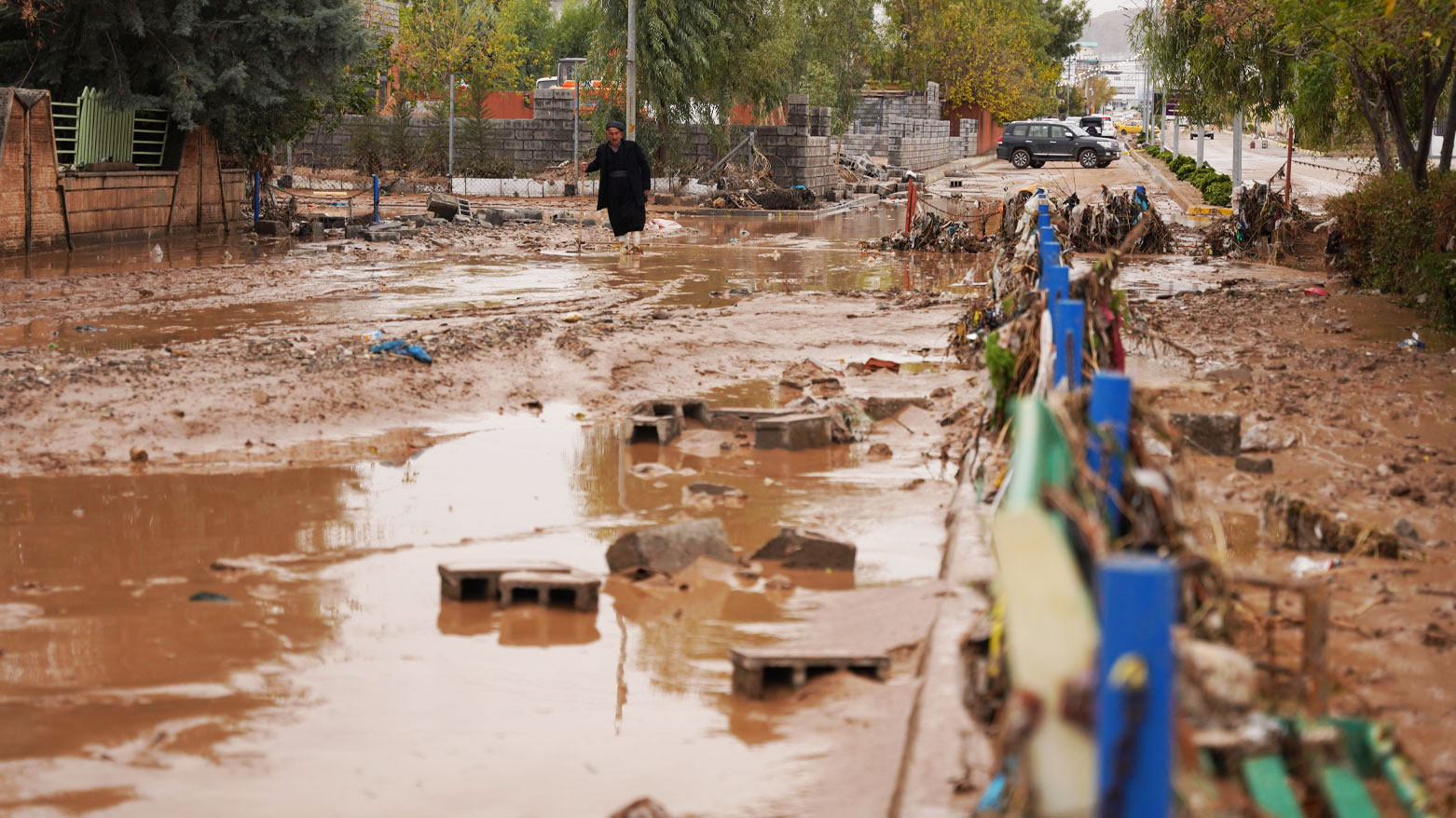
Another resident of the Bawayi neighborhood offered a stark testament to the speed and ferocity of the floodwaters.
Recalling the day of the incident, the citizen explained that there was no time to salvage household items; the singular focus was on survival.
"We were unable to move any household items to a safe place. Now nothing is left for us," the resident stated, expressing gratitude to the Almighty solely for the preservation of life.
These personal accounts contextualize the official statistics, which record the loss of two lives and injuries to twelve others in the Chamchamal district alone, alongside damage to more than 500 houses and 100 commercial shops.
To address these immediate survival needs, the Barzani Charity Foundation (BCF) has executed a wide-scale emergency campaign that began in the very first hours of the disaster.
Acting on the recommendation of President Barzani, BCF teams launched a three-stage relief plan comprising the cleaning of homes, the provision of food security, and the distribution of household necessities. The foundation released comprehensive data on Sunday detailing the scope of its intervention between December 10 and 12.
In a massive food aid operation, the BCF distributed more than 6,000 hot meals to victims, with the bulk of the aid—4,800 meals—directed specifically to Chamchamal District, while 900 meals were sent to the town of Takiya and 400 to Kalar. Additionally, 1,000 baskets of dry food were delivered to families to provide longer-term sustenance.
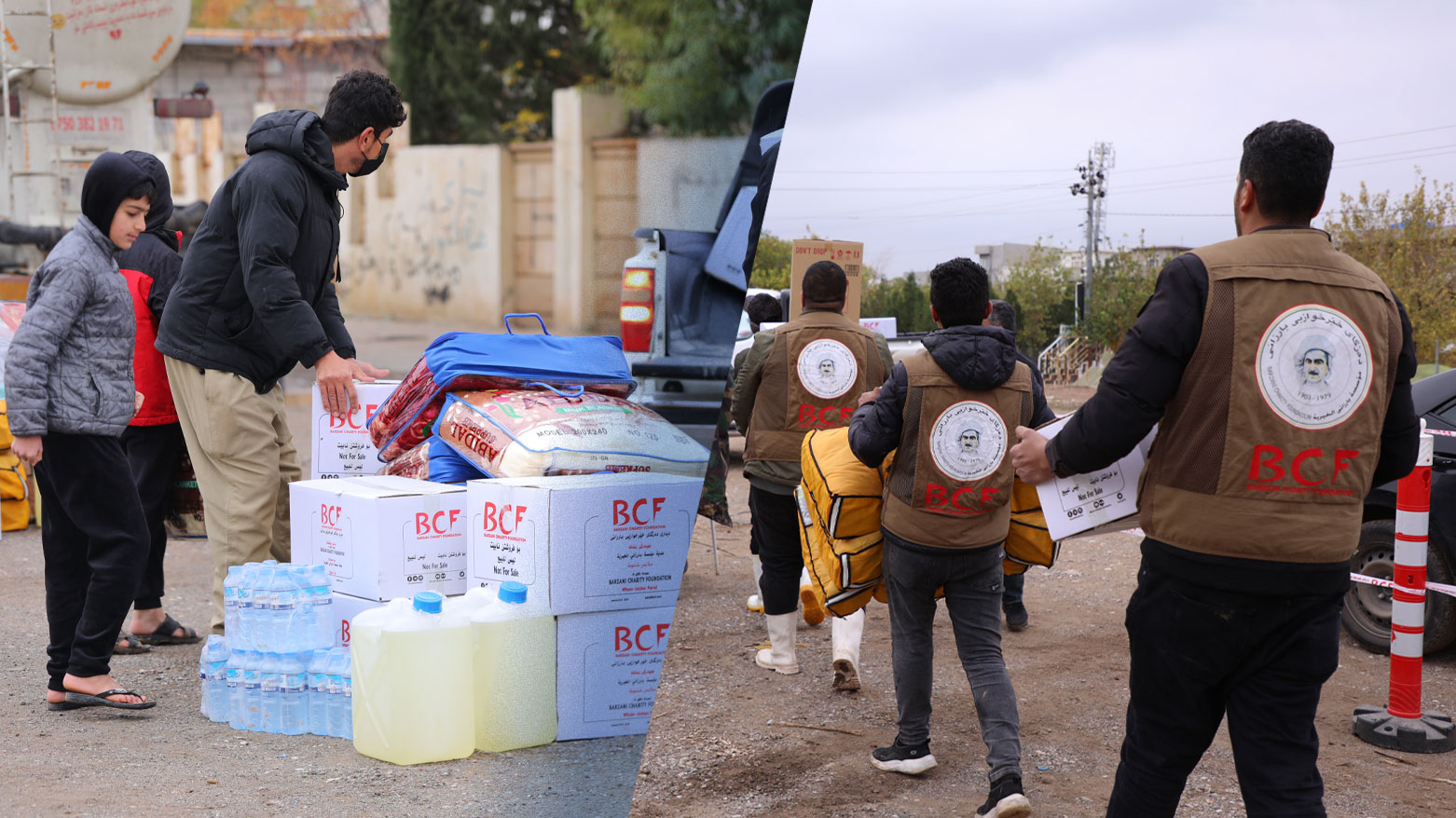
Recognizing the compounded threat of the winter season, the foundation prioritized the distribution of thermal protection. The relief packages included 3,000 cartons of winter clothing, 3,000 blankets, and 1,600 mattresses to replace bedding ruined by the sludge.
To combat the freezing temperatures in damp homes, the BCF distributed 25,000 liters of kerosene oil and 500 heaters, a vital intervention to prevent cold-related illnesses among the displaced and vulnerable.
The foundation’s response also tackled the immense sanitation challenge posed by the flood residue. Utilizing a fleet of 20 water tankers, rescue teams cleaned and washed 135 damaged houses, removing layers of mud to make structures habitable again.
This was supplemented by the provision of six tankers of clean drinking water and 3,000 individual packs of water to ensure access to potable supplies.
In terms of household rehabilitation, the BCF distributed 500 kitchen sets and 4,000 cleaning packs, equipping families with the basic tools necessary to restart their daily lives.
The coordinated efforts of the Kurdistan Regional Government and the Barzani Charity Foundation represent a dual-track approach to disaster management: immediate humanitarian stabilization coupled with institutional restoration.
As 55,000 new books make their way to the schools of Chamchamal and thousands of liters of fuel warm the homes of the Shorsh sub-district, the response highlights a significant mobilization of state and civil resources.
However, the testimony of residents like the indebted Peshmerga serves as a sobering reminder that while the cleanup has begun, the economic and psychological reconstruction of the community will require sustained support long after the floodwaters have receded.