PM Barzani, Iranian Ambassador Discuss Bilateral Ties and Iraq’s Political Developments
Both sides underscored the importance of strengthening cooperation, particularly in the economic, trade, and cultural fields, highlighting the long-standing relations between the Kurdistan Region and the Islamic Republic of Iran.
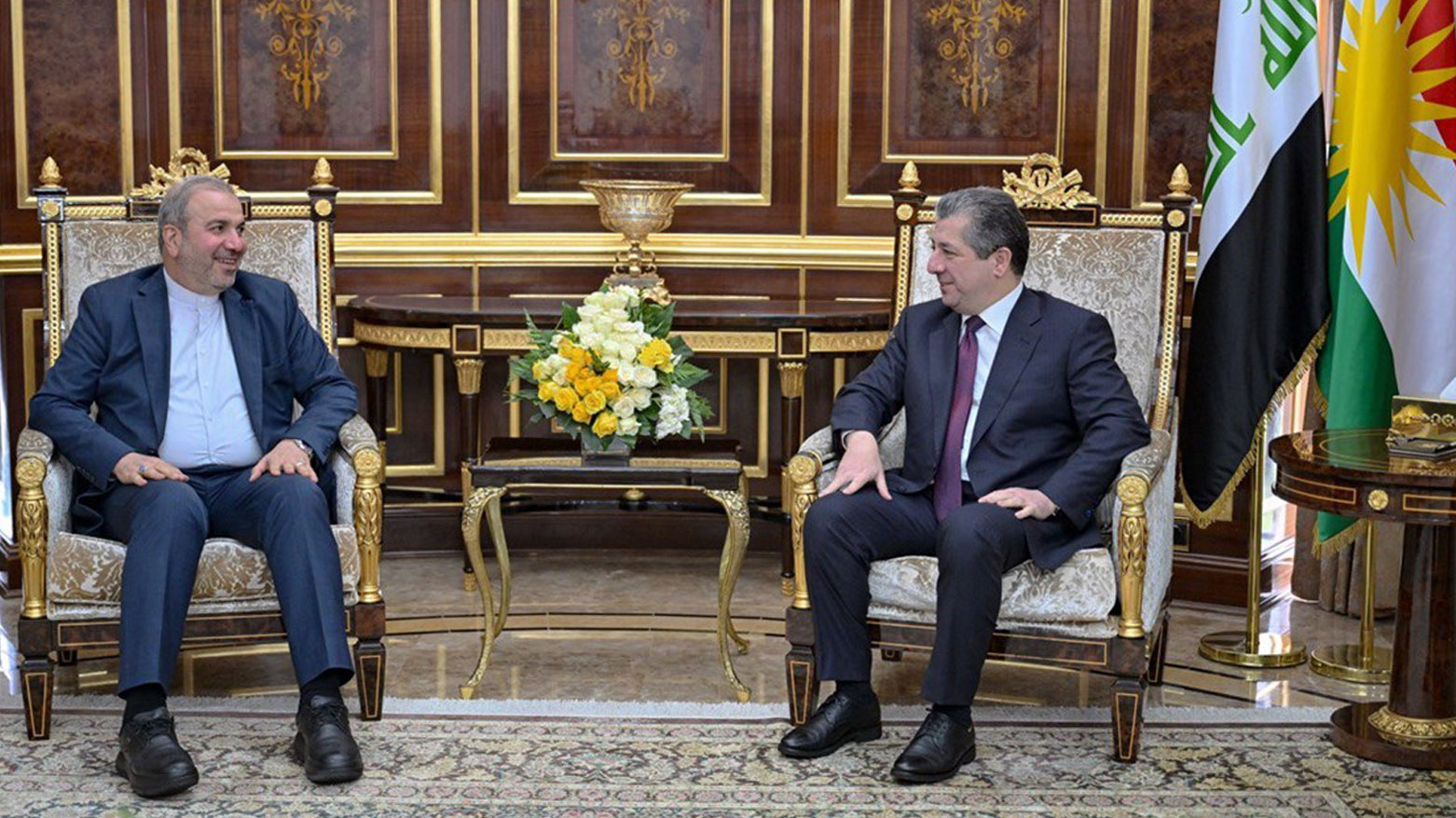
ERBIL (Kurdistan24) – Kurdistan Region Prime Minister Masrour Barzani on Sunday received Mohammad Kazem al-Sadeq, Ambassador of the Islamic Republic of Iran to Iraq, to discuss bilateral relations and recent political developments, according to a statement from the Kurdistan Regional Government (KRG).
The meeting, attended by Iran’s Consul General in Erbil, Faramarz Asadi, reviewed ways to further develop ties between the Kurdistan Region and Iran, as well as the situation in Iraq following parliamentary elections and ongoing discussions to form the next federal cabinet.
Both sides underscored the importance of strengthening cooperation, particularly in the economic, trade, and cultural fields, highlighting the long-standing relations between the Kurdistan Region and the Islamic Republic of Iran.
The talks come as political actors in Iraq continue consultations aimed at forming a new federal government after the elections, with regional and international partners closely following the process.
Polling for the sixth session of the Council of Representatives took place on November 11, with voting open from 7:00 a.m. to 6:00 p.m. across all Iraqi provinces, including the Kurdistan Region.
According to the Iraqi Independent High Electoral Commission (IHEC), voter turnout has surpassed 55 percent, an increase compared to recent electoral cycles. The commission said the figure is based on data from most polling centers and reflects the participation of more than 12 million voters out of over 21 million eligible Iraqis.
This year’s election featured a crowded field of political contenders: 38 political parties, 31 coalitions, and 75 individual lists. In total, 7,768 candidates—5,520 men and 2,248 women—competed for seats in the 329-member parliament.
The vote was held under a revised electoral framework, introduced in response to demands that emerged from the nationwide protests of 2019–2021. The system replaced proportional representation with a single non-transferable vote mechanism, dividing the country into 83 multi-member constituencies.