Months of Agony End as Heroic Teacher’s Family Finally Receives Closure
After eight months, the body of Avesta Yusuf was identified and returned to her family, ending a tragic search that began with her drowning in April.
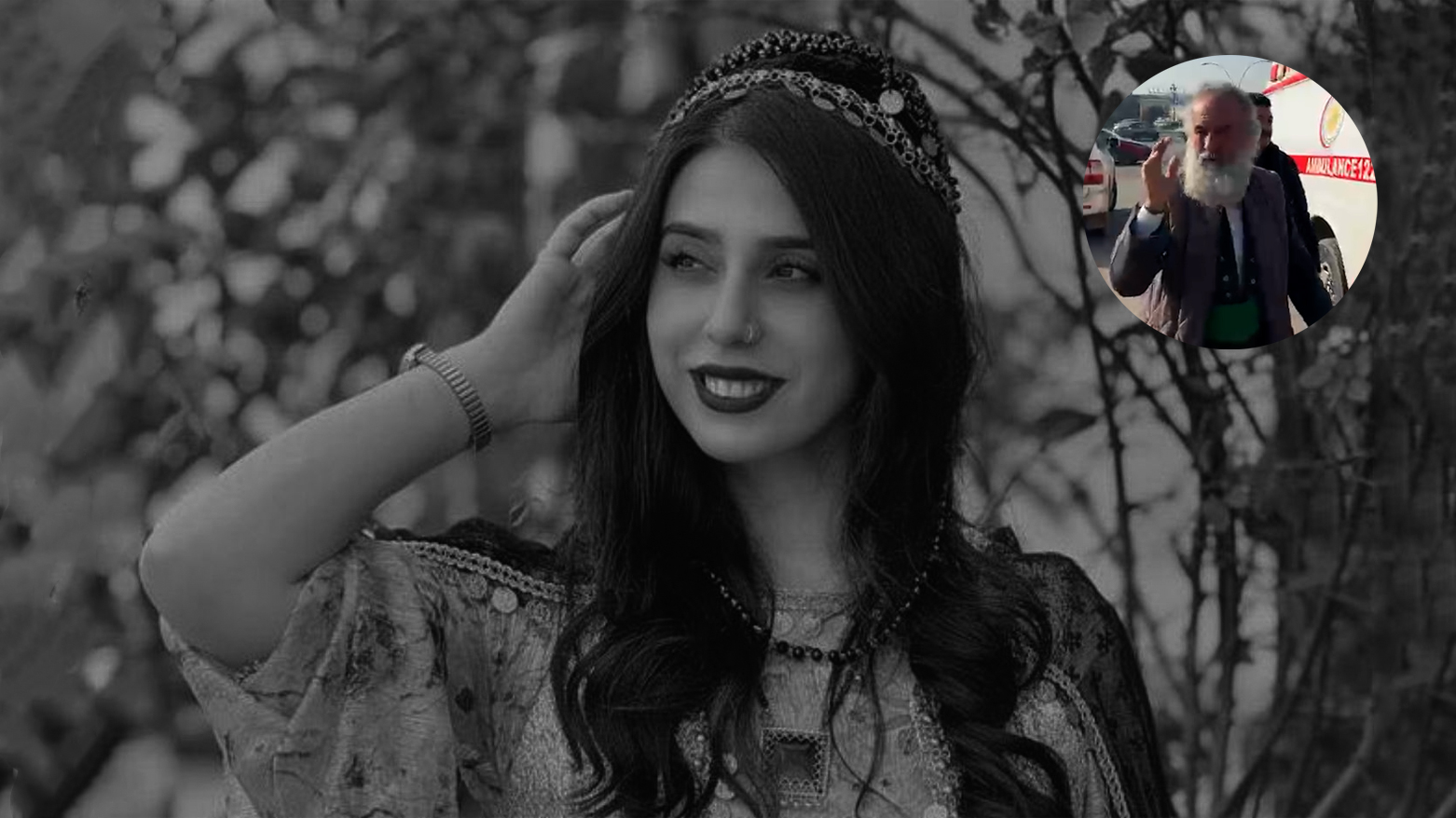
ERBIL (Kurdistan24) – On the evening of Sunday, December 14, 2025, a moment of both grief and relief unfolded along the banks of the Great Zab river. Civil Defense teams, after months of meticulous searching, discovered the body of Avesta Yousuf, the 27-year-old teacher whose disappearance in April had gripped the hearts of the Kurdistan Region.
By the following day, legal and forensic identification confirmed what her family had long feared yet quietly hoped for: the young teacher’s remains had been found. After eight months of agonizing uncertainty, she would finally return home.
For the Yousuf family, the day Avesta went missing has remained etched in memory with painful clarity.
On April 5, 2025, what was meant to be a serene family outing to Mergasor’s scenic landscapes transformed into an unimaginable tragedy. The siblings were taking photographs near the water’s edge when Avesta’s brother slipped and fell into the river. Without hesitation, Avesta dove into the rushing current to save him. Her heroism succeeded: her brother was pulled from the water, shaken but unharmed. Yet the river claimed her, carrying her away into its tumultuous depths.
The months that followed were marked by tireless searching and profound uncertainty.
Dozens of Civil Defense teams and volunteers combed the river’s banks and waters, facing dangerous currents, rugged terrain, and the ever-present hope that somehow, she would be found. Each day brought its own mixture of hope and despair, each night a quiet vigil of prayer and longing.
Three months after her disappearance, on July 5, 2025, an absentee funeral prayer was held on the riverbank. It was a ritual of both remembrance and acknowledgment of loss without closure.
Friends, neighbors, and community members gathered to offer prayers, light candles, and reflect on a life defined by courage and care. While Avesta’s body remained lost, the collective ceremony provided a fragile, spiritual closure for the family and the wider community.
Her father recalls those months of uncertainty as an unending torment. “If she had not been found,” he told Kurdistan24, “I would have had to search for my daughter's body on that river until the end of my life.”
The weight of that uncertainty—the not knowing where a child might be, whether alive or gone—is something few can imagine. Yet even amid such anguish, he expressed profound gratitude: “We thank Almighty God that finally my daughter's body was found. Although my daughter is lifeless, Almighty God has given her back to us as a gift, and we thank Him, because this was a great grief and sorrow on my heart.”
Avesta’s story extends beyond her family; it has touched the lives of many in her community.
The Mergasor community, too, remembers vividly the day she vanished. Volunteers recall long hours wading into the river’s cold waters, scanning the banks with trepidation, hearts heavy with worry. The river, usually admired for its scenic beauty, had become a source of fear, a reminder of nature’s unpredictability, and the fragility of life.
Community members who had watched the search unfold spoke of silent prayers and shared anxiety, of a collective hope that someone, somewhere, might spot a trace of her, even as the currents carried her further away.
When her body was finally recovered, the moment was both heart-wrenching and profoundly relieving.
The Yousuf family could finally perform the burial rites that had been postponed for months. A grave in Barzan had been prepared, allowing them to honor her life and courage in a tangible, enduring way.
Her father expressed gratitude not only to the authorities and Civil Defense teams but also to the Kurdistan Regional Government and President Masoud Barzani, who provided personal support throughout this long, painful journey.
“My daughter was the daughter of His Excellency President Barzani; he is the elder of us all and Avesta is his daughter,” he said. “Their presence here has reduced a large part of our grief and pain, so I thank Almighty God and President Barzani.”
The return of Avesta’s body also marks a moment of reflection on the larger human story at play—a story of love, courage, and sacrifice.
Her act of bravery was instinctive, fueled by the bonds of family and the human impulse to protect those we hold dear. It is a reminder that heroism often manifests in quiet, ordinary moments, not in grand gestures, and that ordinary individuals can rise to extraordinary challenges when the circumstances demand it.
In the months since her disappearance, her story has rippled outward, inspiring empathy and solidarity across the region.
What remains of Avesta for her colleagues, students, and neighbors are memories of her laughter, her patience, and her dedication to others. The community has mourned collectively, finding ways to honor her life even in her absence. Her sacrifice and its consequences have prompted reflection on the fragility of life, the power of nature, and the profound significance of love and courage.
Even in sorrow, there is a recognition of the life she led and the legacy she leaves behind. For her father, the recovery of her body provides the first opportunity to channel grief into remembrance and ritual.
It offers the dignity of a resting place, the ability to visit her grave, and the chance to honor her memory in the presence of family and community. For the broader community, it is a reminder of the strength of human bonds and the compassion that emerges in times of collective hardship.
The upcoming burial ceremony in Barzan is expected to be a gathering not only of family but also of friends, students, colleagues, and community members who wish to pay tribute to Avesta’s life. It will be a space to mourn together, to share stories of her courage, and to acknowledge the heroism that defined her final act.
While the grief will remain profound, the ceremony provides an opportunity to transform sorrow into remembrance, pain into shared compassion, and tragedy into a testament of love and human resilience.
Avesta’s story also underscores the role of community support in the healing process.
From the Civil Defense teams who risked their safety to search the river, to neighbors who offered comfort, prayers, and assistance to the family, to colleagues and students who kept her memory alive, this tragedy became a shared human experience.
In grief, people found connection; in uncertainty, they found solidarity. In many ways, the community’s response became a living tribute to her life, her values, and the impact she had on those around her.
Her final act, though resulting in her death, has left a lasting legacy.
Teacher Avesta Yousuf will be remembered as someone whose love for her family was unwavering, whose courage was instinctive, and whose life inspired countless others. The Great Zab river, which took her life, cannot diminish the memory of her bravery or the influence she had on her students, her community, and her family.
As her family prepares to lay her to rest, there is a profound sense of gratitude intertwined with sorrow.
Grief, after all, is not only the recognition of loss but also the acknowledgment of love. In the story of Avesta Yousuf, both are abundantly clear: the love she embodied, the courage she displayed, and the compassion she inspired remain vivid in the hearts of all who knew her.
Her father’s words reflect the bittersweet nature of closure. “Although my daughter is lifeless, Almighty God has given her back to us as a gift,” he said. “This was a great grief and sorrow on my heart, but now we can finally honor her properly.”
The return of Avesta’s body allows the family and community to engage fully in remembrance, a sacred human ritual that acknowledges life, honors sacrifice, and fosters the resilience necessary to endure loss.
In the months ahead, her story will continue to be told—not only as a tragedy but as a narrative of heroism, empathy, and human connection.
Her courage will serve as an enduring example of selflessness, and her memory will offer comfort to those who face uncertainty, loss, and the challenges of the human experience. Through remembrance, her life continues to touch hearts and inspire deeds of compassion.
Teacher Avesta Yousuf’s journey, from the playful waterside photograph to her final act of heroism, is now complete in the physical sense, but her legacy will resonate far beyond the banks of the Great Zab.
It is a story of bravery, the enduring bonds of family, and the extraordinary capacity for humans to love and protect one another. It is a story of loss, but also of memory, honor, and the remarkable ways in which a single life can shape a community.
Her burial in Barzan will be both an end and a beginning—a final farewell to a beloved daughter, sister, and teacher, and a lasting acknowledgment of the courage and love that defined her life.
As the people of Kurdistan gather to honor her, they do more than mourn; they celebrate a life lived with bravery and heart, and they bear witness to the enduring truth that love, sacrifice, and empathy are the foundations of human resilience.
Avesta Yousuf’s story reminds us that even in the face of nature’s unpredictability and life’s fragility, the bonds of family, community, and humanity persist.
Her courage lives on in the hearts of those she saved, those she taught, and those who mourn her. In remembering her, we honor not only her life but also the profound and enduring power of empathy, love, and selfless sacrifice.