Britain’s First Female MI6 Chief to Warn Russia 'Exporting Chaos'
New MI6 chief Blaise Metreweli warns Russia is "exporting chaos" in a new era of hybrid warfare, as the UK military chief calls for national resilience.
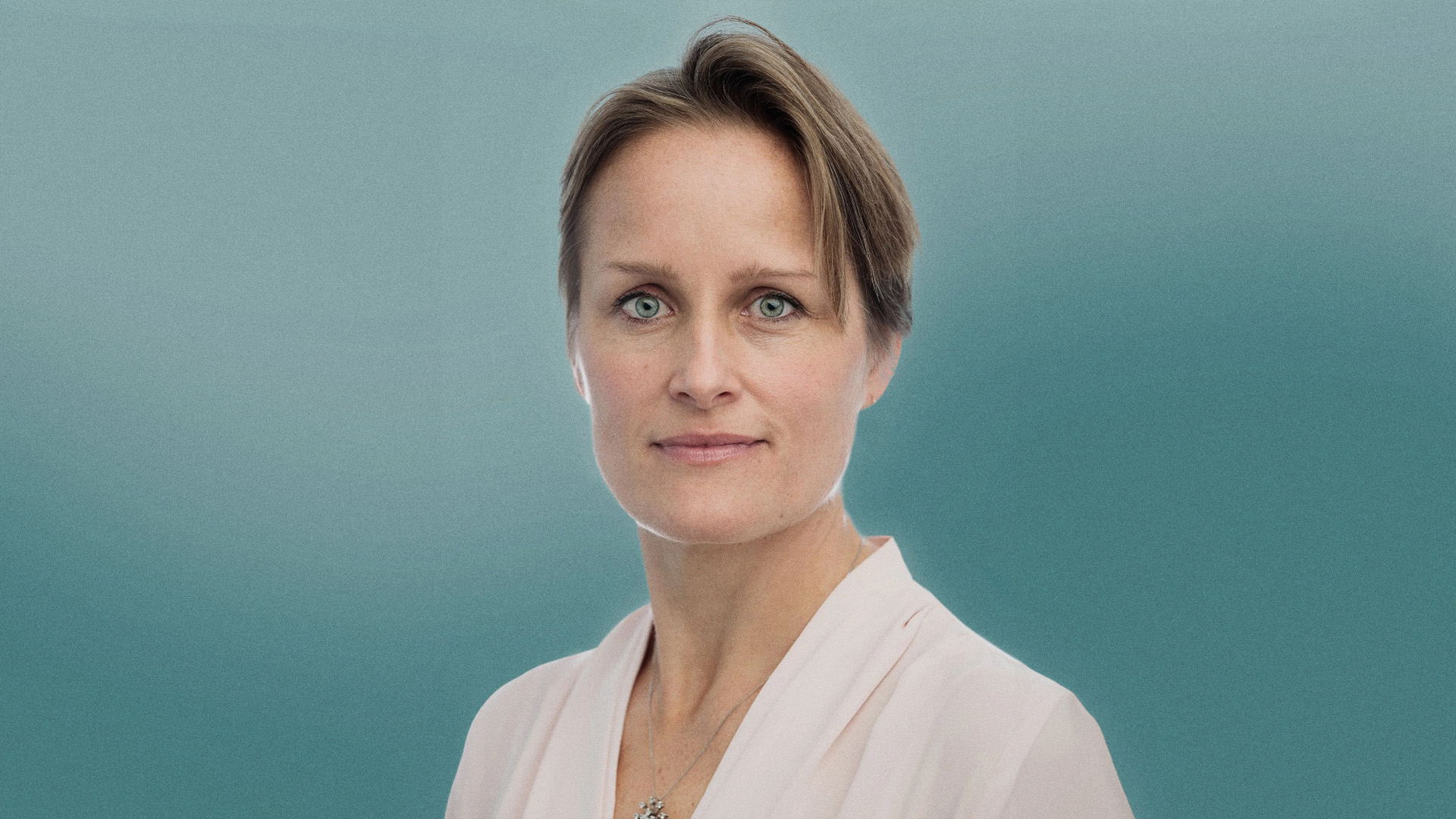
ERBIL (Kurdistan24) – In an inaugural address, the first female chief of Britain’s Secret Intelligence Service, MI6, is set to warn that the global community has entered a "new age of uncertainty" driven by an aggressive Russian state that is actively "exporting chaos" as a primary instrument of its foreign policy.
Blaise Metreweli, who was appointed in June as the 18th head of the agency, will use her maiden speech at the organization's London headquarters on Monday to outline a security landscape where the traditional distinctions between war and peace have eroded, replaced by a complex web of hybrid threats that position the front line everywhere from cyberspace to the human mind.
According to a report by Agence France-Presse (AFP), Metreweli’s assessment paints a picture of an "aggressive, expansionist and revisionist" Moscow that has integrated disruption into its standard operating procedures. Extracts released by the United Kingdom’s Foreign Office reveal that the intelligence chief will explicitly characterize this volatility not as an accidental byproduct of geopolitical friction, but as a deliberate strategy.
"The export of chaos is a feature not a bug in the Russian approach to international engagement," Metreweli is expected to declare. She will further assert that Western allies must be prepared for this trajectory to continue indefinitely "until Putin is forced to change his calculus," signaling a long-term entrenchment of hostilities between London and the Kremlin.
The address by the MI6 chief, who holds the unique distinction of being the only publicly named member of the service and reports directly to the foreign minister, will delve into the increasingly complex nature of global threats.
AFP reports that Metreweli will describe a world where cyber disruption, hybrid warfare, terrorism, and information manipulation have dissolved the safety of geographic distance. By asserting that the "front line is everywhere," she is expected to highlight how adversarial states are bypassing traditional military defenses to strike at the societal and infrastructural nerves of their opponents.
This intelligence assessment is being synchronized with a parallel warning from the military establishment. Richard Knighton, the new head of Britain’s armed forces, is scheduled to deliver a complementary speech later on Monday at the Royal United Services Institute (RUSI), a prominent defense think tank.
According to the Ministry of Defence (MoD), Knighton will describe the current security environment as "more dangerous than I have known during my career," a sobering admission from the country’s top soldier. His remarks will pivot toward the concept of "national resilience," arguing that the response to these multifaceted threats requires a mobilization that extends far beyond the barracks.
"A new era for defence doesn't just mean our military and government stepping up -- as we are -- it means our whole nation stepping up," Knighton will say. To support this national mobilization, he is expected to announce £50 million ($67 million) in funding for new "Defence Technical Excellence Colleges" aimed at helping defense employers train staff to meet these evolving challenges.
The coordinated warnings from Britain’s security leadership arrive at a critical diplomatic juncture.
AFP notes that the speeches come as Prime Minister Keir Starmer prepares to travel to Berlin later on Monday. There, he will engage in high-stakes talks with Ukrainian President Volodymyr Zelensky and European leaders, seeking a pathway to end Moscow's invasion of Ukraine, which has now ground on for nearly four years.
The backdrop to these diplomatic and rhetorical maneuvers is a tangible increase in hostile activity; the British government recently raised alarms following the sighting of a Russian military ship near UK waters, an incident that underscores the proximity of the threat.
Furthermore, the institutional architecture of British defense is being overhauled to meet these challenges.
The MoD has launched a new organization, the Military Intelligence Services, designed to unify the intelligence-gathering and sharing efforts of the army, navy, and air force.
The Ministry stated on Friday that this restructuring comes amid "escalating threats to the UK," citing intensified cyber-attacks, the disruption of satellites, threats to global shipping lanes, and the spread of disinformation as key drivers for the reform.
As London hardens its stance, the message from its intelligence and military chiefs is unified: the era of contained conflict is over, and the export of chaos has become the new geopolitical reality.