$80 Million Dairy Project Anchors Kurdistan’s Push for Food Self-Sufficiency
Duhok's $80 million Kavin Farm, housing 2,000 cows, produces 130 tons of milk daily, employing 2,500 people to help Kurdistan reach dairy self-sufficiency.
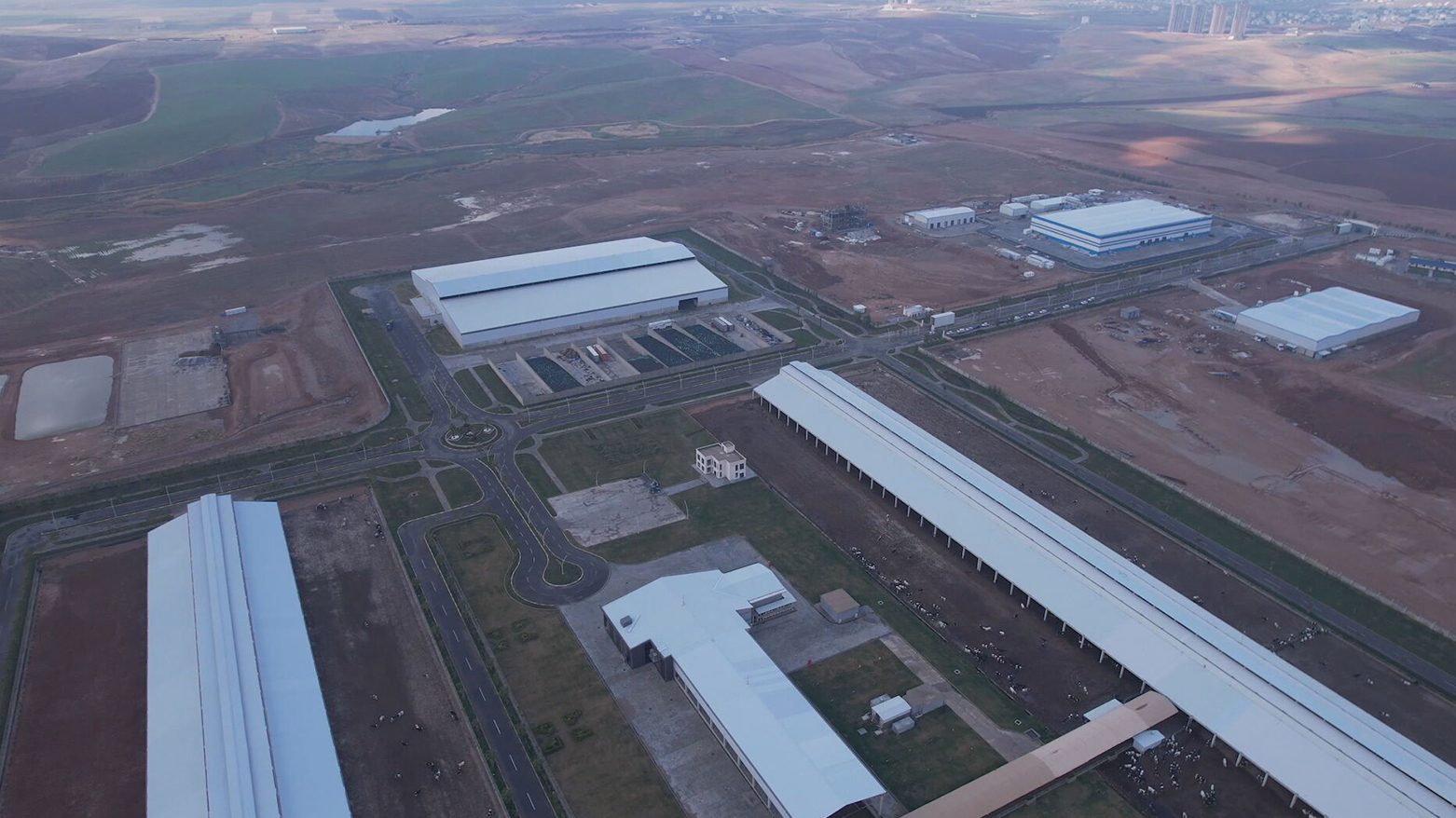
ERBIL (Kurdistan24) – In a sprawling 3,000-dunam expanse within the Duhok Governorate, a transformative agricultural enterprise has emerged as the cornerstone of the Kurdistan Regional Government’s ambitious bid to secure food sovereignty and slash reliance on foreign imports. The "Kavin Farm" project, an massive facility established with an investment of 80 million dollars, stands as one of the largest and most sophisticated cattle breeding and dairy production initiatives not only in the Kurdistan Region but across the entirety of Iraq.
This project's operational launch marks a decisive moment in the Ninth Cabinet’s strategic roadmap, representing a tangible shift from consumerism to production in a sector vital for national stability.
The scale of the operation at Kavin Farm reflects the urgency with which the region is addressing its agricultural deficits.
Housing a herd of more than 2,000 dairy cows, the facility has engineered a daily production capacity of nearly 130 tons of milk. This raw output is not merely collected but is immediately channeled into a modern, on-site industrial ecosystem designed to process the liquid assets into a variety of high-demand consumer goods.
The integrated factory lines are currently churning out fresh milk, yogurt, cheese—including specialized varieties such as mozzarella—and drinking yogurt, all of which are being distributed to domestic markets throughout the Kurdistan Region and federal Iraq.
This vertical integration, from the livestock pens to the processing plant, ensures a quality control mechanism that allows the farm to market its goods as "100% domestic and natural," a designation that carries significant weight in a market often saturated with imported alternatives.
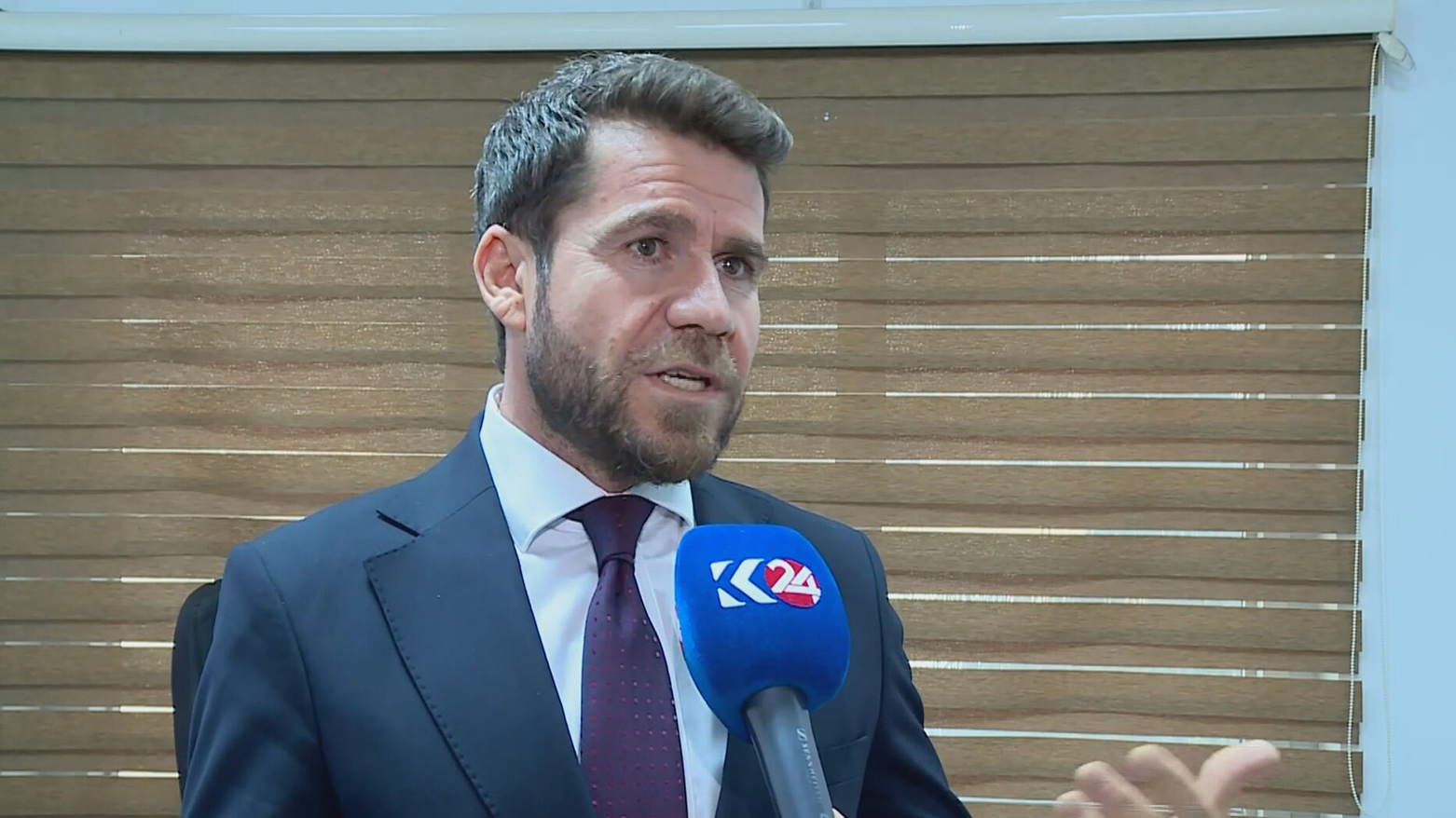
Raqib Abubakr, the manager of the Kavin Farm project, provided a detailed overview of the facility's comprehensive approach during an interview with Kurdistan24 reporter Bewar Hilmi.
Abubakr emphasized that the project’s scope extends beyond simple milking; it encompasses the entire lifecycle of dairy production, including the cultivation and production of fodder to feed the livestock.
This holistic management style reduces dependency on external supply chains and reinforces the project's sustainability. By controlling the inputs, the farm can guarantee the natural quality of the final products, a point of pride for the management as they introduce fresh milk and derivative products to local consumers.

The strategic necessity of Kavin Farm becomes starkly apparent when viewed against the region's consumption statistics. Firas Sadiq, the Director of Animal Wealth at the Ministry of Agriculture, provided a sobering assessment of the current supply-demand gap.
According to ministry data, the Kurdistan Region has an annual requirement of approximately 500,000 liters of milk to meet the needs of its population. However, current domestic production levels hover around 300,000 liters, resulting in a persistent and costly shortage of 200,000 liters per year. This deficit has historically forced the region to rely on imports to bridge the gap, a vulnerability the government is now aggressively moving to close.
The Kavin Farm project is the physical manifestation of a strategic plan devised by the Kurdistan Regional Government to eliminate this deficit and achieve total self-sufficiency in dairy products within the next four years.
To realize this vision of agronomic autonomy, the Ninth Cabinet has prioritized the agricultural sector as a pillar of national security, implementing a dual strategy of infrastructure investment and market protectionism.
Within this framework, the government has executed a series of strategic projects aimed at bolstering food security, including the construction of grain silos, advanced cold storage facilities, and extensive greenhouse networks known as plastic houses.
Complementing these physical assets is a robust policy framework that includes the imposition of taxes on imported products. This fiscal measure is designed to shield nascent domestic producers like Kavin Farm from being undercut by foreign competitors, thereby nurturing the local industry until it can fully meet domestic demand.
The economic footprint of the Kavin Farm project extends well beyond the grocery store shelves. With a foundational cost of 80 million dollars, it represents a massive injection of capital into the Duhok economy. Perhaps most significantly, the project has become a major engine for employment, creating job opportunities for 2,500 people.
These roles range from agricultural labor and livestock management to industrial processing and logistics, providing a vital source of income for thousands of families in the governorate. By anchoring such a labor-intensive industry in Duhok, the project fulfills a key government objective of diversifying the economy and reducing unemployment through private sector development.
As the Kurdistan Region moves toward its four-year target for dairy self-sufficiency, Kavin Farm serves as both a proof of concept and a critical operational asset. It demonstrates the capacity of the region to host large-scale, industrial agriculture that meets international standards while serving local needs.
The transition from a net importer to a self-sufficient producer is fraught with challenges, but with 130 tons of milk now flowing daily from the facilities in Duhok, the trajectory of the region’s agricultural sector has been fundamentally altered.
The project stands as a testament to the potential of domestic investment to reshape the economic landscape, turning the fertile lands of Kurdistan into a foundation for long-term food security and economic independence.
Kurdistan24 correspondent Bewar Hilmi contributed to this report.