Kurdistan Region Marks Flag Day Across Schools and Public Institutions
December 17 commemorates the Kurdish flag’s historic journey from early national awakening to a global symbol of resistance and identity.
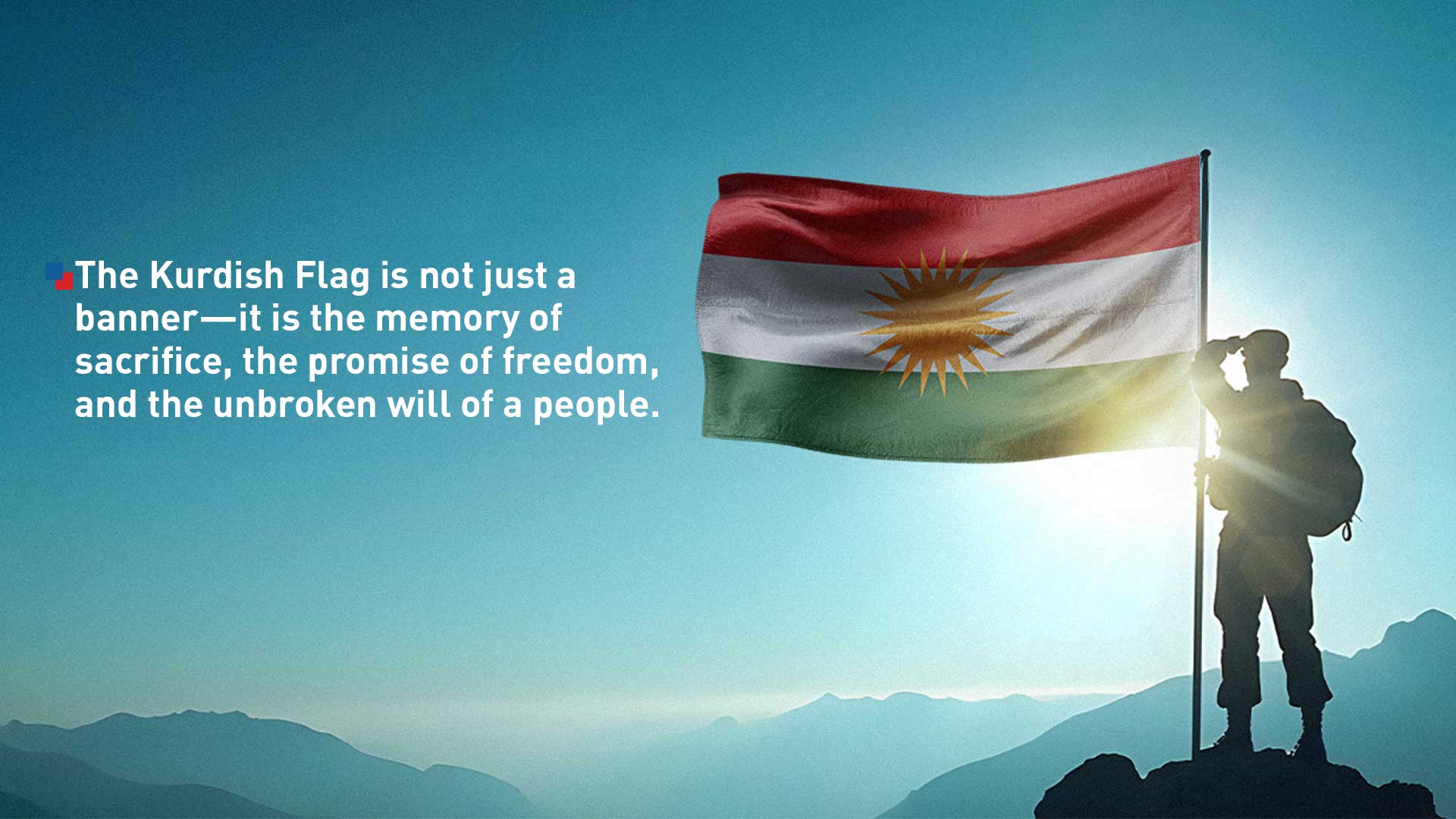
ERBIL (Kurdistan24) — The Kurdistan Region on Wednesday marks Kurdistan Flag Day, observed annually on Dec. 17, with ceremonies and activities held across educational centers, official institutions, and public spaces, reaffirming the flag’s status as a central symbol of Kurdish national identity and collective memory.
According to a decision by the Kurdistan Regional Government’s Ministry of Education, the day was observed even as first-semester examinations continued in schools. Education authorities allocated a dedicated hour before exams began for flag-raising ceremonies and related activities, allowing students and staff to participate in commemorations honoring the Kurdish flag.
The Kurdish flag has a long and complex history closely tied to the Kurdish national movement. In 1919, Dr. Kamuran Bedir Khan first presented the flag as the national symbol of Kurdistan to European countries.
During the 1960s, Kurdish student unions in Europe raised the same flag at various events, helping internationalize Kurdish aspirations at a time when political expression at home was severely restricted.
Following the March 11, 1970 autonomy agreement in Iraq, the Kurdish movement increasingly raised the flag during national occasions and commemorations. Its visibility expanded further after the 1991 uprising in the Kurdistan Region of Iraq, when the flag was prominently displayed at the headquarters of political parties, media institutions, and emerging self-governing bodies.
The Kurdistan Parliament formalized the flag’s legal status in a landmark session on Nov. 11, 1999, passing Law No. 4, which officially recognized the Kurdistan Region’s flag. This was followed by Parliamentary Decision No. 48 on June 19, 2009, designating Dec. 17 of each year as Kurdistan Flag Day.
The choice of Dec. 17 is rooted in history. On this date in 1945, the Kurdish flag was lowered from official buildings of the Republic of Kurdistan in Mahabad following its collapse, marking a moment of loss that later became a symbol of perseverance and renewal for the Kurdish cause.
In more recent decades, particularly after the Kurdish flag was raised on the frontlines during the war against terrorism (ISIS), starting in 2014, it has gained global recognition as a symbol of resistance and the sacrifices of the Peshmerga forces.
The flag has since appeared on international platforms as an emblem of Kurdish resilience and the fight against extremism.
The colors of the Kurdish flag carry distinct meanings deeply embedded in Kurdish political and cultural thought. Red symbolizes revolution, sacrifice, freedom, strength, and equality; yellow represents light, brightness, awareness, and fire; white signifies peace, calm, and ceasefire; and green reflects nature, homeland, protection, and growth.
As Kurdistan Flag Day is observed across the Region, officials and citizens alike view the occasion not only as a commemoration of history, but also as a reaffirmation of unity, identity, and the ongoing pursuit of Kurdish rights within a rapidly changing regional landscape.