KNCS Marks Kurdistan Flag Day in Syria, Emphasizing National Identity and Unity
The KNCS marked Kurdistan Flag Day, in Syria, emphasizing national identity and unity. This aligns with recent efforts that formed a joint Kurdish delegation to negotiate constitutional rights with Damascus and secure a decentralized future.
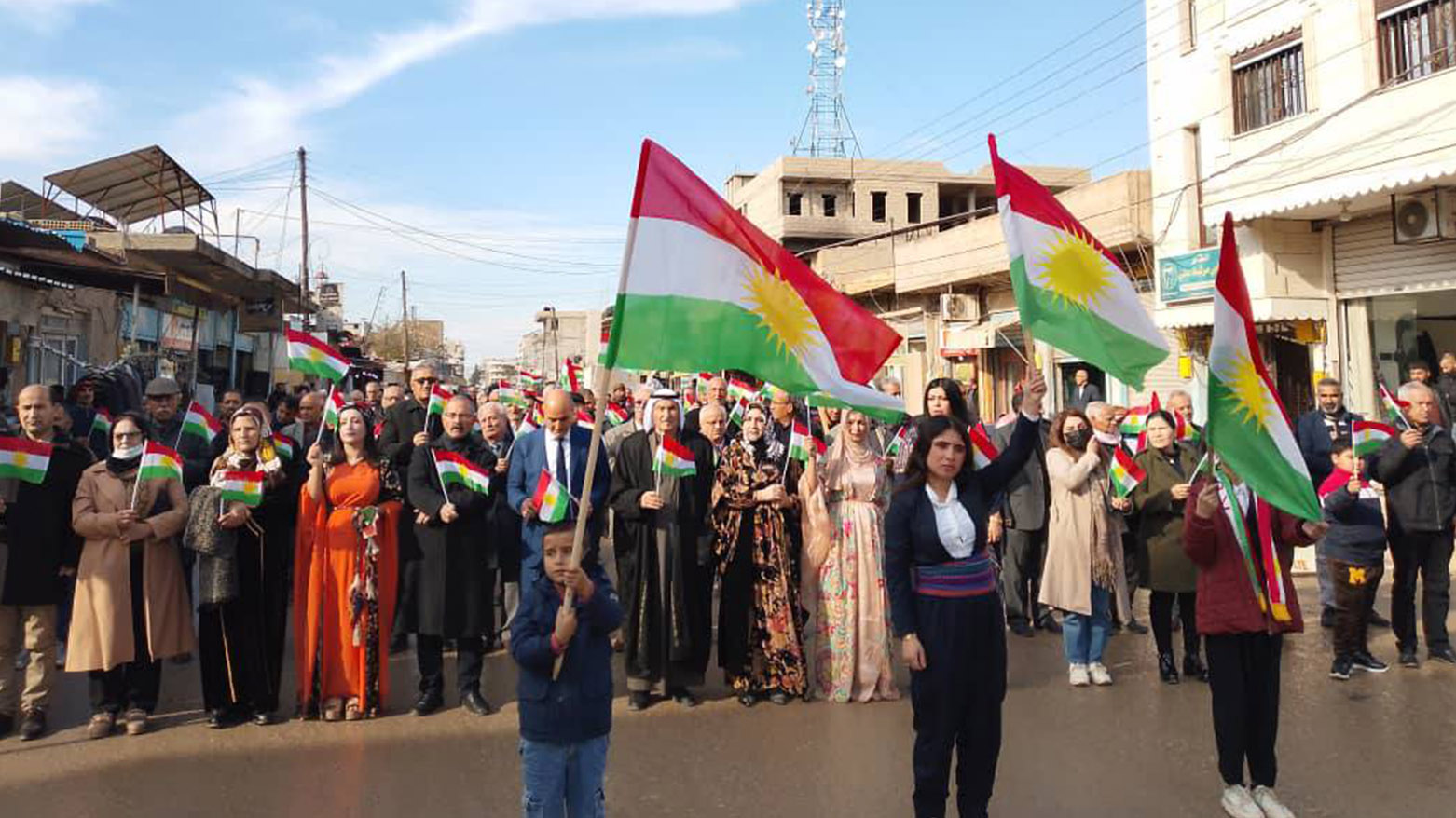
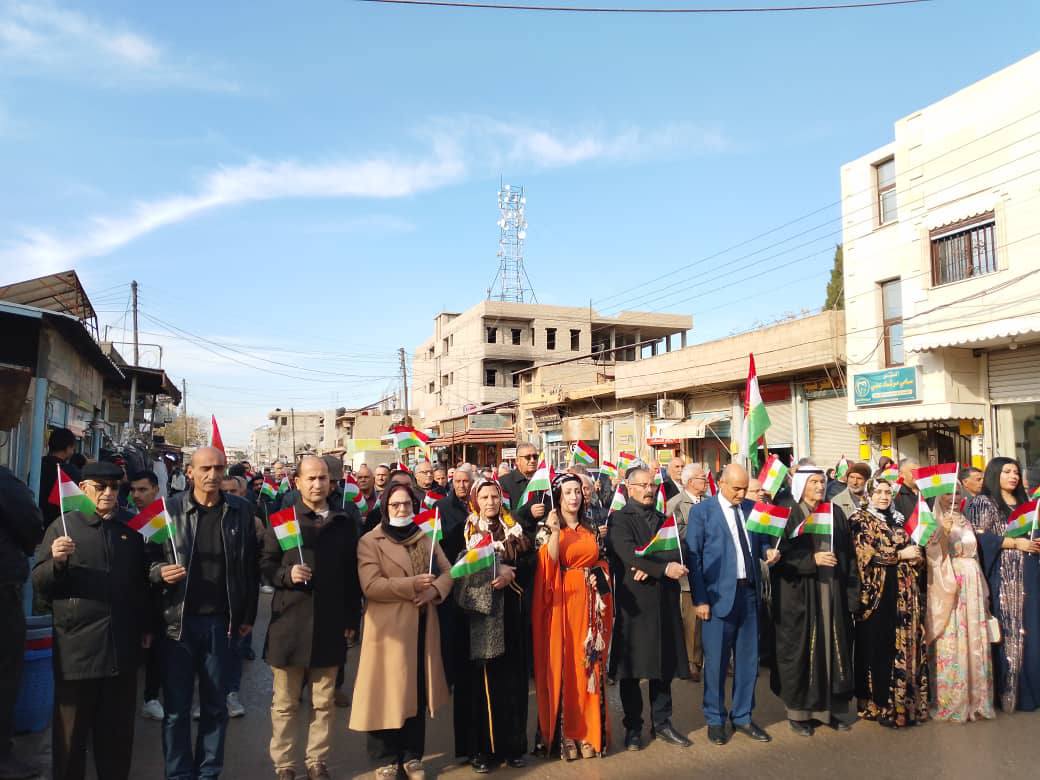
ERBIL (Kurdistan24) - The Kurdish National Council in Syria (KNCS) marked Kurdistan Flag Day on Tuesday in the city of Amûde, northeast Syria (Western Kurdistan), with a public ceremony underscoring Kurdish national identity, unity, and collective memory, amid ongoing political efforts to strengthen Kurdish cohesion in Syria.
According to a statement issued by the Amûde Local Council affiliated with the KNCS, the event was held on Wednesday and attended by political, social, and cultural figures, as well as residents of the city.
The ceremony opened with a speech by Abdulrezaq Hec Qasim, Deputy Head of the Amûde Local Council, who reflected on the historical origins of the Kurdistan flag and the stages of its emergence. He described the flag as more than a symbolic banner, saying it is rooted in a long history of struggle and major sacrifices made by the Kurdish people across different historical periods.
“This flag is not merely a visual symbol,” Hec Qasim said. “Its roots go back to a long struggle and the great sacrifices of the Kurdish people. Today, it has become a unifying symbol of identity, dignity, and the legitimate rights of our people.”
He added that commemorating Kurdistan Flag Day represents a renewal of commitment to the martyrs and a reaffirmation of perseverance in achieving national rights and a life of freedom and dignity.
The ceremony concluded with messages stressing the importance of preserving national memory and strengthening the spirit of unity among Kurds and all components in Western Kurdistan. The Amûde Local Council noted that the event forms part of a broader series of activities organized by the KNCS across Western Kurdistan to mark Kurdistan Flag Day.
The celebration comes as the Kurdish National Council remains a central political actor in broader Kurdish unity efforts in Syria. The KNCS was one of the main pillars of the Kurdish Unity and Solidarity Conference, held on April 26, 2025, in Qamishlo, Western Kurdistan, which brought together more than 400 participants from Kurdish political parties, civil society organizations, women’s movements, and independent figures from across Kurdish regions.
The conference concluded with a landmark decision to establish a unified Kurdish delegation tasked with initiating negotiations with Damascus. The KNCS and the Democratic Union Party (PYD) played leading roles in the conference, each delegating 130 members. The gathering also included political and civic figures as guests, alongside delegations from the Kurdistan Region led by Dr. Hamid Darbandi, envoy of President Masoud Barzani, as well as representatives from the Peoples' Equality and Democracy Party and the Democratic Regions Party.
During the conference, a joint Kurdish political vision was adopted as a foundational charter outlining a framework for resolving the Kurdish issue within a united, democratic, and decentralized Syria. Reading the final communiqué, KNCS head Muhammed Ismail stated that the document articulated a collective Kurdish will, emphasizing constitutional recognition of Kurdish national rights, adherence to international human rights conventions, gender equality, cultural and linguistic pluralism, and decentralized governance.
As Kurdistan Flag Day is marked across Kurdish areas in Syria, the ceremony in Amûde reflects the enduring symbolic power of the Kurdistan flag and its role in reinforcing national identity and unity. The event also aligns with broader political efforts led by the KNCS and other Kurdish actors to translate symbolic unity into concrete political representation and dialogue shaping Syria’s future.