Between “Development Goals” and “Political Agendas”: Census Triggers New Trust Crisis Between Erbil and Baghdad
Kurdish political forces warn Iraq's population census risks being exploited politically rather than serving development, with concerns over data manipulation and lack of a parallel Kurdish data center fueling a trust crisis with Baghdad.
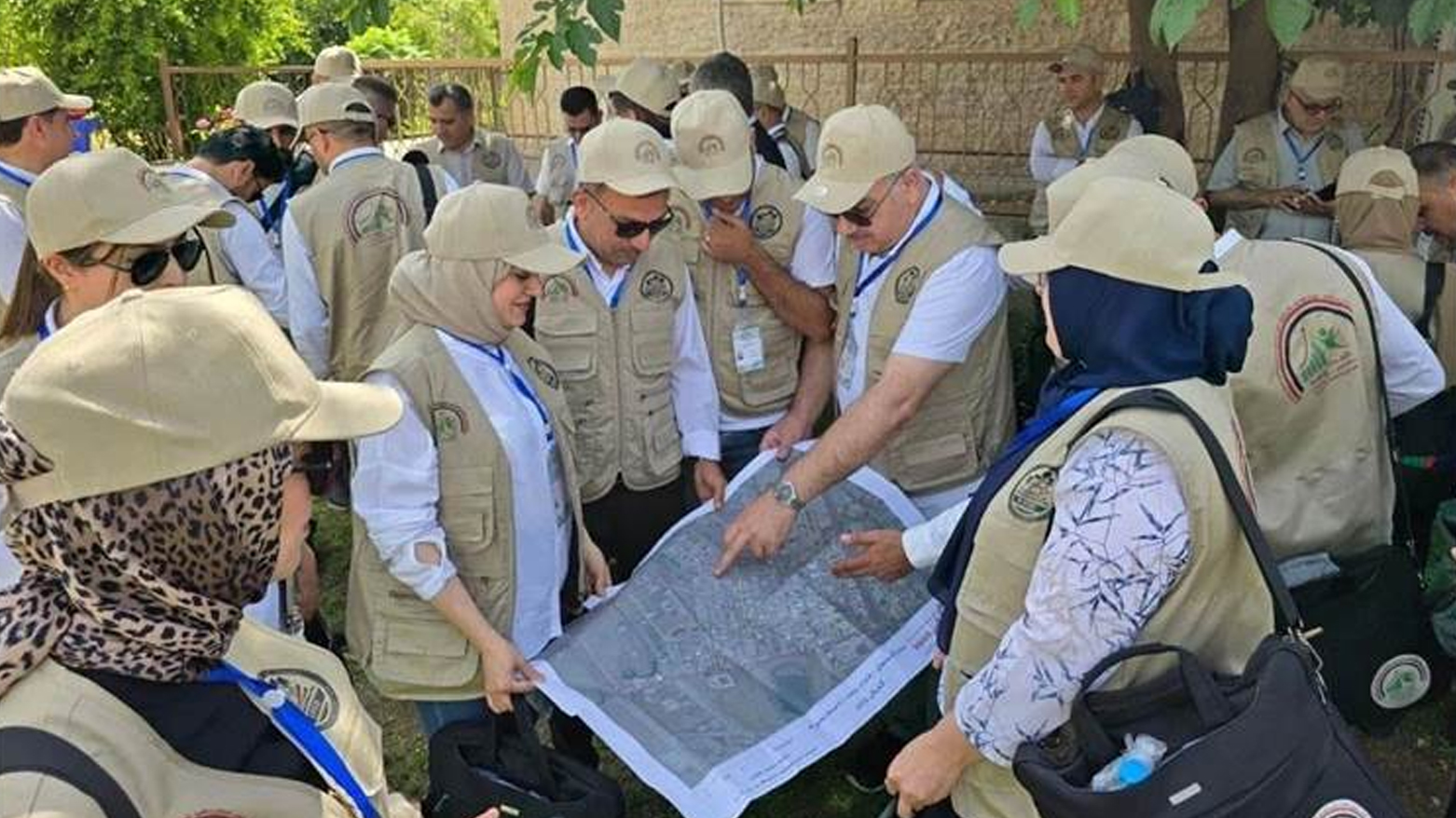
ERBIL (Kurdistan24) - Iraq’s long-anticipated population census has become the latest flashpoint in the fragile relationship between the federal government in Baghdad and the Kurdistan Regional Government (KRG), as Kurdish political forces warn that the process risks being exploited for political ends rather than serving its declared developmental objectives.
Concerns are mounting across the Kurdistan Region that census results could be used to impose a new demographic reality, particularly in Kurdish areas lying outside the KRG’s administrative control. Political observers argue that Baghdad has yet to honor key conditions and guarantees demanded by Erbil to ensure transparency and neutrality, fueling a widening crisis of confidence around the process.
Against this backdrop, Kurdish parties are pushing to make “census conditions” a central pillar of negotiations over the formation of Iraq’s next federal cabinet, insisting that the issue has direct implications for power-sharing, budget allocations, and the broader political balance.
Danna Abdulghaffar, a winning candidate from the Kurdistan Democratic Party (KDP), told Kurdistan24 that the stakes are far higher than a routine statistical exercise. “There are dangerous dimensions to this issue,” he said. “If the census is used politically, public trust in the figures—and in state institutions themselves—will collapse.”
He added that Kurdish representatives would pursue all legislative and legal avenues to prevent such an outcome. “This file will be hot and central in government formation talks,” Abdulghaffar said, stressing that census outcomes affect “every aspect of the political process, from the distribution of posts to the shares of provinces and the Kurdistan Region in the federal budget.”
From a technical standpoint, one of Erbil’s core objections remains unaddressed: the absence of a dedicated data center for the Kurdistan Region parallel to the one in Baghdad. The KRG has repeatedly demanded such a mechanism as a safeguard against electronic manipulation of census data, but no concrete steps have been taken so far.
Statistician Samia Khalid warned that concentrating control of census data in the hands of a single authority carries serious risks. “There are clearly Kurdish areas that were previously excluded or not counted as part of the Region,” she said. “If Kurdish parties fail to present a united front to confront these risks, the results will be negative.”
Khalid emphasized that political unity is decisive in such a sensitive file. “If the Kurdish position were unified, success in this matter would be guaranteed,” she noted.
The original understanding between Erbil and Baghdad envisioned a “development-oriented” census aimed at supporting economic and social planning. However, current political maneuvering has cast doubt on that premise, raising fears that the process could instead be weaponized as a tool of political contestation.
Experts and political figures alike are now urging a return to the spirit of the initial agreements, warning that failure to do so could deepen mistrust and undermine the census itself—along with the broader prospects for stable federal-regional relations in Iraq.