Torrential Rain Floods UAE Roads and Airports, Reviving Memories of 2024 Crisis
Rare torrential rains in the UAE cancelled flights and flooded roads, echoing 2024's record storms and disrupting travel across the Gulf region.
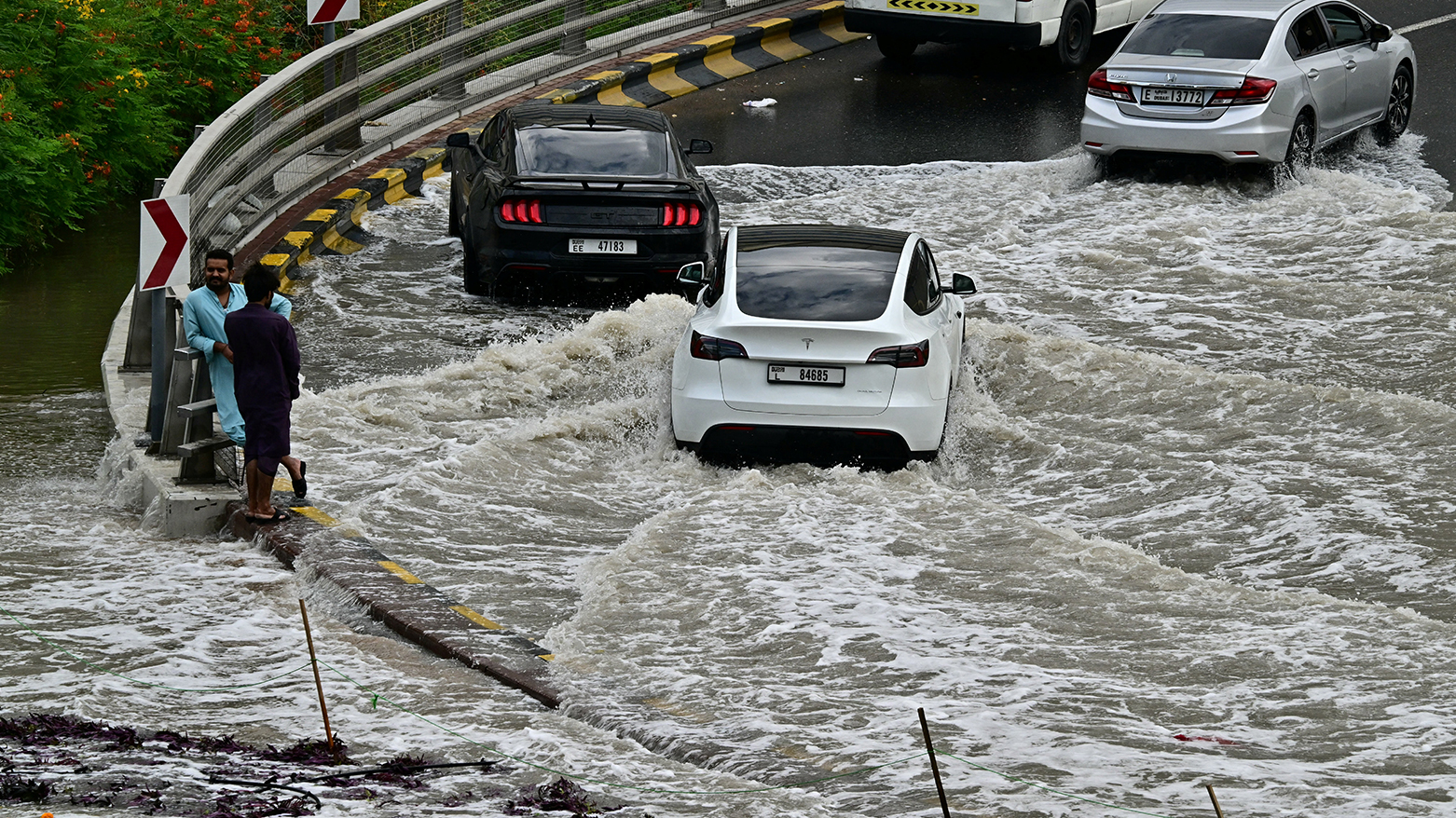
ERBIL (Kurdistan24) – A powerful and rare winter storm swept across the United Arab Emirates on Friday, unleashing torrential downpours that submerged major thoroughfares, grounded aircraft, and brought parts of the desert nation to a watery standstill.
The intensity of the weather system, marked by jagged lightning and thunderclaps that rattled the skylines of Dubai and Sharjah overnight, forced aviation authorities to cancel or delay dozens of flights, disrupting travel at one of the world's busiest transit hubs and reviving memories of the historic deluges that paralyzed the Gulf state just last year.
According to a detailed report by Agence France-Presse (AFP), the meteorological upheaval had an immediate and severe impact on the region's critical aviation sector.
Dubai’s flagship carrier, Emirates, was compelled to axe 13 flights from its schedule on Friday as the storm lashed the commercial capital. The disruption was not limited to a single airline; the chaos rippled through the terminals of neighboring Sharjah’s airport as well, where passengers faced a board of delays and cancellations.
A spokesperson for Dubai Airports confirmed the operational challenges to AFP, stating that "some questions... are cancelled or delayed due to adverse weather," as ground crews struggled to manage the logistics under the relentless rain.
The situation on the ground mirrored the turmoil in the skies. In the emirate of Sharjah, located just north of Dubai, the primary commercial artery was rendered impassable by floodwaters. AFP correspondents on the scene reported striking images of urban disruption, describing residents wading barefoot through the submerged main street.
In one vivid vignette of the morning’s struggle, a man was observed riding his bicycle through water that had risen to the top of his wheels, navigating a landscape that had transformed overnight from a dry highway into a canal.
By early Friday morning, fleets of water-pumping trucks were deployed across Dubai in an urgent effort to clear blocked roads and drain large puddles that had accumulated in the streets, obstructing traffic and stranding motorists.
This infrastructure stress test came despite pre-emptive warnings from authorities.
On Thursday, Dubai police had issued a public advisory urging residents to remain indoors unless "absolutely necessary" as the storm front approached.
The National Center of Meteorology had also issued warnings of rainfall across the country, forecasting precipitation from Thursday into Friday that would cover Dubai and the capital, Abu Dhabi.
Despite these alerts, the volume of water quickly overwhelmed drainage systems in several areas, highlighting the vulnerability of desert cities to sudden, high-volume rainfall events.
For many residents and officials, Friday's deluge served as a troubling echo of the environmental catastrophe witnessed in April 2024.
During that unprecedented event, the heaviest rainfall since records began 76 years ago battered the UAE, resulting in the death of at least four people and bringing the glittering city of Dubai to a complete halt for days. That crisis saw the cancellation of more than 2,000 flights, creating a logistical bottleneck that took weeks to fully resolve.
The recurrence of such intense weather patterns has drawn attention to the broader climatic shifts affecting the region.
AFP noted that a study published by the World Weather Attribution group concluded that global warming driven by fossil fuel emissions "most likely" exacerbated the intensity of the rains that struck the UAE and Oman during the previous year's disaster.
The current storm system was not confined solely to the Emirates but extended its reach across the Persian Gulf, impacting neighboring states with similar severity.
In Qatar, the weather conditions deteriorated to the point where major sporting events were affected.
AFP reported that the Arab Cup football third-place play-off match between Saudi Arabia and the UAE, scheduled for Thursday, was cancelled due to the heavy rain, underscoring the widespread nature of the atmospheric instability gripping the Arabian Peninsula.
As the skies begin to clear and the pumping trucks continue their work, the UAE faces renewed questions about urban planning and climate resilience. While the immediate focus remains on restoring flight schedules and clearing the roads, the frequency of these "rare" storms suggests a shifting environmental reality for the Gulf.