Strategic Water Lifeline and Urban Roads Reshape Services in ChamChamal and Erbil
Strategic water and road projects launched by the Ninth Cabinet aim to secure long-term water supply for 480,000 residents in ChamChamal and upgrade road infrastructure in Erbil, marking major advances in public services and urban development.
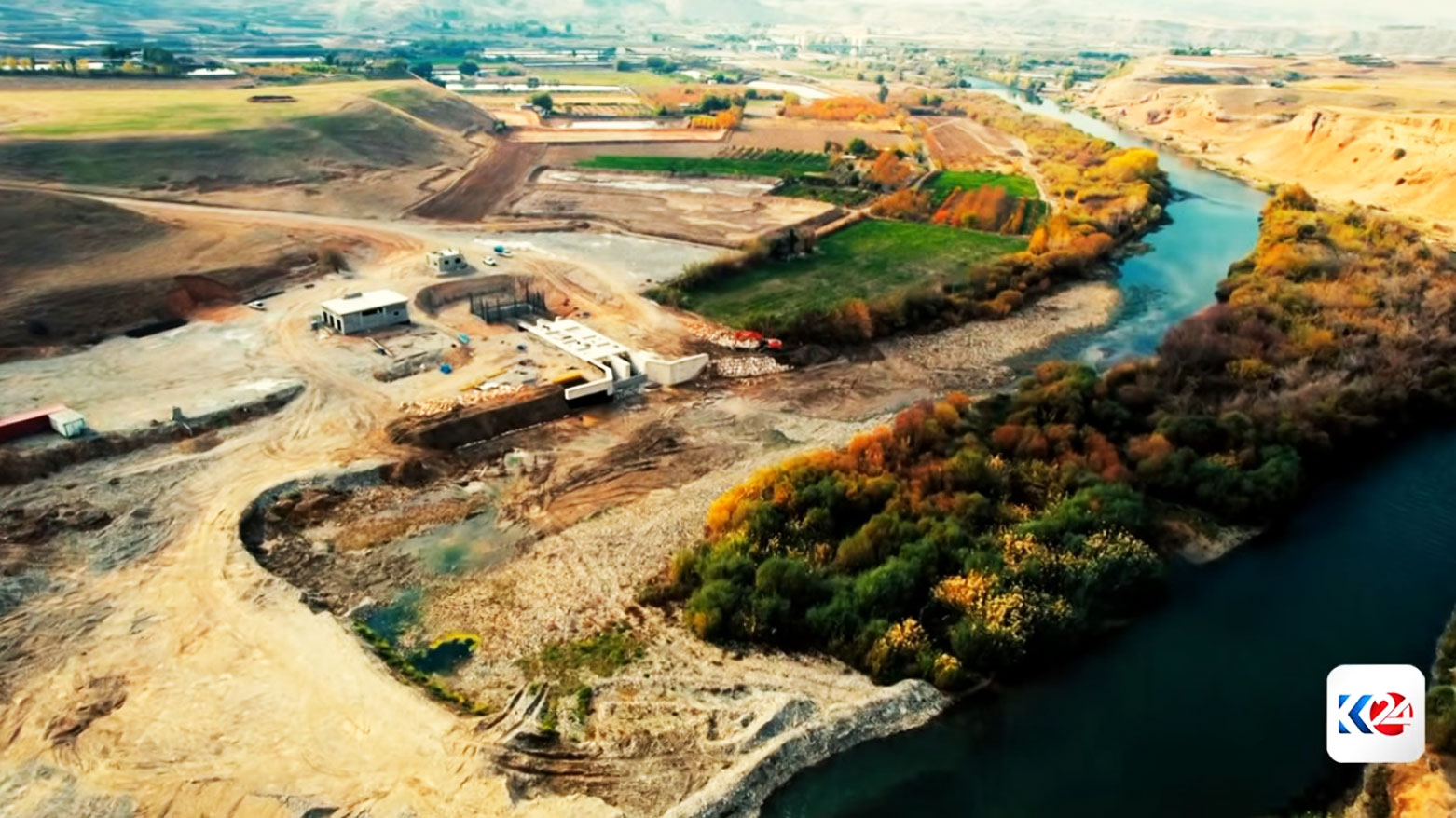
ERBIL (Kurdistan24) - In two parallel service-driven initiatives underscoring the Ninth Cabinet’s infrastructure agenda, the Kurdistan Regional Government has advanced a major strategic water project in ChamChamal while launching a new road development scheme in Erbil, both aimed at addressing long-standing public service needs and improving daily life for hundreds of thousands of residents.
At the center of the first initiative is the Gobtepa–ChamChamal Water Project, described as one of the most important strategic projects currently under implementation by the Ninth Cabinet. Designed to place a definitive end to water shortages in ChamChamal district and surrounding areas for the next 30 to 50 years, the project is progressing at an accelerated pace and has reached advanced construction stages, according to a field follow-up by Kurdistan24.
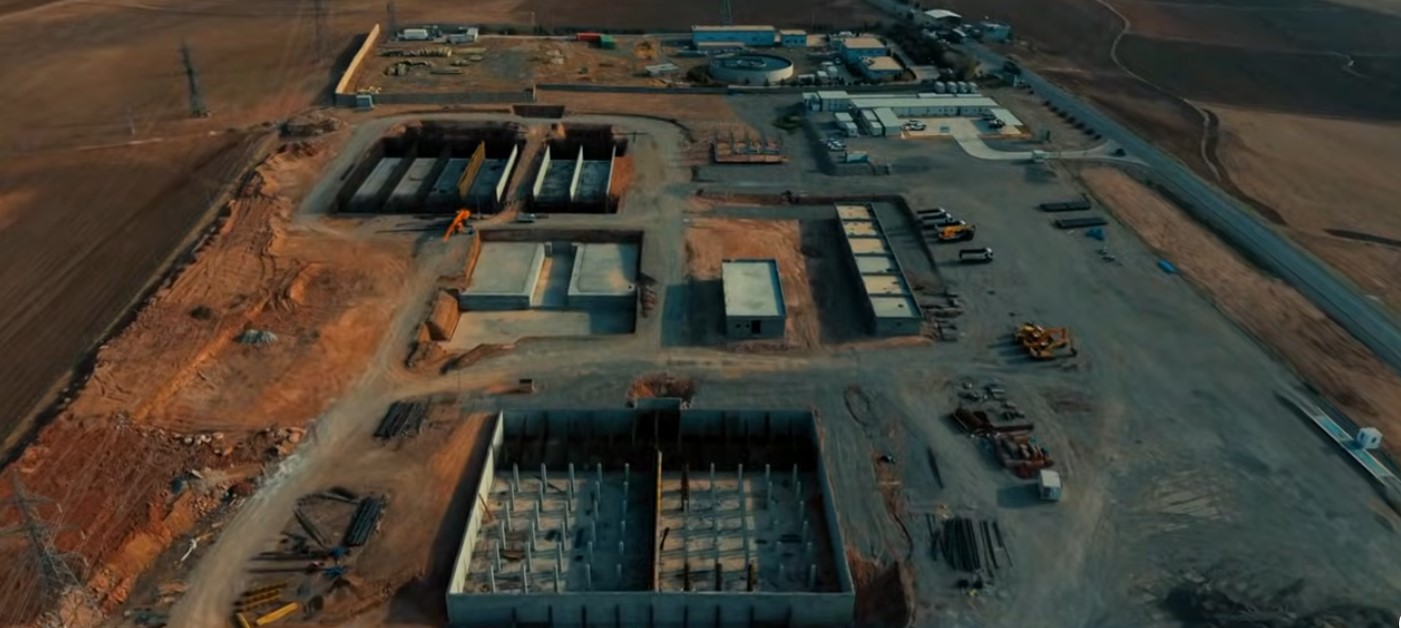
Once completed, the project is expected to supply clean and sustainable drinking water to approximately 480,000 citizens in ChamChamal district, the subdistricts of Takiya and Aghjalar, and their affiliated villages. Technically, the project has a production capacity of 3,800 cubic meters of treated water per hour. Water will be transported from its source at the Little Zab River through a pipeline extending 58 kilometers to the final station. To ensure uninterrupted operation, a dedicated 33 kV power line stretching 28 kilometers has been installed.
The project also includes several large reservoirs, among them two tanks with capacities of five thousand and ten thousand cubic meters in the Takiya subdistrict, and a main reservoir in ChamChamal with a capacity of twenty thousand cubic meters. One of the project’s most significant technical features is the method by which water will reach ChamChamal city and its neighborhoods. Water will flow from the Takiya station by gravity, without the need for additional pumping, due to the area’s topographical elevation differences, a design that will significantly reduce future electricity and maintenance costs.
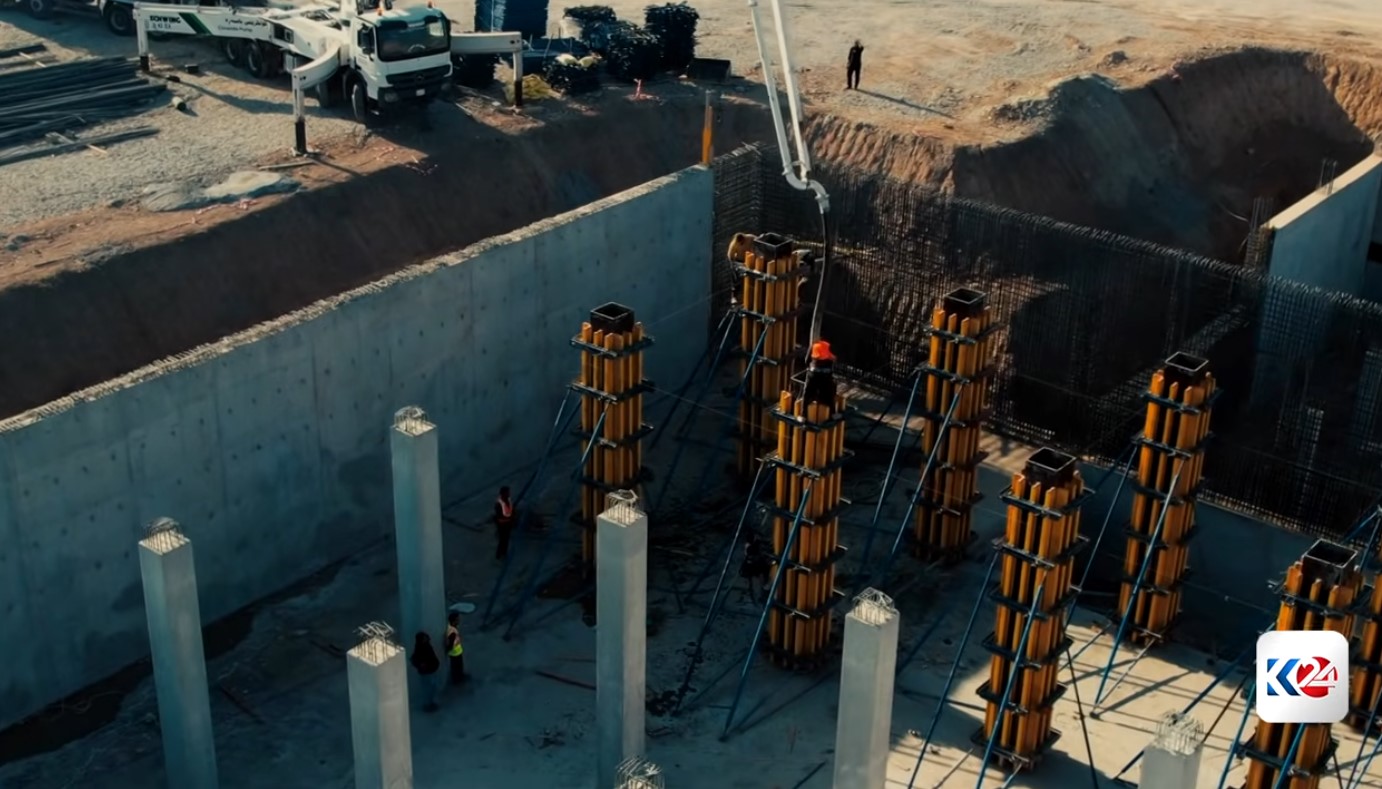
Briar Ali, Director of the Gobtepa–ChamChamal Water Project, told Kurdistan24 that the project consists of seven main stations and that concrete works have exceeded seventy-five percent completion. He added that the project has created more than one hundred and fifty job opportunities, with over seventy heavy machines and pieces of equipment operating daily on site. Ali stressed that all pumps and equipment used are from reputable international brands, including Germany’s KSB, to ensure quality and operational efficiency.
Meanwhile, Haidar Mohammed, Director of the Resident Engineer Department for the project, said that if financial entitlements are provided on schedule, all works are expected to be completed within the next eight months, allowing the project to enter full service. In addition to resolving ChamChamal’s water crisis, the project is expected to have a positive indirect impact on Sulaimani, as the water currently allocated to ChamChamal from the Dokan–Sulaimani line will be redirected entirely to Sulaimani city, increasing per capita water availability there.
In Erbil, a separate but complementary infrastructure effort was launched on Saturday, Dec. 20, 2025, when Erbil Governor Omed Khoshnaw laid the foundation stone for a new road construction project in the city’s Civil Servants neighborhood (Farmanbaran). The project, with a total cost of 609 million Iraqi dinars, includes the construction of a thirty-meter-wide main road and ten internal roads within the eight-thousand-sector of the neighborhood.
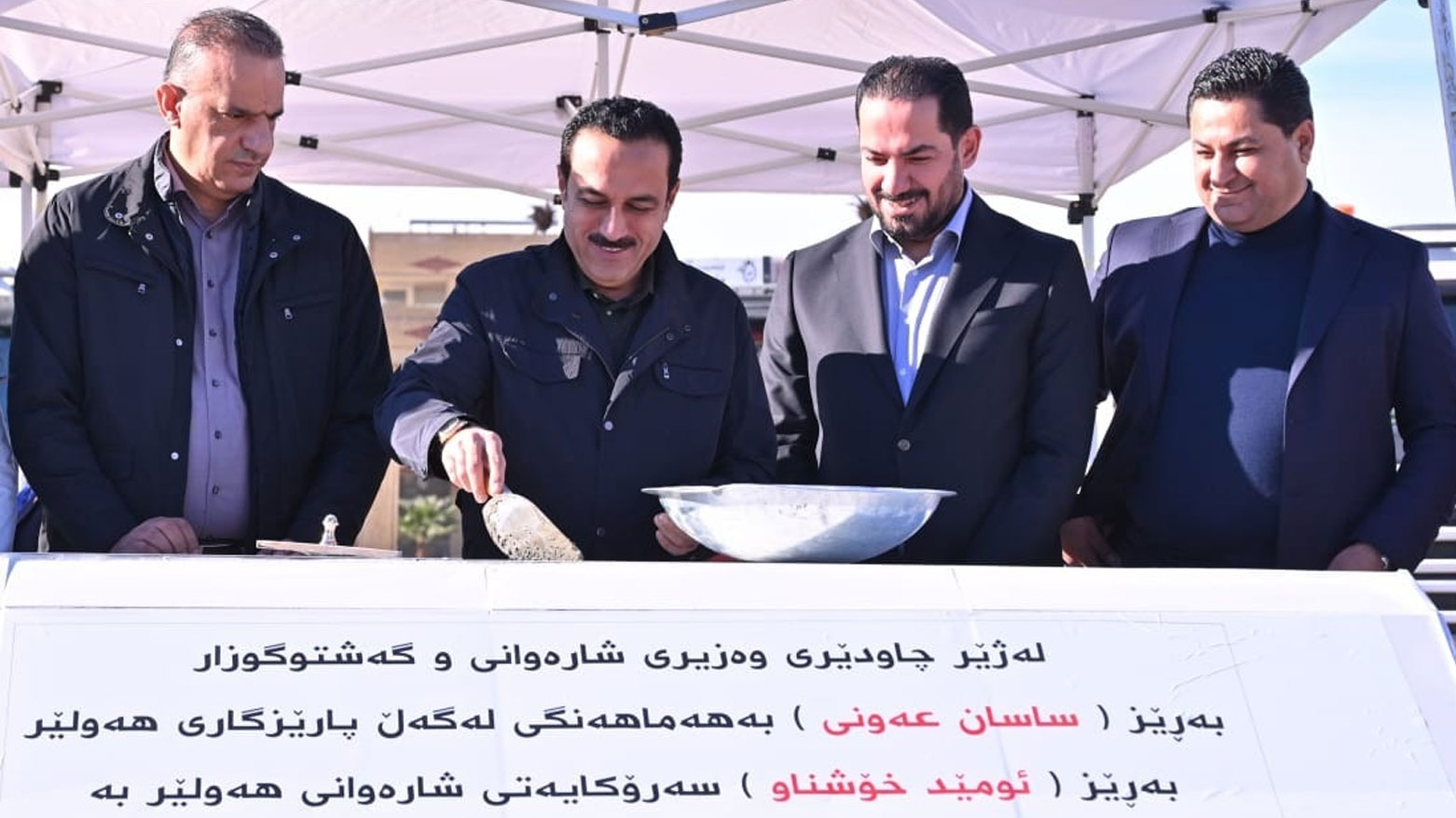
The foundation stone ceremony was attended by Erbil Mayor Karzan Abdulhadi, Fourth Municipality Director Niaz Saleh, and a number of engineers and project supervisors. In his remarks, Governor Khoshnaw said the project falls within the third phase of the area’s development and is funded through fifteen percent of the revenues of the Erbil Municipality Presidency.
“Based on the guidance and support of Kurdistan Region Prime Minister Masrour Barzani, who consistently emphasizes the need to deliver service projects to all areas without discrimination between the city center and its outskirts, we have begun implementing this project, which will provide significant services to residents of this neighborhood, and we hope it will meet their satisfaction,” Khoshnaw said.
He added that a package of service projects is currently being implemented in this neighborhood and other areas within the governorate, noting that some components have already been completed while work continues to launch others as part of the Kurdistan Regional Government’s broader planning program. Khoshnaw reaffirmed the governorate’s commitment to mobilizing all available capabilities and budgets to develop infrastructure.
The third phase of the Erbil project includes the construction of the main thirty-meter road, ten internal roads with a total length of two thousand two hundred meters, road opening and laying of a “sub-base” layer over an area of twenty-four thousand square meters, and asphalt paving covering nineteen thousand square meters. The project forms part of ongoing efforts by the Erbil Municipality Presidency to improve internal road networks and facilitate movement in newly developed residential neighborhoods.