Traditional Kurdish Tahini Production in Kurdistan Finds Global Niche Amid Modernization
Amedi's 500-year-old water mills produce traditional Kurdish tahini that is now reaching global markets, serving as a cultural ambassador for Kurdistan.
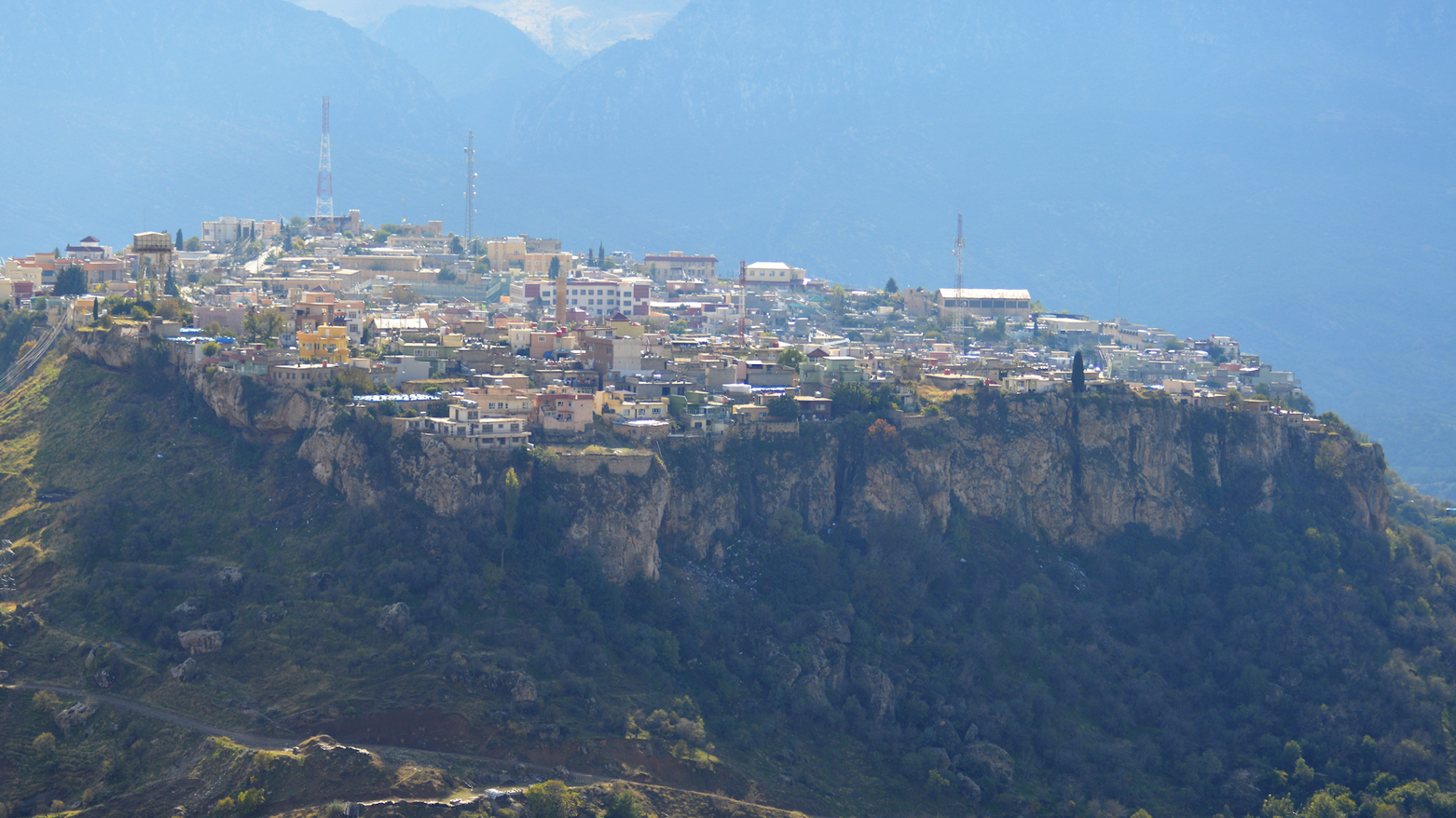
ERBIL (Kurdistan24) — Perched atop a rocky plateau that rises more than a thousand meters above sea level, the historic city of Amedi has long been regarded as a natural engineering miracle. Surrounded by a dramatic landscape of mountains and valleys in the Duhok Governorate, this ancient settlement is currently gaining recognition not only for its architectural ingenuity but for a culinary heritage that has survived centuries of industrial change.
The production of "Tahini," locally known as Rashi, has emerged as both a cultural symbol and a burgeoning economic driver, with traditional water-powered mills successfully placing the local product in international markets.
The allure of Amedi extends beyond its physical beauty to the preservation of a craft that has been passed down through generations for hundreds of years.
While modern industrial food production has largely shifted toward electric machinery and mass manufacturing, the artisans of Amedi have steadfastly maintained the use of traditional water mills.
This method, deeply rooted in the region's history, is credited with producing a tahini of superior quality that is now attracting direct orders from abroad. The persistence of this technique represents a deliberate choice to prioritize texture and flavor over the speed of electrification.
Rahand, a local water mill owner, explained the operational philosophy that distinguishes the city's product from competitors.
Speaking to Kurdistan 24, Rahand emphasized that the authenticity of Amedi tahini is derived from two primary sources: the raw materials and the processing method. "This is the original Amedi tahini; we use pure local sesame from our farms in it," he said.
The reliance on locally sourced agriculture ensures a control over quality that is often lost in larger supply chains.
Furthermore, Rahand noted that the production capabilities are not hindered by the seasons. "What distinguishes our product is the continued operation of the water mills throughout the four seasons of the year, which gives the tahini a texture and flavor that cannot be obtained in modern electric mills," he told Kurdistan24.
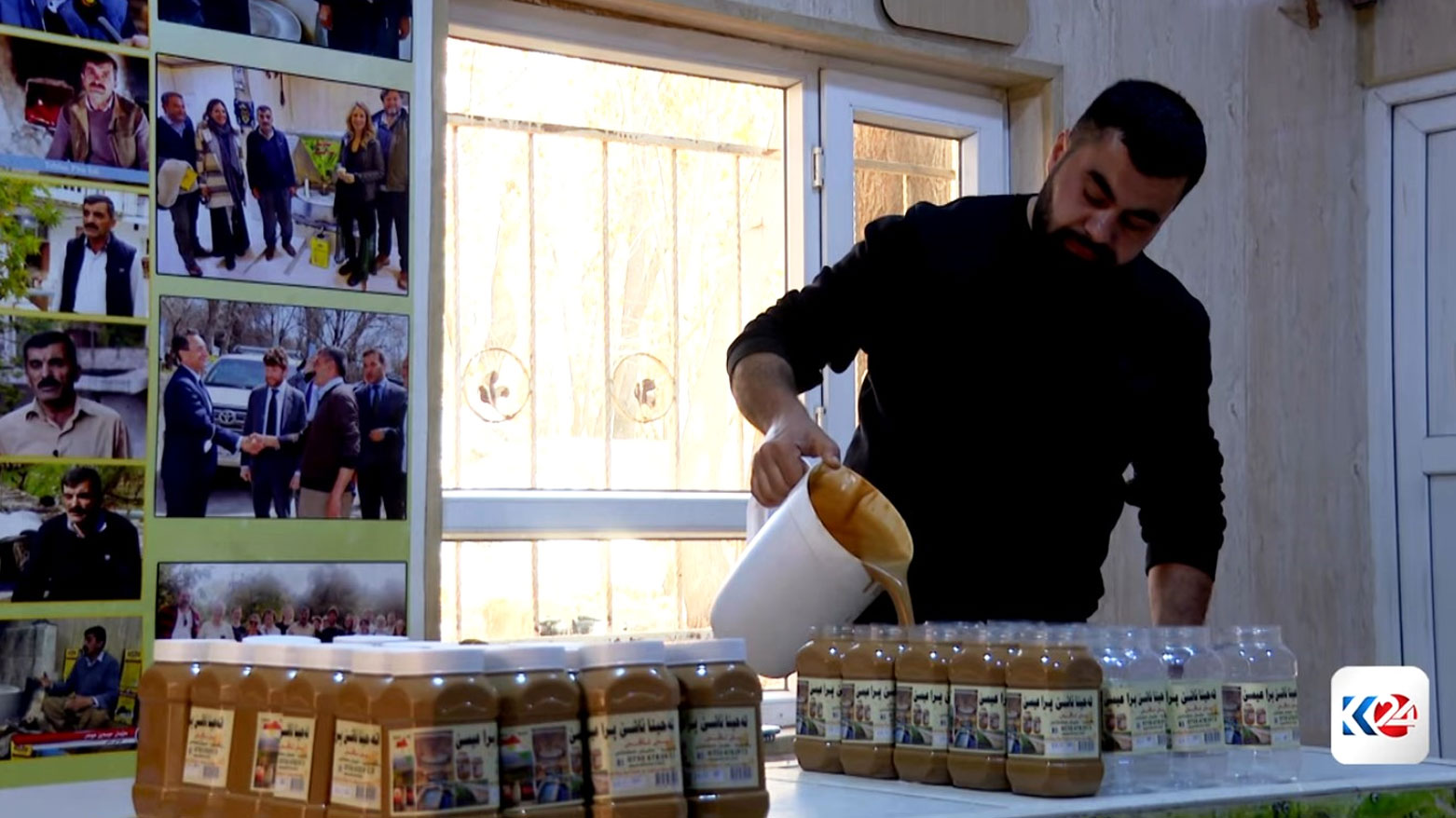
The survival of these mills is not merely a business decision but a matter of cultural identity. An elderly expert in tahini making, who also participated in the report by Kurdistan 24, highlighted the deep historical roots of the machinery.
According to the expert, the history of the water mills in Amedi dates back between 400 and 500 years.
These structures serve as a physical link to the folklore and identity of the region. The expert described a resilience against the "invasion of electric machines," noting that the community sticks to the old method to ensure the highest levels of quality.
This traditional process is rigorous and unhurried, involving a specific sequence of eight stages.
As detailed by the expert, the production line moves from purifying the sesame seeds to washing and drying them, eventually leading to the grinding phase. It is this multi-step, manual oversight that allows the millers to maintain a standard of excellence that defines the Amedi brand.
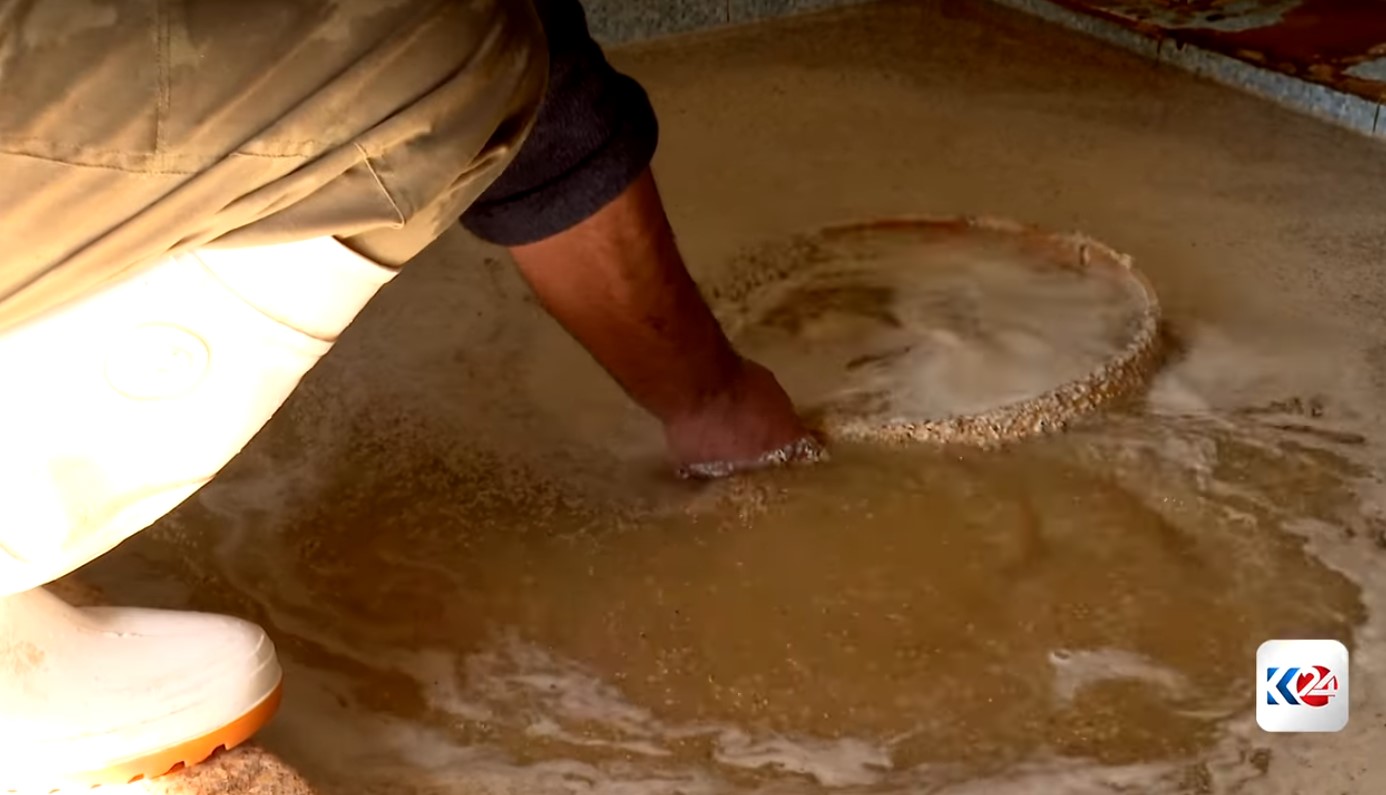
The adherence to these eight stages is viewed by the practitioners as essential to the integrity of the final product.
Beyond its mechanics, the production of tahini in Amedi is inextricably linked to the social and cultural fabric of the Kurdistan Region.
The product occupies a central place in the collective memory of the population. It is regarded as a staple food, particularly during the holy month of Ramadan.
Locals consume the nutrient-rich paste during Suhoor meals—the pre-dawn meal before fasting begins—relying on its ability to provide sustained energy and a feeling of satiety for long periods. This practical dietary application has cemented tahini’s status as a household essential.
However, the significance of the foodstuff transcends its nutritional value.
Tahini has become a symbol of coexistence and brotherhood within the region.
The people of Amedi take particular pride in offering the local delicacy to guests and tourists who flock to the city from various parts of Kurdistan, Iraq, and neighboring countries such as Türkiye. The sharing of food serves as a conduit for hospitality, reinforcing social bonds in a region often defined by its diverse cultural interactions.
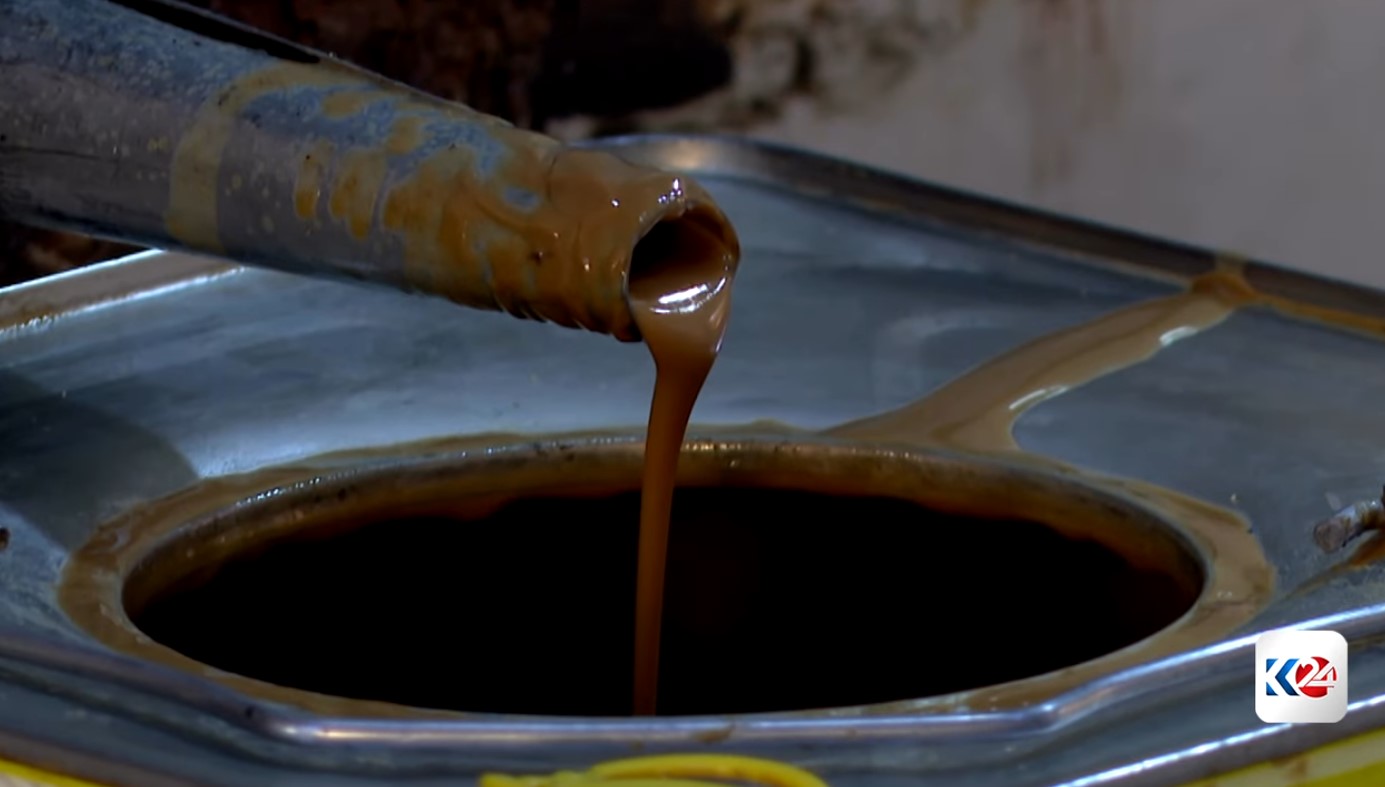
The sensory distinctiveness of the water-milled tahini is evident to visitors.
Narmin, a tourist visiting from the Sinjar district, offered her perspective to Kurdistan 24, noting the stark contrast between the commercial varieties and the artisanal product of Amedi.
"The tahini here has a completely different taste," she said. Her visit was motivated by a desire to experience the heritage of the city firsthand. "I came to taste the heritage of Amedi, and it is very beautiful to see this gathering that blends culture, art, and handmade products," Narmin added, reflecting the growing trend of heritage tourism where culinary experiences play a pivotal role.
Economically, the commitment to tradition is beginning to yield dividends that reach far beyond the local mountains.
The unique qualities of the tahini—specifically its production without preservatives and its prestigious reputation—have turned it into an exportable commodity.
Amedi's tahini has already begun reaching international markets. This expansion is being driven by direct orders, suggesting that global consumers are increasingly seeking out authentic, preservative-free artisanal products.
The trajectory of the Amedi tahini industry illustrates a broader economic potential for the Kurdistan Region’s traditional crafts.
By positioning the product as an "extraordinary ambassador" for Kurdistani national production, the millers of Amedi are demonstrating that heritage conservation can align with commercial viability.
The product’s success challenges the notion that modernization requires the abandonment of ancestral techniques. Instead, the "fragrance of Kurdistani heritage," as described in the report, is proving to be a competitive advantage in a global marketplace that values authenticity.
As the water mills continue to turn throughout the four seasons, utilizing the hydraulic power of the region’s natural geography, they sustain a legacy that is half a millennium old.
The dual function of these mills—as preservers of folklore and engines of economic growth—highlights the resilience of the local population.
From the farms providing pure local sesame to the eight-stage grinding process, the entire ecosystem of tahini production in Amedi stands as a testament to the enduring value of quality and tradition.
The rocky plateau, once an isolated engineering miracle, is now connecting with the world through the export of its most famous flavor, securing a future for a craft that has defined the city’s identity for centuries.