SDF Commander Predicts Regional Kurdish Unity in 2026 as Türkiye Urges Integration Into Syrian Army
SDF's Abdi predicts 2026 Kurdish unity and constitutional rights, while Türkiye demands SDF's integration into Syria's army and an end to autonomous structures.
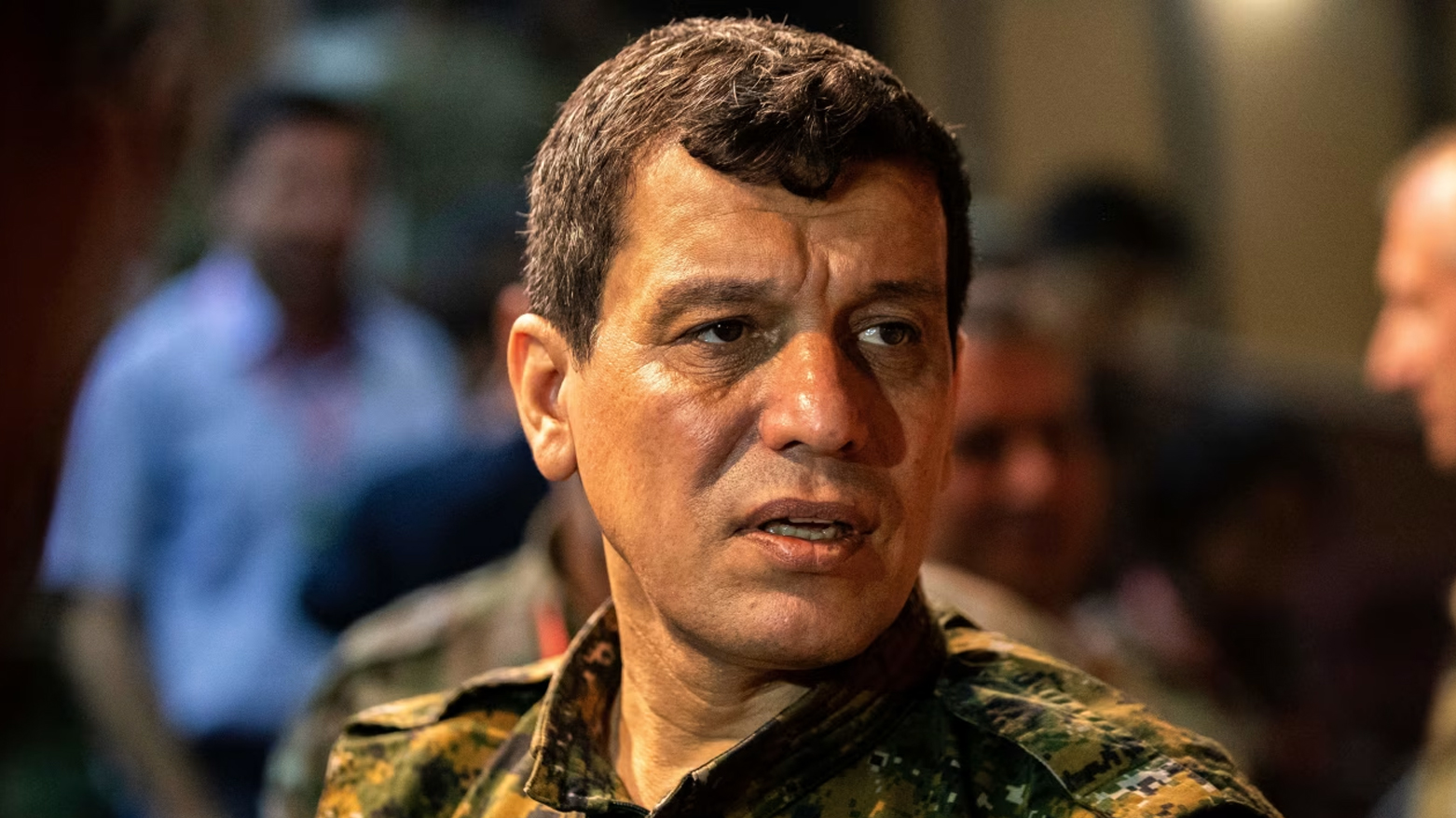
ERBIL (Kurdistan24) — The commander of the Syrian Democratic Forces (SDF) has declared that the coming year will mark a historic turning point for Kurdish political unity across the Middle East, a statement that stands in sharp contrast to simultaneous demands from Ankara for the group’s immediate disbandment and integration into the Syrian central military command.
In remarks reported by Sky News Arabia on Sunday, Gen. Mazloum Abdi outlined an ambitious vision for 2026, predicting it would become the year of a "Kurdish National Confederation."
His comments come amid heightened pressure regarding the status of a landmark agreement signed earlier this year between the SDF and the Syrian government in Damascus.
While Turkish officials insist that the deal requires the SDF to dissolve its autonomous structures, Gen. Abdi characterized the current period not as an end, but as the beginning of a broader political project.
"Our enemies claim that the end of this year will be the end of the Kurds, the Syrian Democratic Forces, and the Rojava project," Gen. Abdi stated, directly addressing speculation regarding the group's future. "But the truth is completely different: It is the beginning of our great project."
According to the Sky News Arabia report, Gen. Abdi expressed confidence that 2026 would witness unprecedented cohesion among Kurds residing in the four countries of the region.
"We have never been closer to achieving that," he said, adding that in the coming year, "the rights of the Kurds and their land in Rojava will be guaranteed in the constitution."
However, this optimistic projection of constitutional recognition and cross-border unity faces stern opposition from neighboring Türkiye, which continues to exert significant pressure on the implementation of the March 10 agreement between the SDF and Damascus.
Turkish Minister of Defense Yaşar Güler, speaking to media representatives on Saturday, offered a fundamentally different interpretation of the region's trajectory.
As reported by Anadolu Agency and cited by Sky News Arabia, Güler expressed frustration with the pace of the March agreement's implementation, asserting that the deal has yet to translate into reality on the ground.
The Turkish Defense Minister emphasized that the agreement was drafted within the strict framework of a "one state and one army" principle.
He contended that despite the diplomatic paperwork, the accord "has not yet met with any resonance or practical reflection on the ground, nor has it been supported by tangible steps."
For Ankara, the path forward requires the total assimilation of the SDF into the existing Syrian military hierarchy.
Güler called specifically for the integration of SDF forces into the Syrian Army, but stipulated that this process could only occur "after cleansing them of terrorist elements." This condition reflects Türkiye's long-standing security posture regarding the group.
The divergence between Gen. Abdi’s vision of a "Kurdish National Confederation" and Güler’s demand for centralization highlights the fragility of the March 10 accord. While the SDF commander speaks of decentralized constitutional rights and the "Rojava project," the Turkish leadership is demanding the complete elimination of such structures.
Güler stressed the necessity for the SDF to abandon what he termed "separatist and decentralized rhetoric."
He further insisted on the "complete elimination of any parallel security structures on the ground," signaling that Türkiye expects the SDF to cede its independent command and control capabilities entirely to the central authority in Damascus.
The Turkish minister criticized the current diplomatic process, arguing against managing this critical phase through "endless vague phrases." Instead, he demanded a clear, binding road map with a specific and implementable timeline to dissolve the SDF’s autonomous status and merge its personnel into the state army.
The conflicting statements underscore the deep ideological and operational gap that remains nearly nine months after the signing of the agreement.
Gen. Abdi’s comments suggest that the SDF views the future through the lens of expanding Kurdish political rights and maintaining the distinct identity of the "Rojava administration". In contrast, Turkish officials view the only acceptable outcome as the restoration of central state authority and the dismantling of the SDF as a distinct entity.
As 2025 draws to a close, the competing narratives set the stage for a potentially volatile 2026.
One side anticipates the constitutional consecration of Kurdish autonomy, while the other pushes for the erasure of that same autonomy through military integration and the reassertion of the central state’s monopoly on force.