Syria Orders Ceasefire After Deadly Clashes as Turkey Presses SDF Integration
Fighting in Aleppo kills civilians ahead of deadline to merge Kurdish-led forces into Syrian army.
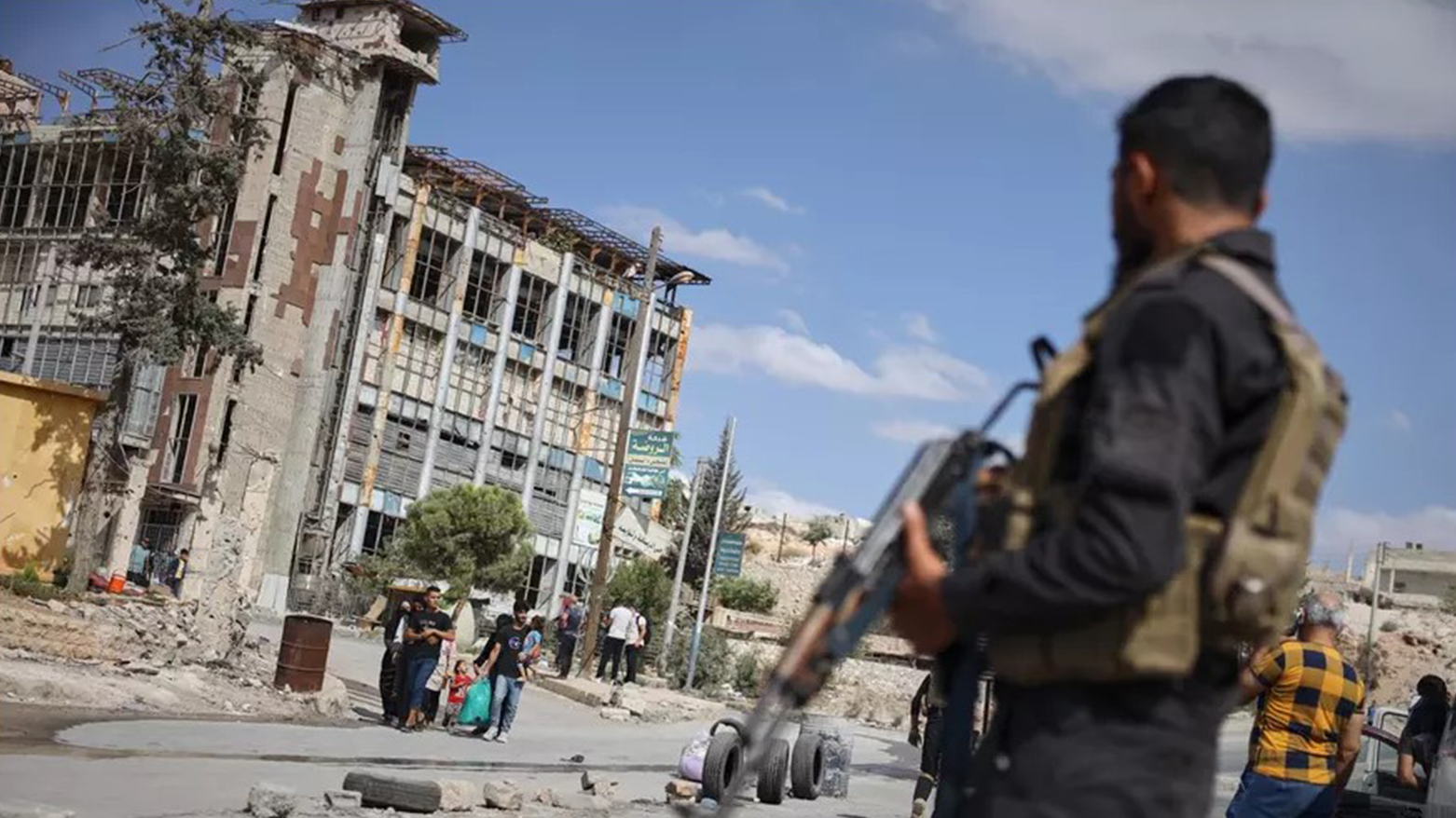
ERBIL (Kurdistan24) — Syrian government forces and the Kurdish-led Syrian Democratic Forces (SDF) on Monday ordered their fighters to observe a ceasefire following deadly clashes in Aleppo, as Turkey renewed calls for the integration of Kurdish forces into Syria’s national army.
The violence erupted ahead of a deadline to implement a March 10 agreement between Damascus and the SDF that aims to integrate the US-backed force—controlling much of Syria’s oil-rich northeast—into the state by the end of the year. At least three people were reported killed in the exchanges.
State news agency SANA quoted Syria’s defense ministry as saying the army’s general staff had issued “an order to stop targeting the sources of fire.” The SDF said it had likewise “issued directives to our forces to cease responding to attacks.”
Both sides accused the other of initiating the clashes. SANA reported that two civilians were killed and eight wounded in SDF shelling of Aleppo districts, while the SDF said a woman was killed and 17 civilians wounded by “rocket and tank shelling carried out by Damascus government factions” in the Sheikh Maqsud and Ashrafieh neighborhoods.
The Kurdish-majority districts of Sheikh Maqsud and Ashrafiyeh have remained under the control of Kurdish units linked to the SDF and local security forces, despite a disengagement agreement reached in April with Syria’s new Islamist authorities.
Syria’s interior ministry accused Kurdish forces of attacking government personnel at joint checkpoints in the neighborhoods, a claim the SDF rejected, instead blaming “factions affiliated with the interim government.”
The defense ministry denied attacking SDF positions, while the Kurdish-led force denied targeting Aleppo neighborhoods. The clashes followed a similar bout of violence in October, after which Syria announced a comprehensive ceasefire with Kurdish forces.
Under the March agreement, Kurdish civil and military institutions are to be folded into the central government. However, implementation has stalled amid differences between the parties, despite sustained international pressure.
Regional Diplomacy and Turkish Pressure
The ceasefire announcement came as Turkish Foreign Minister Hakan Fidan, Defense Minister Yasar Guler, and intelligence chief Ibrahim Kalin met Syrian President Ahmed al-Sharaa in Damascus. Turkey, a key backer of Syria’s new authorities since the ouster of longtime ruler Bashar al-Assad last year, views the SDF’s presence along its border as a security threat.
“It is important that the SDF be integrated into the Syrian administration through dialogue and reconciliation, in a transparent manner, and that it no longer acts as an obstacle to Syria’s territorial integrity and long-term stability,” Fidan said at a joint press conference with Syrian Foreign Minister Asaad al-Shaibani.
Fidan also claimed the Kurds “do not intend to make much progress” on implementing the March deal.
Shaibani said Damascus had received an SDF response to a defense ministry proposal on integration and was studying whether it serves “the national interest in achieving the integration and achieving a single unified Syrian territory.”
A Kurdish official told AFP last week that Damascus’s proposal included splitting the SDF into three divisions and several brigades, including a women’s brigade, to be deployed under SDF commanders in Kurdish-controlled areas of northeastern Syria.
The proposal marked Damascus’s first written offer since March, the official said, adding that international and regional efforts are underway to finalize the agreement by year’s end.
Turkey shares a 900-kilometer border with Syria and has launched successive cross-border operations to push the SDF away from its frontier. “Syria’s stability means Turkey’s stability,” Fidan said, while Shaibani noted that talks also addressed counterterrorism efforts and preventing a resurgence of the Islamic State group.