Kurdish Soldier in German Army Debuts Documentary on War, Identity, and Service in Erbil
Kurdish-German soldier Beriwan Asaad screened her documentary in Erbil, detailing her service against ISIS and honoring her late journalist father.
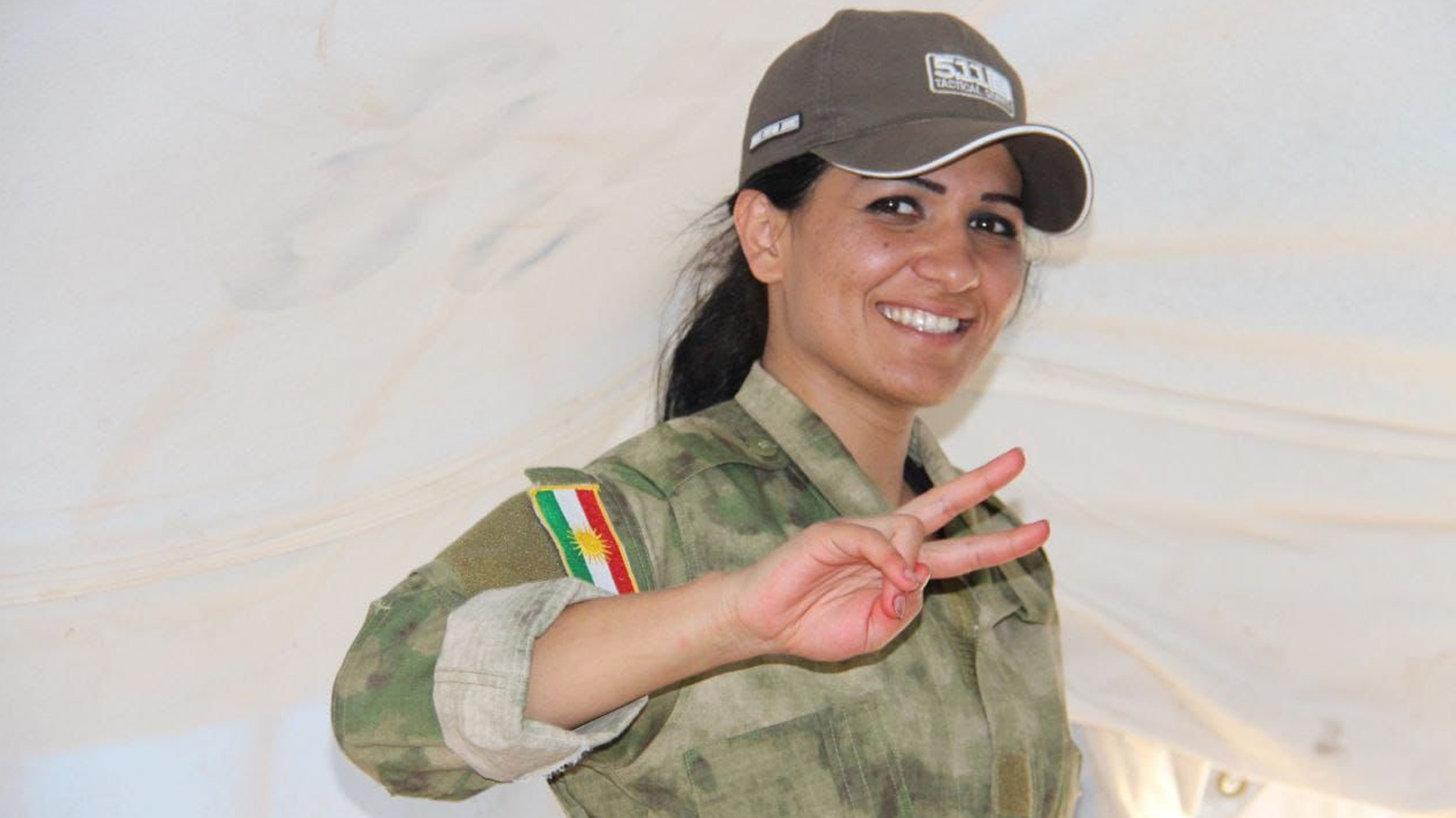
ERBIL (Kurdistan24) — A documentary film exploring the intersection of personal loss, diaspora identity, and military service against the Islamic State (ISIS) premiered in the Kurdistan Region’s capital this week, offering a rare cinematic perspective from a female Kurdish soldier serving in the German armed forces.
The screening of the film, titled "The Day the Sun Did Not Rise," took place at the Empire Cinema in Erbil. The event was characterized as a formal ceremony attended by a significant convergence of government officials, prominent artists, and the family members of the filmmaker, Beriwan Mohammed Mala Asaad.
Asaad, who serves as a soldier, advisor, and interpreter in the German Army, utilized the platform to unveil a narrative that bridges her childhood trauma with her professional role in the international military coalition’s efforts in the region.
The documentary serves as an autobiographical account of Asaad’s life, which has been marked by a series of profound personal and professional undulations.
Central to the film’s narrative is Asaad’s reflection on her experiences as a 10-year-old child, a period defined by the deep pain resulting from the loss of her father. The film portrays her father not merely as a parent but as a renowned journalist who became a victim of war, a loss that catalyzed a lifelong search for identity that drives the film’s emotional arc.
Beyond the personal memoir, "The Day the Sun Did Not Rise" provides a detailed examination of Asaad’s professional trajectory within the German military establishment.
The production highlights her multifaceted position within the German Army, documenting her work as a soldier, an advisor, and an interpreter.
Crucially, the film sheds light on her direct involvement in the security dynamics of the Kurdistan Region, showing how she fought and served alongside the Peshmerga forces in defensive trenches during the campaign against ISIS terrorists.
This segment of the documentary underscores the unique position of Kurdish expatriates who returned to the region within the frameworks of foreign militaries to assist in the existential fight against extremism.
In an exclusive statement provided to Kurdistan24, Asaad clarified that the primary objective of the documentary extends beyond the recounting of her own biography. She emphasized that the work is intended to serve as a poignant message advocating for the protection of journalists and war correspondents—a cause deeply rooted in her father’s fate.
"The Kurds have many enemies, so we must protect our media personnel so that they can unitedly convey the voice of oppression and grievance of the Kurdish people to the whole world," Asaad told Kurdistan24.
Her comments highlight a thematic link in the film between the physical defense of the land, undertaken by soldiers, and the defense of the historical narrative, undertaken by journalists.
By advocating for the safety of media workers, Asaad positions the camera and the pen as essential tools in the Kurdish struggle, parallel to the military service she rendered on the front lines.
The production of the film was handled by the company JOOL, with direction by Dyar Kurdo. The collaboration resulted in a cinematic work that attendees described as an artistic and impactful blend of themes.
The director and production team focused on weaving together the distinct threads of Asaad’s life: the raw pain of a childhood marred by war, the complexities of growing up in the diaspora, and the eventual return to her homeland in a military capacity.
The Empire Cinema screening provided a venue for the local community to engage with the reality of the Kurdish diaspora's continued connection to the homeland.
The film depicts the "military heroism of a Kurdish girl in the diaspora," framing her service in the German Army not as a departure from her roots, but as a different avenue of service to them. The documentary illustrates the dual burden carried by many in the community—the memory of past victimization and the present duty to defend against new threats.
By focusing on the search for her father’s identity, the film also addresses the intergenerational trauma caused by conflict in the region. Asaad’s journey to understand the life and death of her father, a journalist killed in conflict, mirrors the broader Kurdish experience of seeking acknowledgment and justice for historical grievances.
The event in Erbil stands as a testament to the enduring cultural and political ties between the Kurdistan Region and its diaspora community in Europe. Asaad’s presence, both on screen and in the theater, underscored the role that individuals can play in bridging the gap between foreign powers, such as Germany, and local forces, such as the Peshmerga.
As the credits rolled at Empire Cinema, the audience was left with a comprehensive portrait of a life shaped by the geopolitical turbulence of the Middle East.
From a grieving 10-year-old to a soldier on the front lines against ISIS, Asaad’s story, as captured by director Dyar Kurdo, offers a personalized lens through which to view the broader history of the region.
Her call to protect journalists serves as a final, forward-looking exhortation, reminding the public that the documentation of history is as vital as the battles fought to shape it.