Russian Envoy Rebuffs U.S. Warnings on Iran’s Nuclear Program, Citing Treaty Rights
Russian envoy Mikhail Ulyanov defended Iran's "inalienable right" to a peaceful nuclear program under the NPT, rejecting US warnings and limiting talks to nuclear issues.
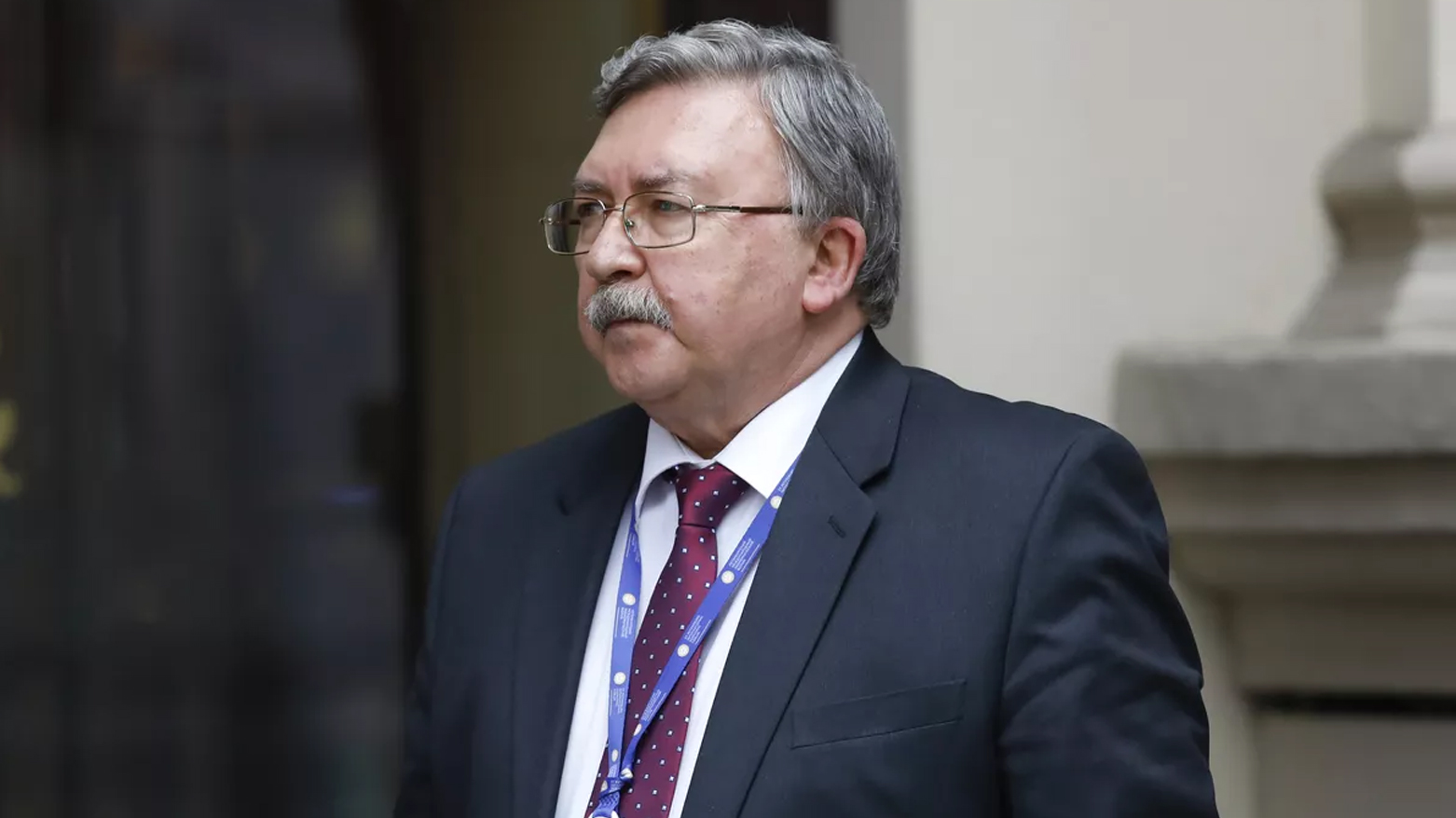
ERBIL (Kurdistan24) — A senior Russian diplomat has forcefully rejected American assertions regarding Iran’s nuclear ambitions, invoking international treaty law to defend Tehran’s right to maintain a nuclear program and warning against expanding future diplomatic negotiations beyond the strict confines of nuclear issues.
Mikhail Ulyanov, Russia’s Permanent Representative to international organizations in Vienna, issued the rebuttal in a direct response to comments made by former U.S. Secretary of State Mike Pompeo.
The exchange, reported by the Islamic Republic News Agency (IRNA), highlights the deepening diplomatic fissure between Washington and Moscow regarding the oversight and interpretation of Iran’s atomic activities.
The latest diplomatic flare-up was precipitated by a statement posted on the social media platform X by Pompeo, who served as America’s top diplomat under the first term of Trump administration. In his assessment of the current geopolitical landscape, Pompeo warned that "Iran is doing everything it can to reconstitute its nuclear program," declaring unequivocally, "We cannot allow this to happen."
Iran is doing everything it can to reconstitute its nuclear program.
— Mike Pompeo (@mikepompeo) December 22, 2025
We cannot allow this to happen.
The opportunity for peace and prosperity in the region is there - but it will require sustained pressure on Iran and its proxies across the Middle East. pic.twitter.com/wKxzMvTxCT
According to IRNA, Ulyanov challenged the premise of Pompeo’s warning by citing the legal framework of the Nuclear Non-Proliferation Treaty (NPT).
In his response on X, the Russian envoy suggested that the former U.S. Secretary of State appeared to be unaware of the specific rights granted to signatory nations under international law. Ulyanov wrote that under the NPT, Iran possesses "the inalienable right to maintain [a] national nuclear program provided that it serves exclusively peaceful purposes."
Apparently, the former Secretary of State does not know that under the NPT Iran has the inalienable right to maintain national nuclear programme provided that it serves exclusively peaceful purposes. https://t.co/pjmjnqweNI
— Mikhail Ulyanov (@Amb_Ulyanov) December 22, 2025
The distinction drawn by the Russian diplomat serves to reframe the narrative from one of illicit proliferation, as suggested by American officials, to one of sovereign rights and legal compliance. By emphasizing the "inalienable" nature of these rights, Moscow is signaling its continued diplomatic protection of Tehran’s nuclear infrastructure, provided it remains within the peaceful boundaries established by the treaty.
Narrowing the Scope of Negotiations
Beyond the immediate legal defense of Iran’s program, the IRNA report indicates that Ulyanov used the opportunity to outline Russia’s rigid stance on the parameters of any potential future diplomatic engagements with Tehran.
The Russian diplomat stressed that negotiations must be "confined strictly to nuclear-related issues," rejecting recent calls from Western capitals to broaden discussions to include Iran’s missile program or its regional influence.
To reinforce this position, Ulyanov shared and endorsed a video statement made on Monday by Esmaeil Baghaei, the spokesperson for Iran’s Foreign Ministry. In the footage, Baghaei articulated Tehran’s refusal to subject its military capabilities to international bargaining.
"The defensive capabilities of the Islamic Republic of Iran are designed to deter aggressors from any thought of attacking Iran and are by no means a matter that can be discussed or bargained over," Baghaei stated.
Ulyanov publicly aligned himself with this hardline stance, commenting, "Right. The talks should be devoted to nuclear issues only."
The 'Three Birds' Dilemma
The Russian envoy offered a stark critique of Western diplomatic strategies that seek to address multiple security concerns simultaneously. According to the reporting by IRNA, Ulyanov cautioned that any attempt to broaden the scope of talks to encompass regional security dynamics or ballistic missile development would imperil the diplomatic process entirely.
He characterized such a comprehensive approach as an attempt to "hit three birds with one stone," a strategy he argued would render the entire negotiation process "unrealistic." This metaphor underscores Moscow's assessment that linking nuclear compliance with concessions on conventional defense or regional foreign policy creates an insurmountable diplomatic hurdle.
The coordination between Russian and Iranian messaging is evident in their shared insistence on decoupling nuclear technology from military deterrence.
While Pompeo and other U.S. officials view the reconstitution of Iran’s program as a prelude to weaponization that must be stopped, Ulyanov and Baghaei frame the nuclear program as a treaty-protected peaceful endeavor and the missile program as a non-negotiable sovereign deterrent.
Deterrence and Sovereignty
The statements reported by IRNA reflect a broader strategy by Tehran to insulate its military infrastructure from foreign oversight.
Baghaei’s declaration that Iran’s defensive capabilities are designed solely "to deter aggressors" serves as the foundational argument for excluding missiles from nuclear talks.
By endorsing this view, Russia is effectively bolstering Iran’s negotiating leverage, signaling to Western powers that the path to any new agreement lies solely through the narrow corridor of nuclear technicalities, rather than a comprehensive security pact.
As the debate plays out in the public sphere via social media platforms and official state media, the gap between the U.S. demand for total cessation of what it views as a threat, and the Russo-Iranian insistence on legal rights and limited negotiation scopes, appears to be widening.
The reliance on the NPT as a defense by Moscow suggests that future diplomatic battles will be fought not just over centrifuges and enrichment levels, but over the fundamental legal interpretations of what sovereign nations are permitted to develop under international law.