U.S. Envoy Hails Bipartisan Push for Syrian Integration Deal at Munich
“Bipartisan Communication & Input Are Driving Real Progress Toward Inclusive, Syrian-Led Peace and Stability,” Barrack Says.
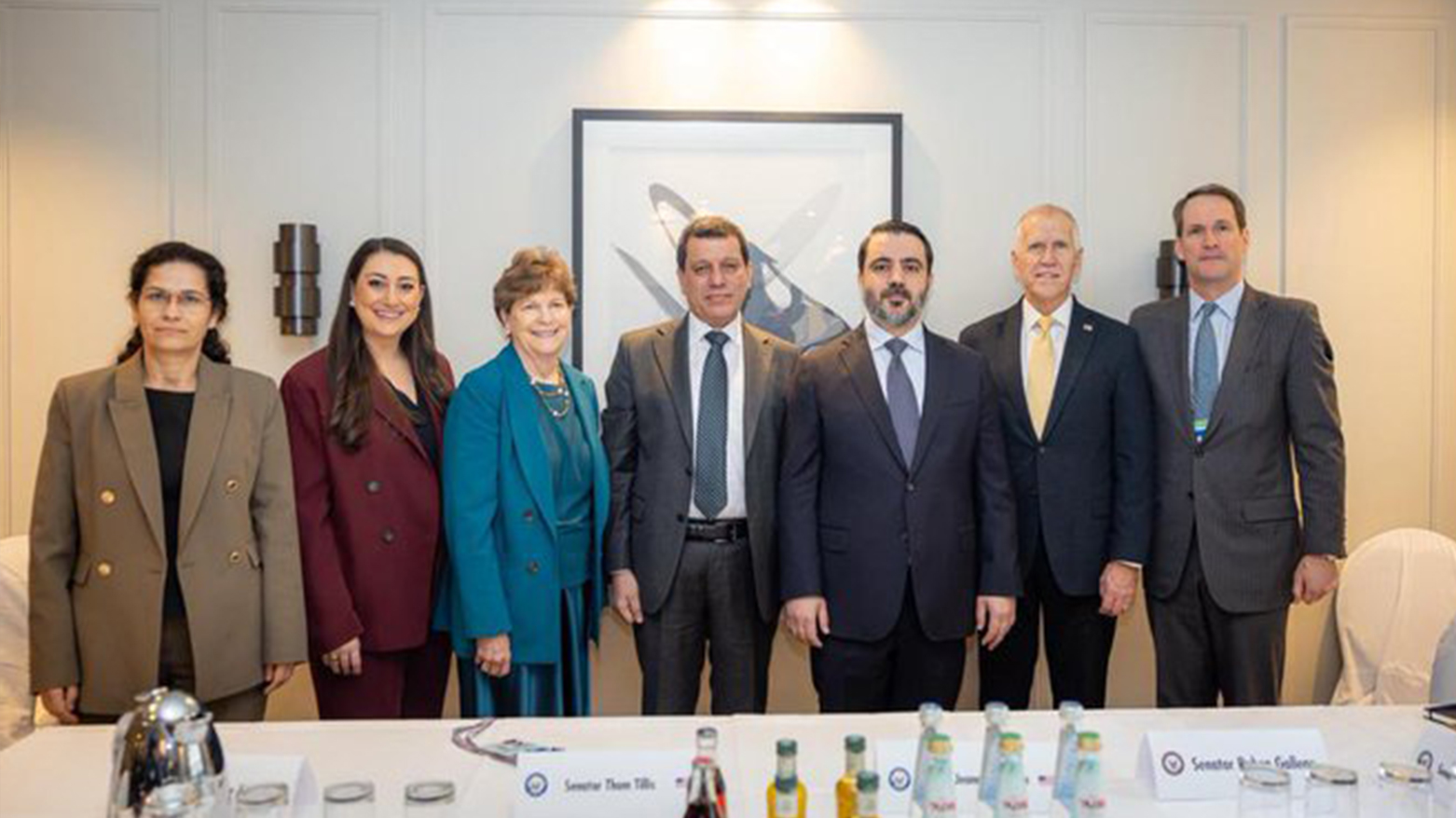
ERBIL (Kurdistan24) — U.S. Ambassador to Türkiye and Special Envoy for Syria, Tom Barrack, on Saturday praised bipartisan American engagement supporting Syria’s political transition, describing it as a driver of “real progress” toward stability.
In a post on X, Barrack said that bipartisan communication—led by U.S. Senator Jeanne Shaheen at MSC2026—was reinforcing initiatives by U.S. President Donald Trump and Secretary of State Marco Rubio aimed at advancing “inclusive, Syrian-led political processes” that foster peace, stability, and prosperity for all Syrians. “Unity works!” Barrack wrote.
Bipartisan communication & input are driving real progress! Led by @SenatorShaheen’s strong engagement at #MSC2026, emphasizing @POTUS and @SecRubio’s initiatives for inclusive, Syrian-led political processes—fostering sustained peace, stability, and prosperity for ALL Syrians.… pic.twitter.com/08rkTE7n0E
— Ambassador Tom Barrack (@USAMBTurkiye) February 14, 2026
His remarks came a day after Rubio met Syrian Foreign Minister Asaad al-Shaibani on the sidelines of the Munich Security Conference, where discussions focused on Damascus’s recent agreement with Kurdish authorities.
According to a readout issued on Saturday by the Office of the Spokesperson and attributed to Principal Deputy Spokesperson Tommy Pigott, Secretary of State Marco Rubio met jointly with Syrian Foreign Minister Asaad al-Shaibani and Syrian Democratic Forces (SDF) Commander-in-Chief Mazloum Abdi during the Munich Security Conference.
The meeting underscored Washington’s backing for a stable Syria, at peace with its neighbors, and protective of the rights of all ethnic and religious minority communities.
Rubio welcomed Damascus’s stated commitment to full cooperation with the United States and the Global Coalition to Defeat ISIS, stressing the need to sustain joint counterterrorism efforts.
He also emphasized the importance of implementing the permanent ceasefire and the integration agreement in northeast Syria, highlighting that safeguarding the rights, security, and equal treatment of all Syrians remains central to long-term stabilization efforts.
According to a statement from the Syrian Foreign Ministry, the meeting addressed “the latest domestic and regional developments,” with both sides emphasizing Syria’s unity, sovereignty, and territorial integrity. Rubio reportedly expressed U.S. support for the recent integration agreement between Damascus and the Kurdish-led SDF.
Photos released by Damascus showed SDF commander Mazloum Abdi attending the meeting. Abdi later described the talks as “positive,” telling local media that the integration process was a central topic of discussion.
Last month, Syria’s government and Kurdish-led authorities signed an agreement to gradually integrate the SDF’s military and civilian institutions into the Syrian state structure. The deal followed months of tension and sporadic clashes, during which Kurdish forces ceded territory to advancing government troops.
As part of the arrangement, Damascus on Friday appointed Noureddine Ahmed Eissa, a Kurd from Qamishlo, as governor of Hasakeh province—long considered a stronghold of Kurdish self-administration. Syria’s state news agency SANA reported the presidential decree as a step aligned with the broader integration framework.
The SDF, backed by the U.S.-led coalition, spearheaded the campaign that culminated in the territorial defeat of ISIS in Syria in 2019. However, Washington has in recent months recalibrated its Syria policy, drawing closer to the country’s new Islamist authorities and signaling that the original rationale for its close alliance with Kurdish forces has largely concluded.
In a parallel development, U.S. forces confirmed on Thursday their withdrawal from Al-Tanf base near Syria’s borders with Jordan and Iraq—a move widely viewed as part of a broader repositioning of American military assets in the region.
Barrack’s statement underscores Washington’s effort to frame the Kurdish-state integration agreement as a cornerstone of a Syrian-led political settlement, while balancing evolving strategic priorities.
As Damascus seeks to consolidate control across the country, U.S. officials appear to be backing a managed transition that preserves territorial integrity while aiming to prevent renewed instability.
At the same time, Washington has underscored that any durable settlement must guarantee the protection of the rights of Kurds and other ethnic and religious minorities, framing minority safeguards as an essential pillar of Syria’s long-term peace and national reconciliation process.